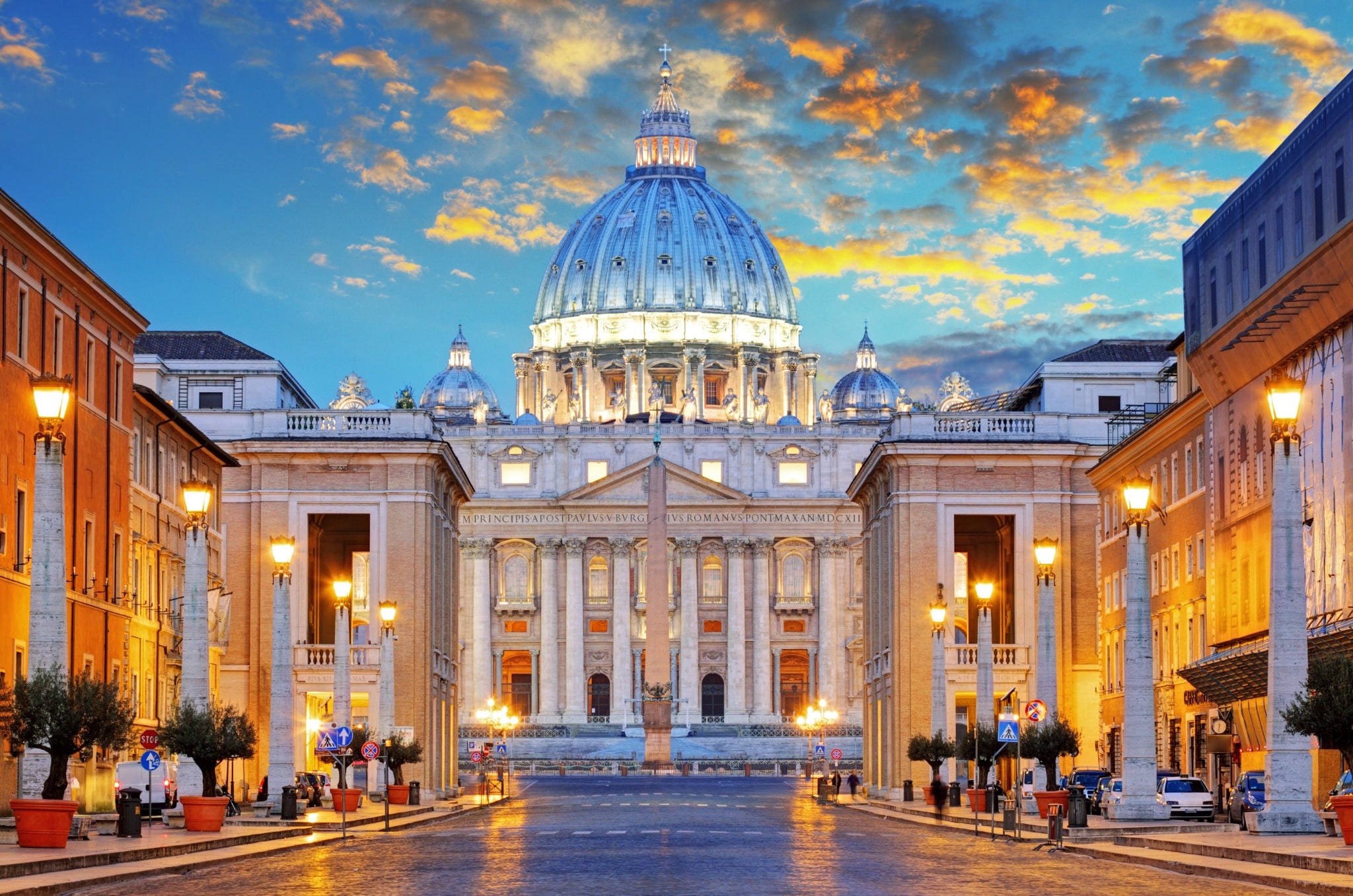
✝ Why this place matters
Christian Significance
A sanctuary protecting 28 marble steps traditionally believed to have been brought from Jerusalem to Rome by Saint Helena, associated with the staircase Jesus climbed during his trial before Pontius Pilate.
“And Paul dwelt two whole years in his own hired house, and received all that came in unto him, Preaching the kingdom of God, and teaching those things which concern the Lord Jesus Christ, with all confidence, no man forbidding him.”
— Acts 28:30–31 (KJV)
✝ The wider story
Faith, History and Context
Scala Sancta (Holy Stairs) forms part of the wider Christian pilgrimage landscape of Rome & Vatican City. The destination brings together places connected through Scripture, longstanding Christian devotion, surviving monuments, and archaeological interpretation.
A sanctuary protecting 28 marble steps traditionally believed to have been brought from Jerusalem to Rome by Saint Helena, associated with the staircase Jesus climbed during his trial before Pontius Pilate. Where an exact biblical location cannot be established, this guide treats the association as Christian tradition rather than presenting it as proven fact. That distinction allows pilgrims to appreciate the spiritual meaning of the place without overstating the surviving historical evidence.
A visit is most meaningful when the site is understood alongside the other sacred places of Rome & Vatican City. Allow time for quiet reflection, active worship, and the practical realities of a functioning church, shrine, archaeological site, or public landscape.
✝ Visit thoughtfully
Pilgrim Guidance
- Confirm current opening hours, worship schedules, entry rules, and access conditions shortly before visiting.
- Dress and speak respectfully; remember that many pilgrimage sites remain active places of prayer.
- Read the relevant biblical passage before arrival and allow a few quiet minutes away from group movement.