Read the passage
Mark 6:30–44
Read the passage within its full chapter, not as an isolated line.
Read the chapter · World English BibleThey all ate and were filled.
The disciples return from their mission and seek rest, but Jesus responds to a crowd with compassion. He involves the disciples in distributing food. Read this as a narrative about care and provision, not a promise that faithful people will never face material need. Compare Luke 9:10–17, which mentions Bethsaida in the surrounding narrative.
Notice where Mark places this meal: after the apostles return from their work and after the account of Herod’s banquet. One meal displays power through violence; the other responds to a hungry crowd with compassion. The disciples first calculate what they cannot buy, but Jesus asks them to examine what is available and participate in distributing it. The people sit in groups rather than remaining an anonymous mass. Reading these details makes the story more than an illustration of abundance: it also asks how leaders see people, organize care, and involve others in meeting need.
What we know — and what remains open
Identification of the place
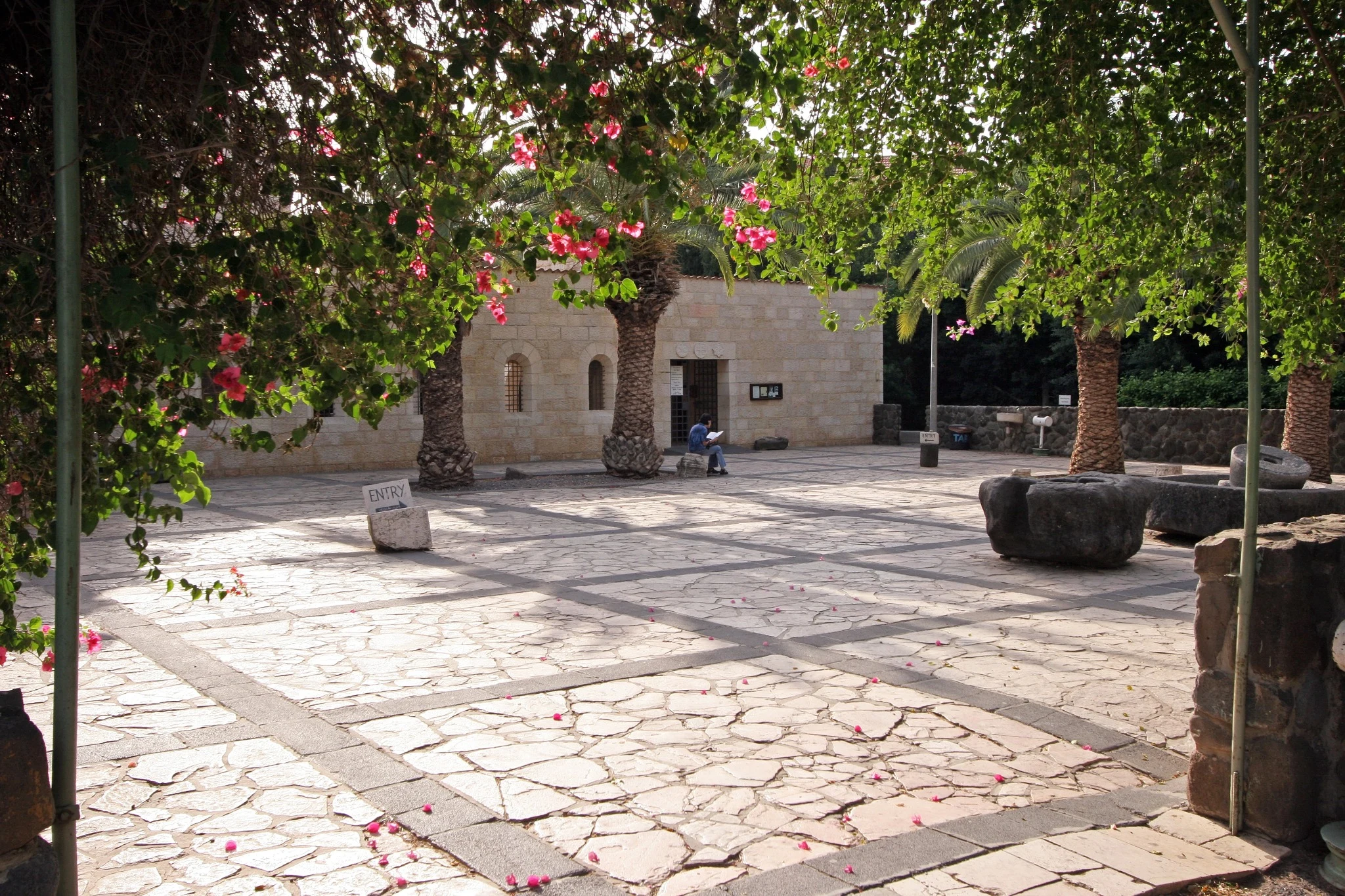
Modern sanctuary identifiedTabgha is on the northwestern lakeshore. Identifying the exact feeding place from the Gospel accounts remains uncertain.
Connection to the event
Traditional location; uncertain geographyA church stood here in late antiquity. The modern sanctuary preserves earlier mosaic floors, including the famous bread-and-fish image.
What this does not establish
The mosaics establish an old commemoration, not the occurrence or location of a miracle. Tabgha should be presented as a traditional site, especially when comparing different Gospel geographical details.
What to notice when you visit
- Look at the bread-and-fish mosaic and the wider floor decoration.
- Observe the relationship between the modern church and its earlier archaeological footprint.
Plan with the place in mind
- Confirm access with the church before building a tight lakeshore schedule.
- Keep groups clear of worshippers and do not cross protective barriers to photograph mosaics.
- The Primacy of Peter is a separate nearby sanctuary: plan both stops rather than assuming one entrance covers the whole area.
Opening hours and prices are not live. Before traveling, confirm access, services and local conditions with the site operator and relevant authorities.
Approximate visitor landmark; not a boundary or proof of the historical event. Open map
Take something with you
What food, time or attention could you share with someone today?
Continue in prayer · For ThisSources & further reading
Sources explain the passage, the tradition or the present site; they do not all support the same kind of claim.
- Mark 6:30–44 · full biblical text
- University of Exeter · Church of the Multiplication
- Custody · traditions of Tabgha
Guide prepared: November 12, 2026. AI-assisted synthesis; no independent academic review. Our editorial approach