Read the passage
Matthew 4:18–22; Luke 5:1–11
Read the passage within its full chapter, not as an isolated line.
Read the chapter · World English BibleMatthew presents two pairs of brothers in quick succession. Simon Peter and Andrew cast a net; James and John repair their nets with Zebedee. Jesus calls them, and they leave the work before them. Luke develops a longer scene: teaching from Simon’s boat, an unsuccessful night of fishing, an unexpected catch, the help of partners, and Simon’s unsettling awareness of his own inadequacy. These are distinct narrative presentations, not two camera angles that require us to invent a complete shared timetable. Luke makes the abundance lead to a new vocation, not to a promise of commercial success. Matthew’s emphasis falls on the urgency of following. Together they invite a serious question: what happens when an identity organized around competence and income encounters a call to serve? The stories do not require contempt for ordinary work. Nets, boats, and cooperation have already formed abilities that will matter within the disciples’ new life.
What we know — and what remains open
Identification of the place
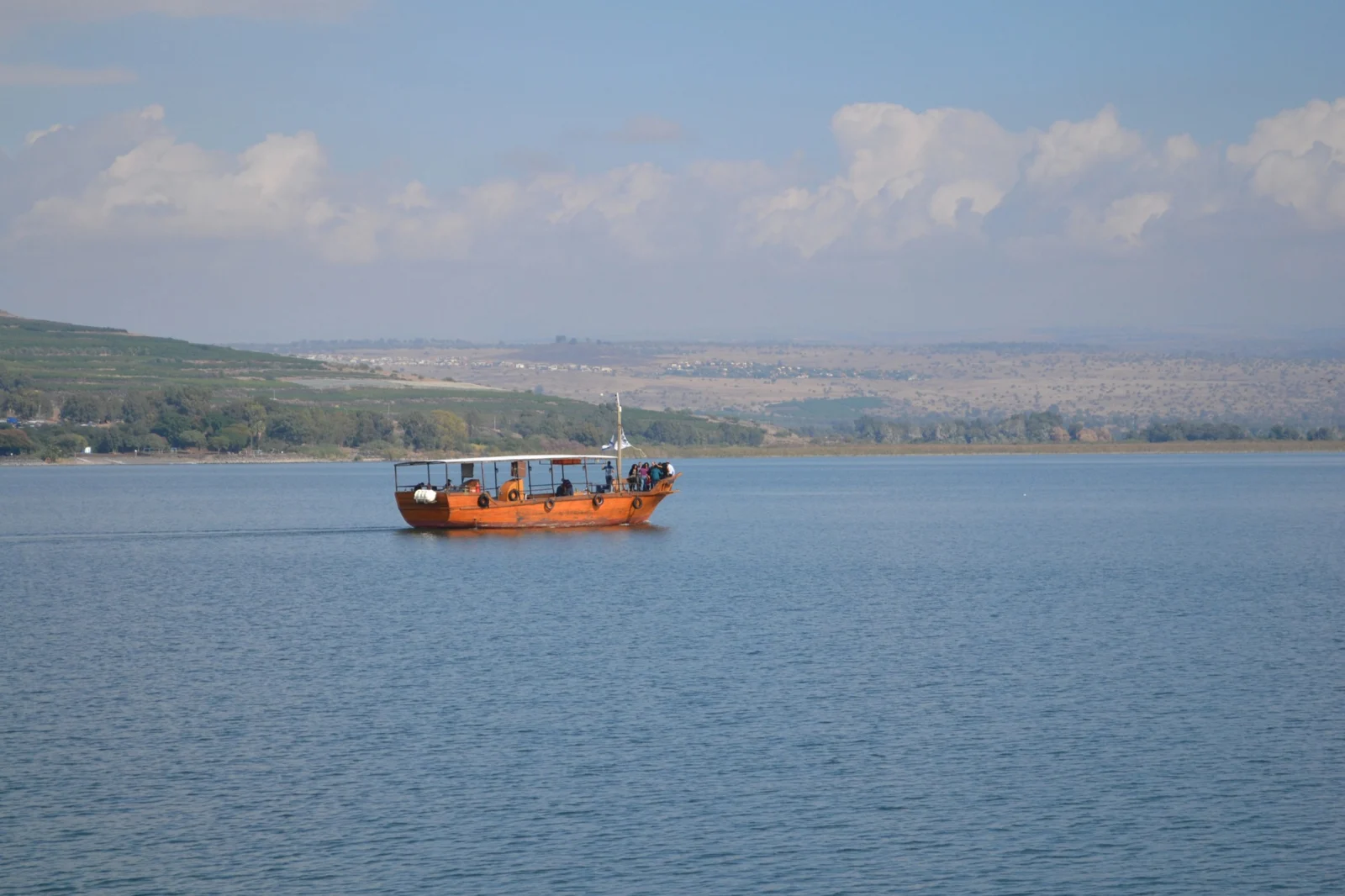
Lake identified; shore unspecifiedThe lake is identified; the particular stretch where each calling occurred is not. This page uses the northwestern shore as a contextual visit, not an excavated calling site. The Yigal Allon Centre’s preserved ancient boat supplies evidence for lake transport and fishing culture around the Gospel period.
Connection to the event
Contextual shoreline visitTabgha’s better-defined Christian commemorations concern the feeding of the crowd and Peter’s encounter with the risen Jesus. Their presence makes the shore a meaningful place to compare the beginning and later renewal of discipleship, but does not transfer their traditions to the first calling.
What this does not establish
No inscription identifies the museum boat with Jesus or the disciples. Nor should a modern lakeside photograph imply that today’s waterline reproduces the ancient shoreline exactly. A call to discipleship is not general advice to abandon dependants or make impulsive financial decisions.
What to notice when you visit
- At the boat gallery, consider the room available for workers and equipment rather than searching for a miraculous object.
- At Tabgha, observe the relation between shore, paths, and land: fishing joined waterborne work to households and markets.
Plan with the place in mind
- Treat Ginosar and Tabgha as separate stops with transport between them; do not assume one admission covers both.
- Ask the museum about its current exhibition and accessible route, and the sanctuary about worship arrangements.
- Compare Matthew and Luke in a quiet place before the group discussion. Give each narrative its own sequence and avoid resolving differences through invented details.
Opening hours and prices are not live. Before traveling, confirm access, services and local conditions with the site operator and relevant authorities.
Tabgha is a contextual shore stop, not the verified location of the first calling. Open map
Take something with you
Which skill from your ordinary work could serve someone this week without becoming a performance of your own importance? Choose one realistic use of that skill and discuss major life changes with the people affected.
Continue in prayer · For ThisSources & further reading
Sources explain the passage, the tradition or the present site; they do not all support the same kind of claim.
- Matthew 4:18–22; Luke 5:1–11 · full biblical text
- Custody of the Holy Land · Tabgha
- Yigal Allon Centre · Ancient boat
- World English Bible · Luke 5
- World English Bible · Full chapter
Guide prepared: November 12, 2026. AI-assisted synthesis; no independent academic review. Our editorial approach