Read the passage
Luke 2:1–7
Read the passage within its full chapter, not as an isolated line.
Read the chapter · World English BibleShe gave birth to her firstborn son. She wrapped him in bands of cloth and laid him in a feeding trough, because there was no room for them in the inn.
Luke moves from an imperial enrollment to a family’s arrival and the child placed in a manger. The modest setting shapes the story. Luke does not describe the present church, a silver star or the complete modern Christmas tableau. Read Matthew 2 separately rather than assuming every familiar Nativity detail occurs in this passage.
Luke tells the birth briefly, then gives substantial attention to those who hear about it. The sign is not a palace or a public display of power but a child in a feeding trough. The shepherds report what they have heard, while Mary holds and considers these words. These are different responses within the same narrative: speaking, wondering, pondering, and returning to daily work with praise. When reading at Bethlehem, distinguish Luke’s account from details supplied by Christmas art or combined with Matthew. A familiar image can help us remember, but it can also make us overlook what this particular Gospel actually emphasizes.
What we know — and what remains open
Identification of the place
Biblical town identifiedBethlehem is explicitly named in Luke and Matthew. The present church is a documented historic building above the traditional grotto.
Connection to the event
Ancient birth-site traditionUNESCO records the birth-site tradition from the second century and the first church in the fourth. The surviving complex reflects later building and restoration.
What this does not establish
The antiquity of the tradition matters, but archaeology cannot identify a birth to the exact point marked inside the grotto. The marker is devotional, not a contemporary record.
What to notice when you visit
- See the church above ground before joining any queue for the grotto.
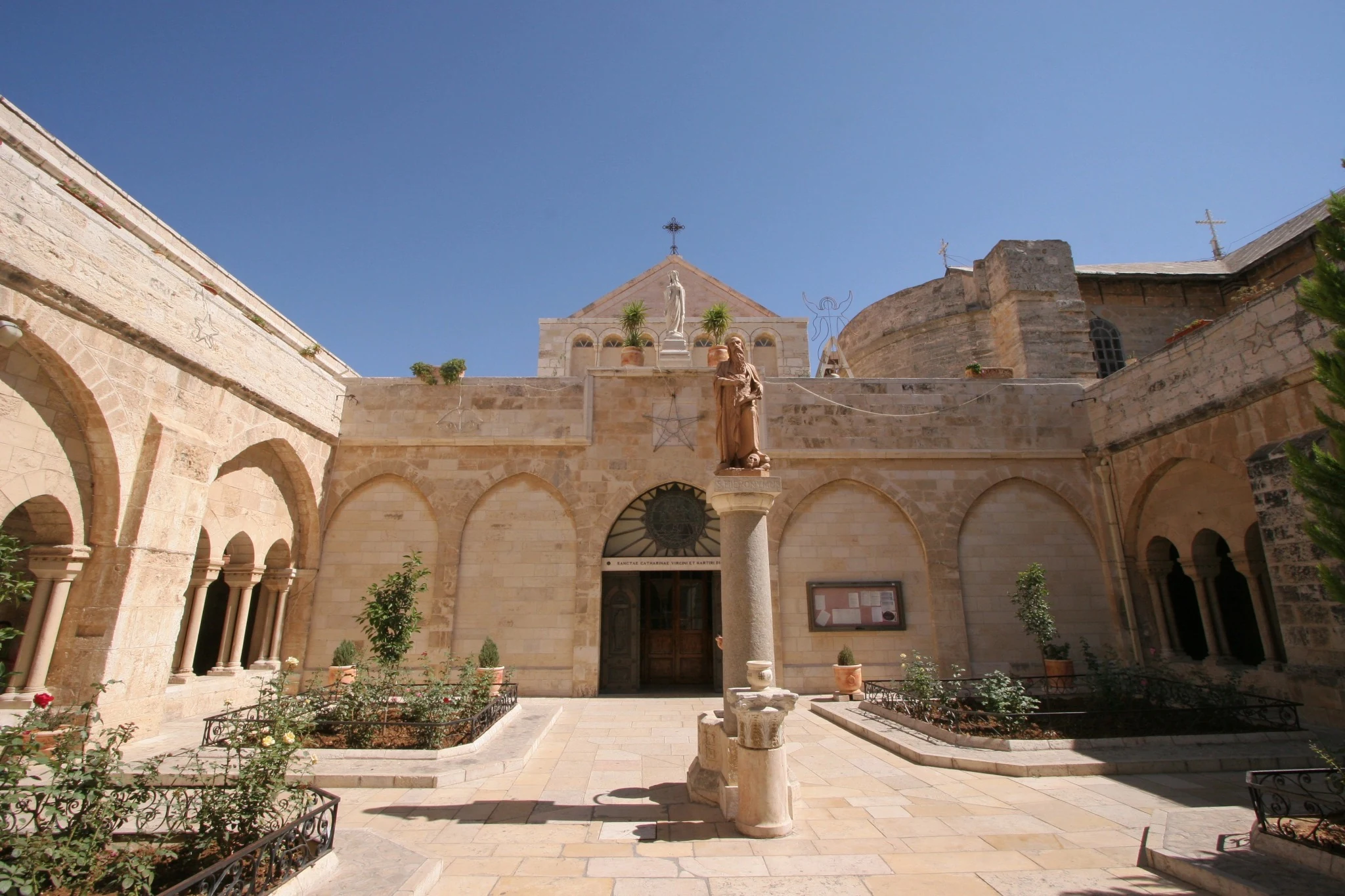
- If available during your visit, include neighbouring Saint Catherine’s church to understand the shared complex.
Plan with the place in mind
- Plan Bethlehem as a West Bank visit; confirm current access, transport and identification requirements before travelling.
- The grotto involves a confined route and steps. Ask about the actual route before joining the queue if your group has mobility needs.
- Reserve unhurried time for Manger Square and local businesses rather than scheduling only a brief church stop.
Opening hours and prices are not live. Before traveling, confirm access, services and local conditions with the site operator and relevant authorities.
Approximate visitor landmark; not a boundary or proof of the historical event. Open map
Take something with you
Where could you make room for someone who is easily overlooked?
Continue in prayer · For ThisSources & further reading
Sources explain the passage, the tradition or the present site; they do not all support the same kind of claim.
- Luke 2:1–7 · full biblical text
- UNESCO · Birthplace of Jesus: Church of the Nativity
- Christian Information Center · Bethlehem visit
Guide prepared: November 12, 2026. AI-assisted synthesis; no independent academic review. Our editorial approach