Read the passage
Luke 4:16–30
Read the passage within its full chapter, not as an isolated line.
Read the chapter · World English BibleJesus returns to the town where he grew up and participates in Sabbath worship. The reading from Isaiah announces good news, release, and restoration; Jesus applies it to the present hearing. Initial amazement turns into conflict as he challenges the expectation of hometown privilege and recalls Elijah’s care for a widow in Sidon and Elisha’s healing of Naaman the Syrian. The examples come from Israel’s own Scriptures. This is therefore not a speech against Judaism, but a confrontation over the reach of mercy within a Jewish scriptural conversation. The crowd drives him out toward a brow of the hill. Luke says he passes through their midst and goes away; it does not say that he jumps from the cliff or flies across a valley. Those additions should not be repeated as Gospel detail even when they appear in popular visitor descriptions. The key question is whether a community welcomes good news only when it confirms its own priority, or can rejoice when grace reaches someone it regards as an outsider.
What we know — and what remains open
Identification of the place
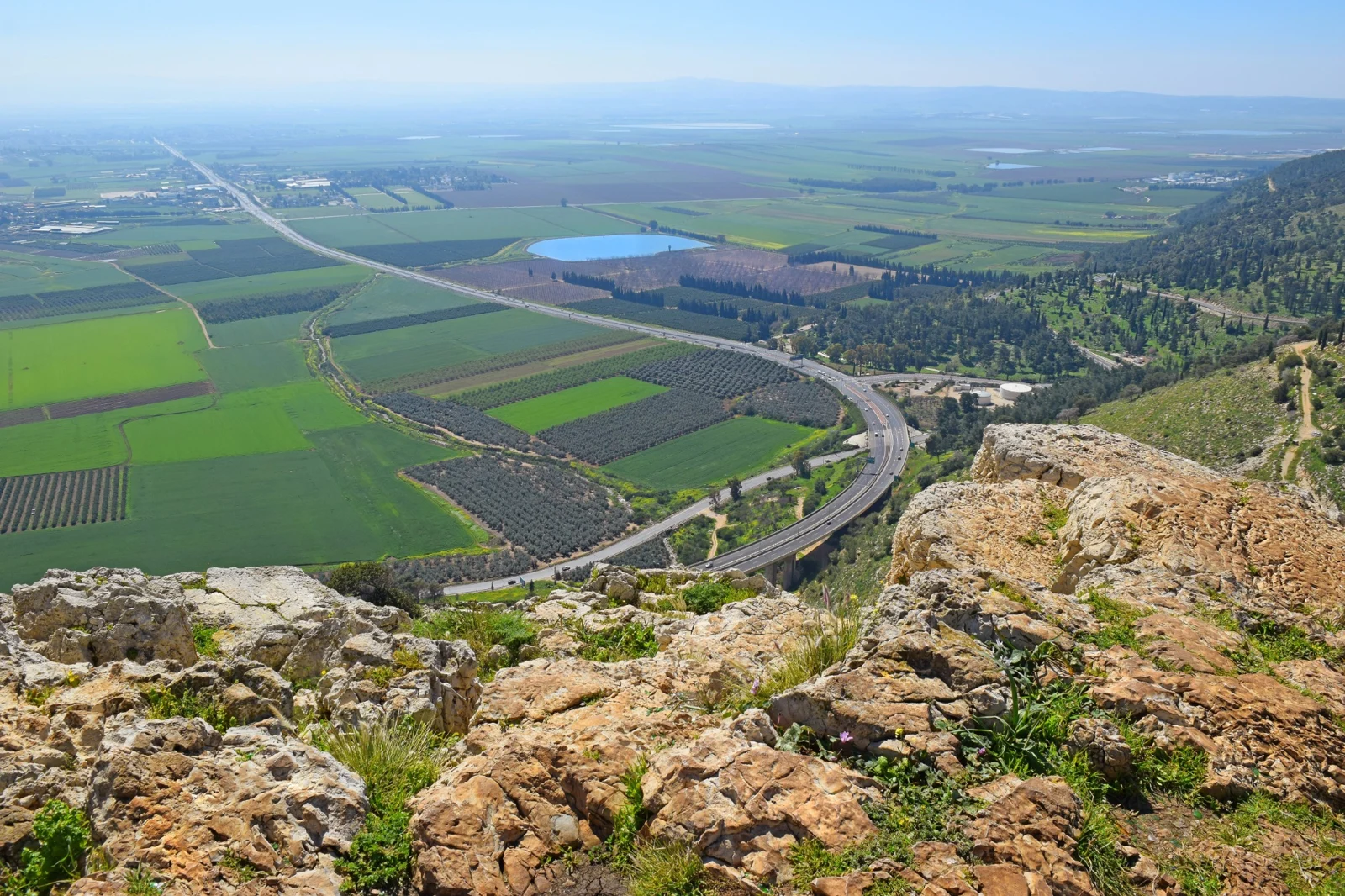
Biblical town identifiedNazareth is explicitly named in Luke. The modern viewpoint south of the city overlooks the surrounding landscape, including the Jezreel Valley and Mount Tabor. Municipal and land-management descriptions establish it as a visitor landmark; they do not settle its identification with the hill in Luke’s account.
Connection to the event
Traditional cliff; exact location uncertainThe name Mount Precipice carries a longstanding devotional link with the rejection story. It is best introduced as the traditional viewpoint from which pilgrims remember the episode. The landscape can deepen attention to the text without requiring the claim that the crowd stood at the modern lookout.
What this does not establish
The exact synagogue and brow of the hill are not identified by this visit. Do not turn the crowd into a claim about all the inhabitants of Nazareth then or now, or about Jewish people collectively. A scenic cliff is not independent evidence for an attempted execution at that location.
Questions to explore
- Use the broad view to distinguish Nazareth’s setting from the later identification of a single dramatic cliff.
- Read the examples of the widow and Naaman at the viewpoint; they explain the argument more clearly than a photograph of the drop alone.
Plan with the place in mind
- Check current approach and parking arrangements with the local visitor information service; conditions on outdoor paths can change.
- Stay on marked paths and behind protective boundaries. There is no devotional reason to approach an unsafe edge or reenact the crowd’s action.
- Pair the viewpoint with time in present-day Nazareth, allowing its residents and living religious communities to be more than a backdrop to one ancient conflict.
Opening hours and prices are not live. Before traveling, confirm access, services and local conditions with the site operator and relevant authorities.
No precise location
The viewpoint is traditional; no exact event coordinate is established here.
Take something with you
Who receives your sympathy less readily because they are not part of your circle? Read the two prophetic examples again, then choose one way to listen beyond the boundaries of familiarity.
Continue in prayer · For ThisSources & further reading
Sources explain the passage, the tradition or the present site; they do not all support the same kind of claim.
- Luke 4:16–30 · full biblical text
- Nazareth Municipality · Mount Precipice
- KKL-JNF · Mount Precipice viewpoint
- World English Bible · Full chapter
Guide prepared: November 12, 2026. AI-assisted synthesis; no independent academic review. Our editorial approach