Read the passage
Mark 5:1–20
Read the passage within its full chapter, not as an isolated line.
Read the chapter · World English BibleAfter crossing the lake, Jesus encounters a man whom his community has been unable to restrain. Mark describes his suffering vividly, but does not reduce the ending to the spectacular destruction of a herd. The decisive contrast is between the man’s former isolation and his restored condition. The witnesses become afraid and ask Jesus to leave. The restored man asks to accompany him, yet receives a different task: return home and tell what mercy has done. This makes the story a movement back into human relationship, not simply an escape from a frightening place. The herd, the losses, and the frightened community leave uncomfortable questions that should not be edited away. What happens when restoration disrupts the arrangements through which a community has learned to manage someone it excludes? Mark’s account uses the religious language of possession. It must not be used to label contemporary mental illness, disability, or distress as demonic. The page follows the narrative’s own categories without converting them into a modern diagnosis.
What we know — and what remains open
Identification of the place
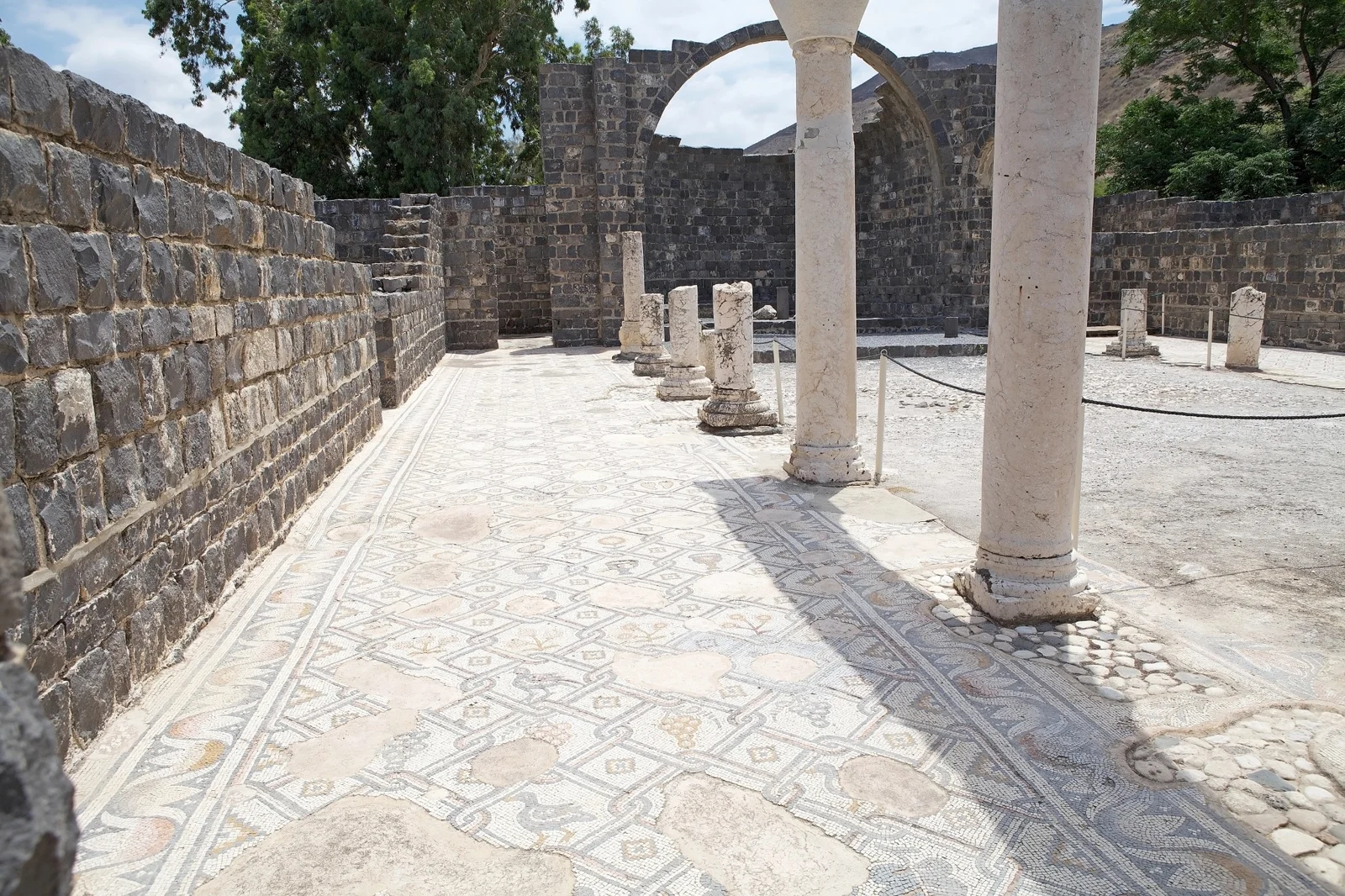
What can be locatedKursi is an archaeological park on the eastern side of the lake. Its Byzantine monastic remains provide tangible evidence that Christians commemorated the episode here. They cannot by themselves establish that this was the landing place described by Mark.
Connection to the event
How the place is rememberedThe place-name varies across Gospel traditions and editions: the linked WEB chapter uses Gadarenes, while Gerasenes is familiar in other translations. A careful guide retains that complication instead of treating the modern sign at Kursi as a solution to every textual question.
What this does not establish
An excavated monastery verifies an ancient commemorative community, not a miracle, a herd’s route, or a diagnosis. Neither dramatic cliffs nor a convenient shoreline should be used to supply details absent from the account. The exact geographical identification remains debated.
Questions to explore
- Look at the surviving church plan and mosaic surfaces as evidence of the people who came later to remember the story. Keep their date distinct from the Gospel setting.
- Read the last verses with as much attention as the dramatic middle. Home, mercy, and testimony are the destination of the restored man’s story.
Plan with the place in mind
- Check the national park operator’s current visitor guidance before approaching the eastern shore. Ask specifically about the main ruin route if steps, heat, or walking distance are concerns.
- Stay on designated paths around mosaics and excavated structures. Do not climb toward a supposed exact miracle point to manufacture a more dramatic photograph.
- Allow a separate lakeside stop if you want to read about the crossing. The archaeological enclosure and an accessible shoreline are different experiences with different access arrangements.
Opening hours and prices are not live. Before traveling, confirm access, services and local conditions with the site operator and relevant authorities.
No precise location
Kursi is a traditional commemorative site; no exact landing place or herd route is mapped.
Take something with you
Ask whose return to ordinary community life you could support. A welcoming conversation, a practical invitation, or respectful help finding professional support may matter more than discussing what once made that person seem different.
Continue in prayer · For ThisSources & further reading
Sources explain the passage, the tradition or the present site; they do not all support the same kind of claim.
Guide prepared: November 12, 2026. AI-assisted synthesis; no independent academic review. Our editorial approach