Read the passage
Genesis 14:17–24
Read the passage within its full chapter, not as an isolated line.
Read the chapter · World English BibleGenesis 14 first recounts a campaign in which Lot is taken captive and Abram leads a rescue. On his return, two kings enter the scene. Melchizedek, king of Salem and priest of God Most High, brings bread and wine and blesses Abram; Abram gives him a tenth. The king of Sodom then offers possessions that Abram refuses for himself, while recognizing the shares of his companions. Reading these exchanges together shifts attention from a mysterious isolated priest to the question of credit, generosity, and dependence after victory. The text is brief: it does not describe a later Christian service or explain all the questions subsequent readers ask about Melchizedek.
What we know — and what remains open
Identification of the place
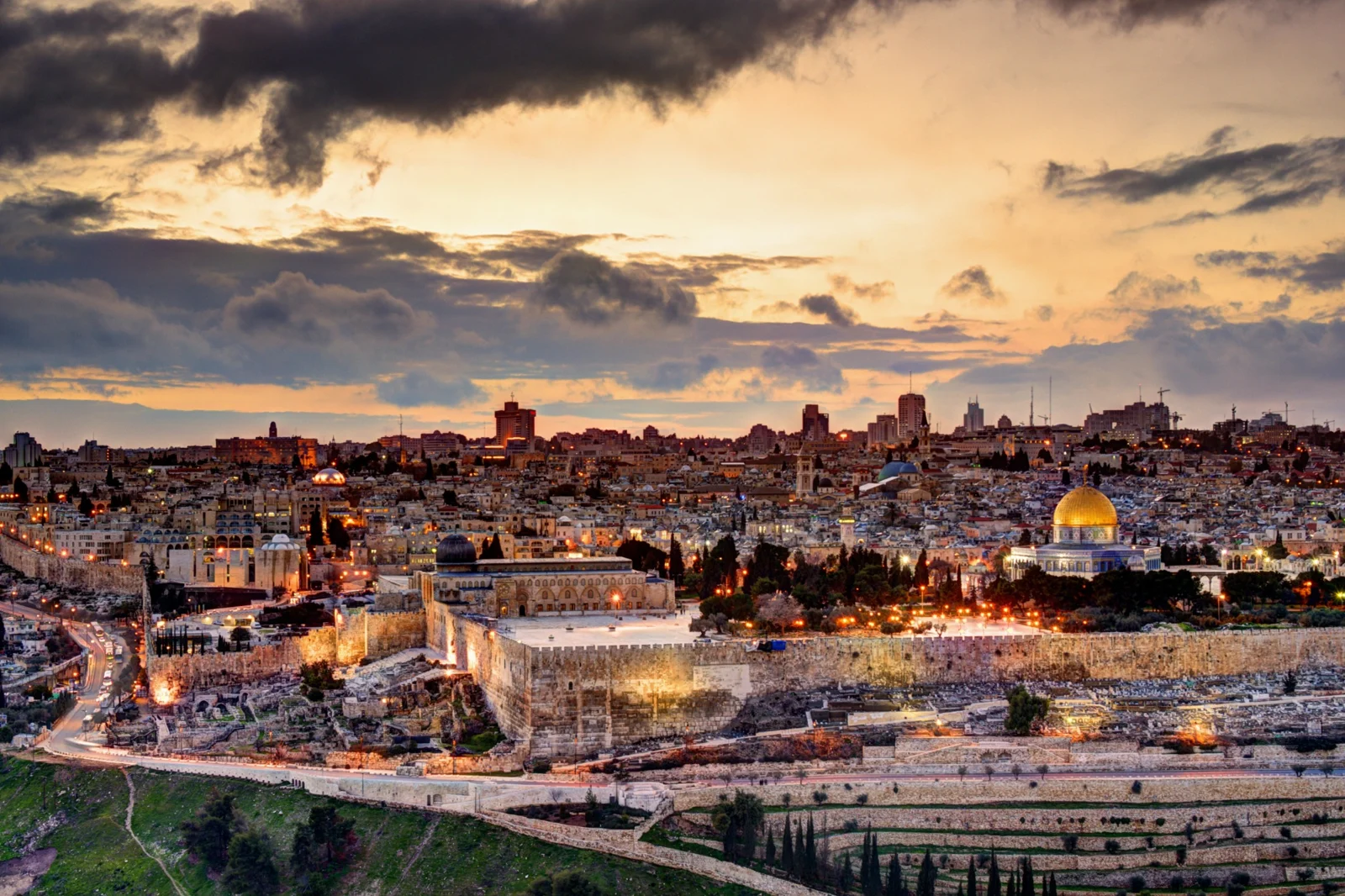
Meeting location unestablishedJerusalem is a real city with a documented multilayered sacred landscape, recognized by UNESCO. That heritage status does not identify the Valley of Shaveh mentioned in the chapter or the spot where bread and wine were offered. Salem’s association with Jerusalem is part of the biblical and interpretive discussion, not an excavated plaque naming this meeting. No structure visible today should be labeled Melchizedek’s hall on this page.
Connection to the event
Salem associated with JerusalemChristian interpretation connects Melchizedek with the priestly language of Psalm 110 and Hebrews, and often reads the bread and wine in relation to the Eucharist. These are important theological connections, but they are later readings of Genesis, not additional physical evidence. Jewish interpretation also gives the priest-king a place in a much wider history of reading. A respectful visit leaves room for this layered reception.
What this does not establish
A sanctuary may use this encounter in its teaching without standing on the encounter’s location. Likewise, sharing bread and wine does not establish that Genesis describes every element of a later sacrament. Distinguish the narrative’s own words, later scriptural interpretation, and the geography a modern visitor can actually verify.
Questions to explore
- Use an Old City viewpoint to consider how many historical periods now occupy the city associated with Salem; avoid assigning the scene to whichever monument dominates the photograph.
- Read the blessing and Abram’s refusal of personal enrichment together. Notice how the two royal encounters produce contrasting accounts of what victory might mean.
Plan with the place in mind
- Include this as a reading stop within a Jerusalem heritage walk, rather than paying for a supposedly authenticated meeting chamber.
- Choose a quiet place outside active worship and circulation areas for group discussion. Ask a guide to label tradition explicitly whenever a particular location is proposed.
Opening hours and prices are not live. Before traveling, confirm access, services and local conditions with the site operator and relevant authorities.
No precise location
No marker is placed for the meeting: the Jerusalem association does not locate the Valley of Shaveh or a surviving meeting site.
Take something with you
After an achievement, whose contribution do you acknowledge? Before taking sole credit, name the people who helped and one concrete way to honor their share. Gratitude can interrupt the desire to make success entirely your possession.
Continue in prayer · For ThisSources & further reading
Sources explain the passage, the tradition or the present site; they do not all support the same kind of claim.
Guide prepared: November 12, 2026. AI-assisted synthesis; no independent academic review. Our editorial approach