Read the passage
Genesis 22:1–19
Read the passage within its full chapter, not as an isolated line.
Read the chapter · World English BibleThe narrative follows a promised child into an alarming test. Abraham prepares, travels, and speaks with Isaac, whose question about the offering exposes the tension rather than resolving it. At the crucial moment the messenger stops Abraham, and a ram becomes the offering. The promise is then reaffirmed. Read every stage instead of lifting the language of obedience out of the scene that ends in restraint. The text invites questions about trust, provision, and the cost of understanding a calling; it does not make the reader’s distress illegitimate. In a group, leave room for silence and for participants who cannot discuss threatened harm to a child casually.
What we know — and what remains open
Identification of the place
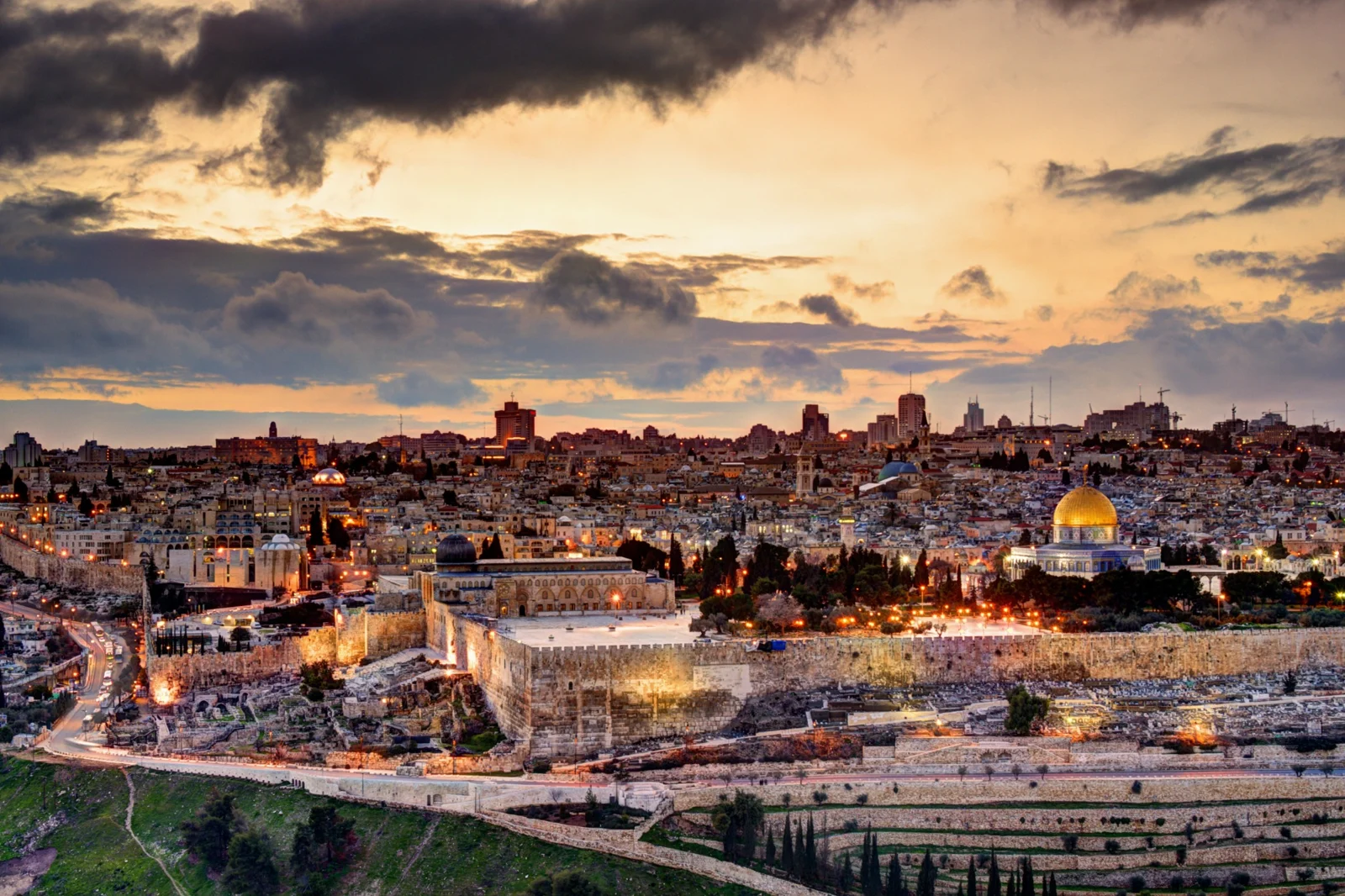
Exact event site unestablishedGenesis names the land of Moriah and a mountain to be indicated, without giving a modern coordinate. Second Chronicles 3:1 explicitly connects Mount Moriah with the Temple in Jerusalem. That connection is a textual foundation for the Jerusalem tradition; it is not an excavated altar bearing Abraham’s name. The present sacred compound contains much later buildings, central to living religious communities.
Connection to the event
Moriah linked to Jerusalem in ScriptureJewish tradition remembers the binding as the Akedah; Christian readings often connect Isaac with later themes of sacrifice and resurrection. The wider Abrahamic sacred landscape also carries Muslim meanings. These connections deserve careful attribution rather than being compressed into a claim that every tradition tells an identical story. An attentive visitor learns which interpretation a guide or sanctuary is presenting.
What this does not establish
This page does not identify the exact stone or altar of the binding. Nor does a religious association grant visitors unrestricted access to a contemporary worship site. Most importantly, the passage must not be used to demand dangerous obedience from a child, partner, or dependent person. Its stopping command belongs within any responsible reading.
Questions to explore
- Read Genesis 22 alongside 2 Chronicles 3:1 before looking across Jerusalem’s sacred landscape; identify what each text adds and what it leaves unspecified.
- Observe the difference between the present architecture of the Temple Mount/Haram al-Sharif and the much earlier setting remembered in the story.
Plan with the place in mind
- Confirm the current visitor arrangements for the specific area you intend to enter, including permitted entrances, dress, and conduct; do not treat a viewpoint and access to the compound as interchangeable.
- A respectful reading can take place at an external viewpoint. For a mixed-faith group, state the interpretive tradition clearly and avoid using the gathering to challenge other worshippers.
Opening hours and prices are not live. Before traveling, confirm access, services and local conditions with the site operator and relevant authorities.
No precise location
No exact binding-site marker: the biblical connection with Jerusalem does not establish a surviving altar or precise modern spot.
Take something with you
What would it mean to recognize an interruption as protection rather than failure? Consider a situation in which stopping, seeking counsel, or refusing harm may be the most faithful next step.
Continue in prayer · For ThisSources & further reading
Sources explain the passage, the tradition or the present site; they do not all support the same kind of claim.
- Genesis 22:1–19 · full biblical text
- UNESCO · Jerusalem sacred heritage
- World English Bible · 2 Chronicles 3
Guide prepared: November 12, 2026. AI-assisted synthesis; no independent academic review. Our editorial approach