Read the passage
Mark 14:32–42
Read the passage within its full chapter, not as an isolated line.
Read the chapter · World English BibleHe said, “Abba, Father, all things are possible to you. Please remove this cup from me. However, not what I desire, but what you desire.”
After the supper, Jesus asks his companions to remain near him while he prays. The passage names distress rather than hiding it. His prayer is not a command for people in danger to refuse help, nor does it imply that fear is a failure of faith. Keep the scene connected to the arrest that follows.
Mark lets distress remain visible. Jesus names his sorrow, asks his companions to stay awake, and repeats his prayer. This is not a scene in which trust eliminates emotion or makes human companionship unnecessary. The sleeping disciples also expose the distance between confident promises and limited endurance. Read the garden alongside Peter’s earlier insistence that he will never fail: the narrative invites humility about our own strength. Its language of surrender should not be turned into advice to remain in abuse or to refuse help. The passage describes Jesus’ particular path toward arrest, not a rule requiring every suffering person to accept preventable harm.
What we know — and what remains open
Identification of the place
Biblical area and sanctuaryMark names Gethsemane; the present sanctuary is at the foot of the Mount of Olives across the Kidron Valley from the Old City.
Connection to the event
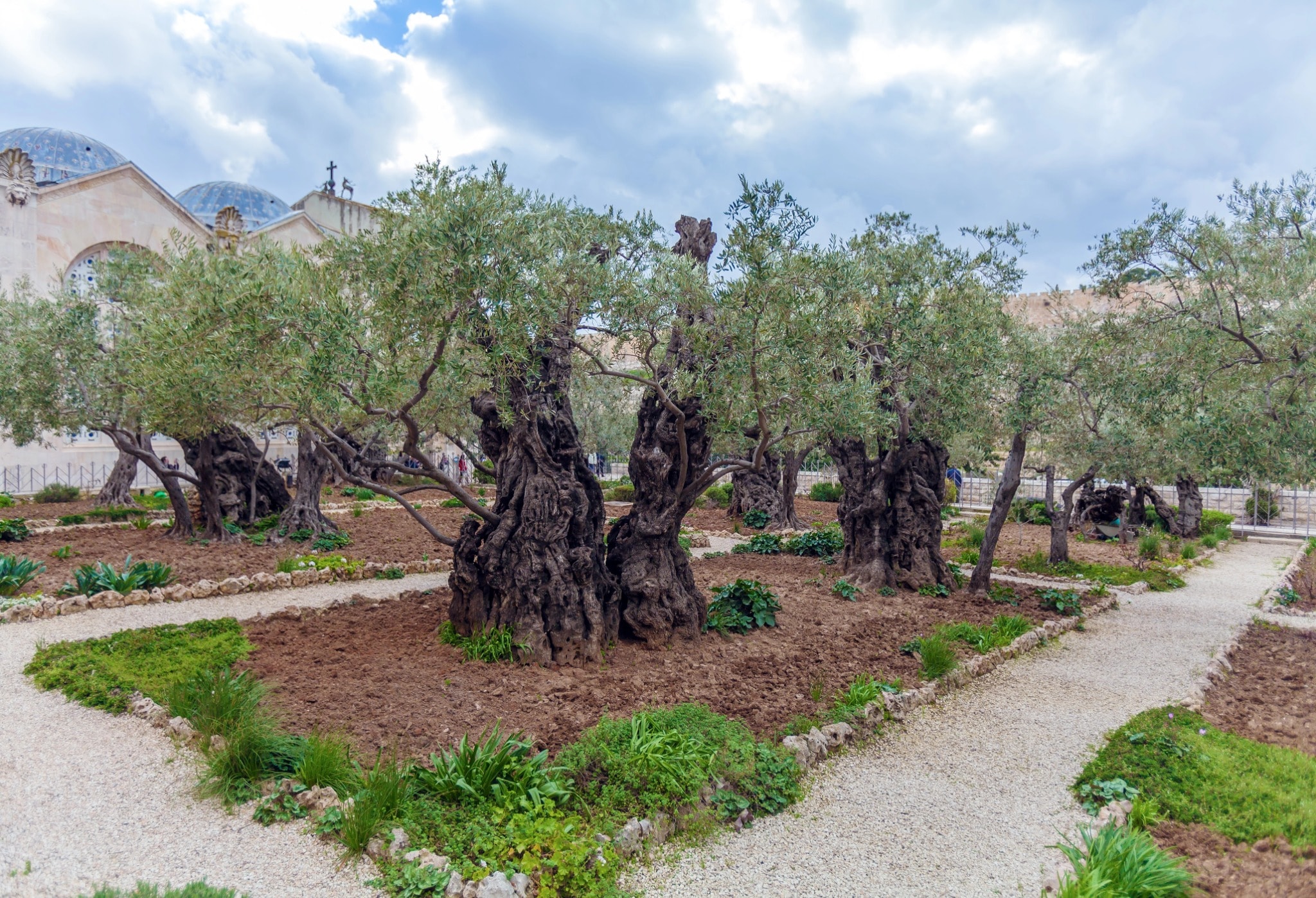
Traditional garden and rockThe garden, basilica and nearby grotto preserve distinct memories of the night of the betrayal. The present basilica, consecrated in 1924, stands over earlier church remains.
What this does not establish
The rock and individual olive trees are objects of devotion, not proof of Jesus’ exact praying position. The Gospel does not identify any surviving tree.
What to notice when you visit
- Spend time in the olive garden, then enter the basilica if worship arrangements permit.
- If continuing to the grotto, recognize it as a separate commemorative space rather than another entrance to the same church.
Plan with the place in mind
- Plan your approach and road crossings at the base of the Mount of Olives; do not follow a map line across traffic without checking the pedestrian route.
- A descent from the upper Mount of Olives can be steep. Arrange a vehicle alternative for visitors who need it.
- Ask permission before group readings or photography during services, and keep garden paths clear.
Opening hours and prices are not live. Before traveling, confirm access, services and local conditions with the site operator and relevant authorities.
Approximate visitor landmark; not a boundary or proof of the historical event. Open map
Take something with you
Who could you ask to stay alongside you during a difficult time?
Continue in prayer · For ThisSources & further reading
Sources explain the passage, the tradition or the present site; they do not all support the same kind of claim.
- Mark 14:32–42 · full biblical text
- Custody · Gethsemane, garden, grotto and basilica
- Christian Information Center · Jerusalem visit
Guide prepared: November 12, 2026. AI-assisted synthesis; no independent academic review. Our editorial approach