Read the passage
Acts 1:6–14
Read the passage within its full chapter, not as an isolated line.
Read the chapter · World English BibleWhen he had said these things, as they were looking, he was taken up, and a cloud received him out of their sight.
The disciples ask whether the kingdom will now be restored to Israel. Jesus redirects their attention from knowing times and seasons to receiving the Spirit and becoming witnesses. The geographical movement in verse 8—from Jerusalem through Judea and Samaria toward the ends of the earth—opens the larger story of Acts. After Jesus is taken from their sight, they are questioned about their upward gaze. Their next action is to return to Jerusalem, where prayer is shared by the apostles, the women, Mary and Jesus’ brothers. Read the gathering as carefully as the departure. This passage does not provide a timetable for predicting the end of history, and waiting here is not simply doing nothing. It belongs to preparation for a mission that will require both courage and community.
What we know — and what remains open
Identification of the place
Biblical mountain identifiedActs identifies the Mount of Olives as the place from which the disciples return. The present chapel is a specific commemorative landmark on that ridge, in the At-Tur neighborhood. Biblical identification of the mountain is broader than identification of the exact stone or footprint shown inside the shrine.
Connection to the event
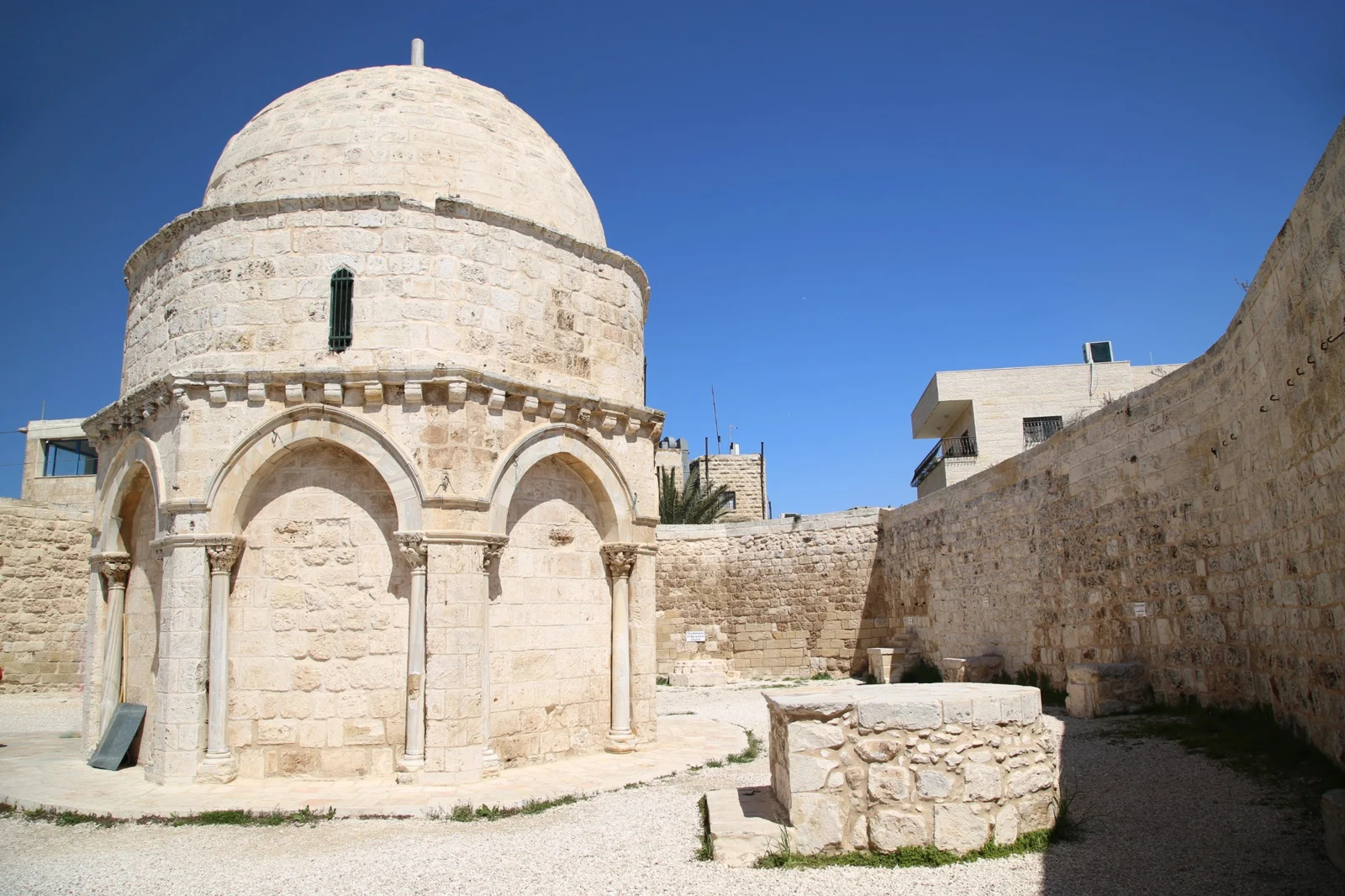
Traditional shrine and footprint attributionChristian tradition venerates a mark in the rock as Jesus’ footprint. The small octagonal shrine preserves medieval architecture and later modifications. The compound is administered by the Muslim waqf, while Christian communities celebrate the Ascension here under established arrangements. Its layered religious history is part of the place a visitor encounters today.
What this does not establish
Neither the building nor the impression in the rock independently verifies the Ascension. The present shrine is not a first-century structure, and the Gospel narrative should not be reduced to finding a physical trace. Christian and Muslim associations with the site also do not mean that all communities interpret the event identically. Present the footprint as a devotional tradition, not an authenticated relic.
What to notice when you visit
- Notice the intimate scale of the octagonal shrine. It invites a different pace from a large basilica: enter quietly, observe, and allow the next visitor space.
- Look at the framed rock with the distinction between devotion and verification in mind. The tradition can be described respectfully without claiming a scientific conclusion.
- Read Acts 1:12–14 after leaving the chapel. The return to shared prayer completes the scene and connects this stop with the wider Jerusalem story.
Plan with the place in mind
- Specify the small Chapel of the Ascension in At-Tur when arranging transport. Other Mount of Olives churches also bear the Ascension name, so a generic destination can cause confusion.
- Confirm current entry arrangements locally and follow the custodian’s directions on dress, photography and religious observance. A public visiting period does not automatically permit a group service.
- For a combined Mount of Olives visit, arrange transport between stops if steep walking is difficult. Ask about the actual doorway, surface and resting places; proximity on a map is not an accessibility assessment.
Opening hours and prices are not live. Before traveling, confirm access, services and local conditions with the site operator and relevant authorities.
Approximate visitor landmark; not a boundary or proof of the historical event. Open map
Take something with you
Instead of trying to resolve every unknown about the future, choose one act of faithful presence today. Pray with someone, keep a promise, or bring practical help to a person outside your usual circle.
Continue in prayer · For ThisSources & further reading
Sources explain the passage, the tradition or the present site; they do not all support the same kind of claim.
- Acts 1:6–14 · full biblical text
- Custody of the Holy Land · Ascension celebration and shrine history
- Destination Palestine · Chapel of the Ascension
Guide prepared: November 12, 2026. AI-assisted synthesis; no independent academic review. Our editorial approach