Read the passage
Luke 22:7–20
Read the passage within its full chapter, not as an isolated line.
Read the chapter · World English BibleHe took bread, and when he had given thanks, he broke and gave it to them, saying, “This is my body which is given for you. Do this in memory of me.”
The meal is prepared in the setting of Passover. Jesus shares bread and a cup with his disciples before the betrayal and arrest. Reading the surrounding chapter also reveals disagreement about greatness and the call to service. A visit should leave room for those difficult relationships, not only a picturesque table imagined in an empty hall.
Luke places an uncomfortable argument beside the shared meal: the disciples dispute which of them is greatest. Jesus answers by contrasting domination with service and locating himself among them as the one who serves. The setting is therefore not only about remembering words over bread and wine; it also tests how a community treats its members. Betrayal and Peter’s coming denial remain in the same chapter. A carefully read supper does not portray an already perfect group. It shows a vulnerable community receiving a pattern of remembrance, responsibility, and care that it still has to learn to practice.
What we know — and what remains open
Identification of the place
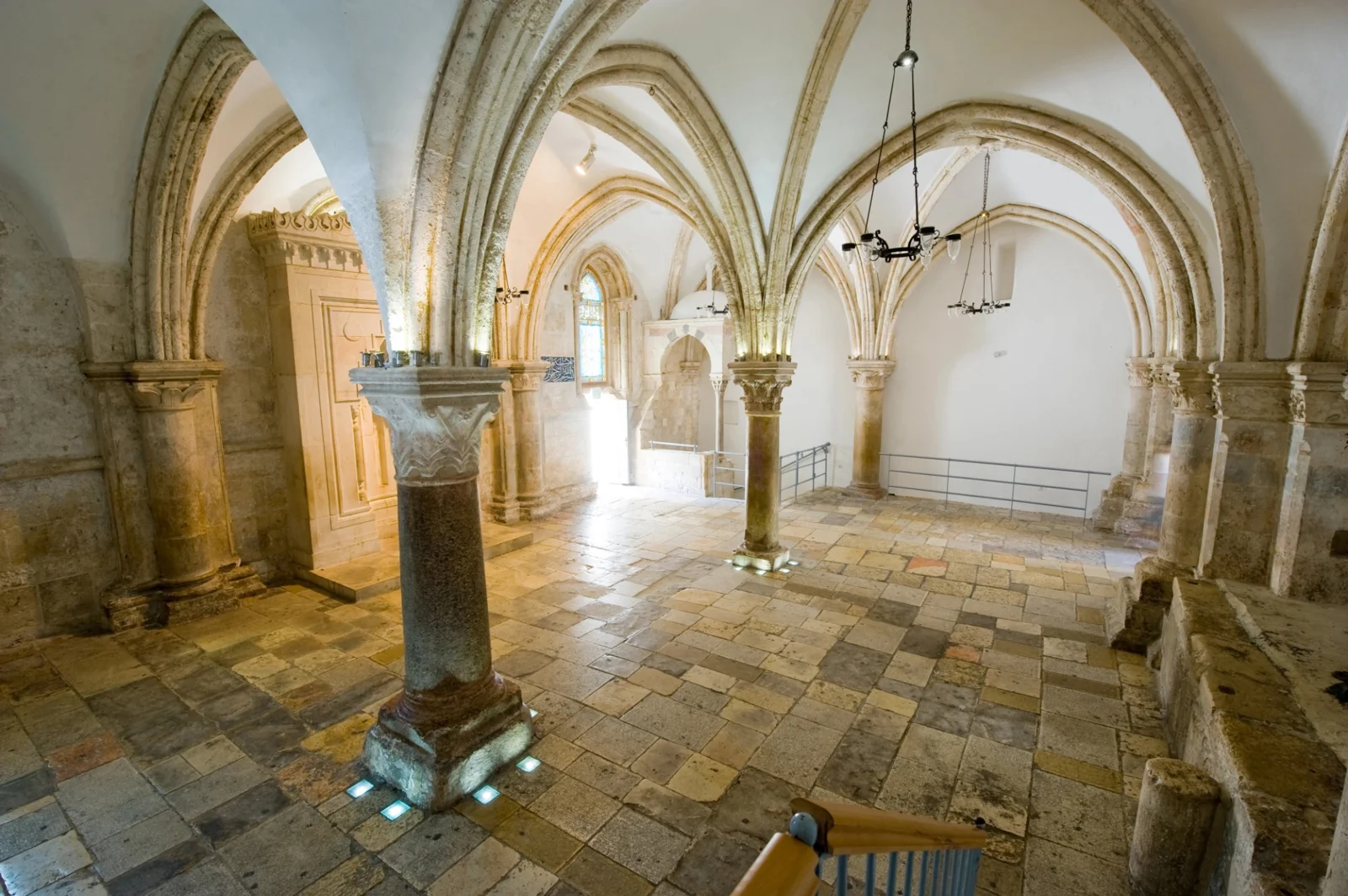
Medieval room identifiedThe Cenacle is a specific room in the Mount Zion complex. Luke describes an upper room in Jerusalem but does not give an address that independently identifies this building.
Connection to the event
Traditional supper locationChristian tradition associates Mount Zion with the Last Supper and Pentecost. The present room reflects medieval construction and a later history that includes use as a mosque.
What this does not establish
Later architecture and a long tradition do not establish the original room’s dimensions or furniture. The nearby Franciscan “Little Cenacle” is a different sanctuary, not the same room.
What to notice when you visit
- Observe the room’s architecture and its layered religious history.
- If visiting the nearby Franciscan chapel, distinguish its contemporary worship role from the traditional Cenacle room.
Plan with the place in mind
- Approach Mount Zion from the area of Zion Gate and confirm the exact entrance locally.
- Do not assume a group may celebrate Mass inside the Cenacle. Arrange worship separately with the appropriate community.
- Ask about steps to the upper room before bringing someone who cannot use stairs; plan a meaningful alternative on Mount Zion if needed.
Opening hours and prices are not live. Before traveling, confirm access, services and local conditions with the site operator and relevant authorities.
Approximate visitor landmark; not a boundary or proof of the historical event. Open map
Take something with you
At your next shared meal, give someone your full attention before reaching for your phone.
Continue in prayer · For ThisSources & further reading
Sources explain the passage, the tradition or the present site; they do not all support the same kind of claim.
- Luke 22:7–20 · full biblical text
- Custody · Cenacle tradition and the Little Cenacle
- Custody · Mount Zion visitor contact
Guide prepared: November 12, 2026. AI-assisted synthesis; no independent academic review. Our editorial approach