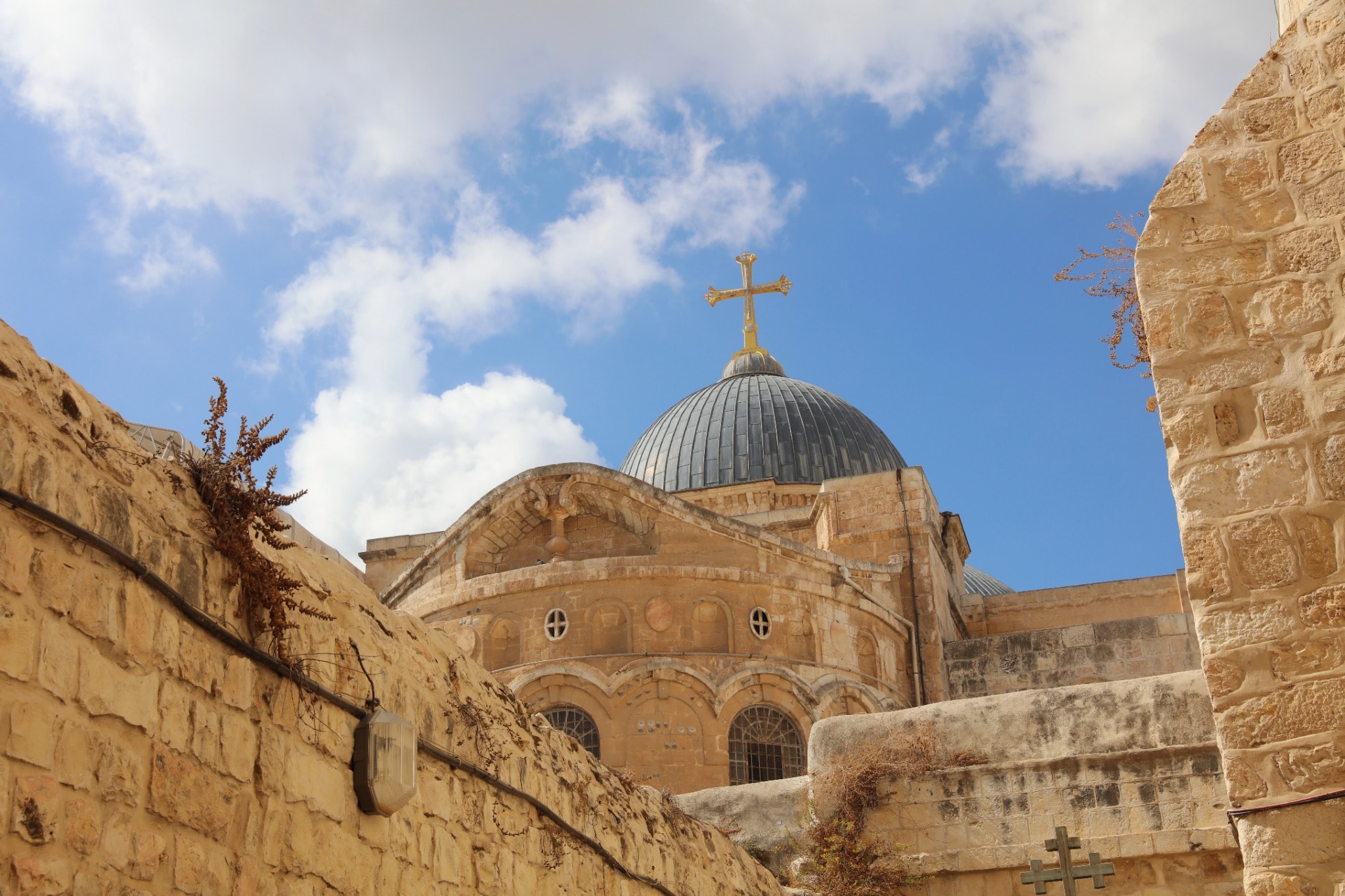
Read the passage
John 20:1–18
Read the passage within its full chapter, not as an isolated line.
Read the chapter · World English BibleSo then the other disciple who came first to the tomb also entered in, and he saw and believed.
Mary Magdalene comes to the tomb, reports the missing body, and later recognizes Jesus when he calls her by name. The narrative moves through bewilderment, grief and recognition rather than instant certainty for everyone. Read John 19:38–42 first for the burial setting and avoid combining every Gospel detail into a single quotation.
John distinguishes several moments of seeing and understanding. Mary first interprets the missing body as removal; the two disciples inspect the linen cloths; Mary later recognizes Jesus when he addresses her. These are not interchangeable reactions compressed into a single instant. Reading the chapter carefully also keeps the women’s witness central and carries the story beyond an empty space to an encounter and a message entrusted to others. The church can help a visitor remember that narrative, but architectural grandeur is not the narrative’s proof. The passage itself directs attention to testimony, recognition, and the life its author hopes readers will receive.
What we know — and what remains open
Identification of the place
Archaeological layers documentedArchaeological investigation documents a former quarry beneath the church and the development of the Christian complex. These are physical findings about the site’s history.
Connection to the event
Ancient tomb traditionThe basilica preserves the ancient Christian identification of Golgotha and Jesus’ tomb. Greek Orthodox, Armenian and Catholic communities share major responsibilities within the sanctuary.
What this does not establish
Evidence of a quarry, burial environment or early church cannot by itself identify a deceased person or verify a resurrection. State the archaeological findings and the Christian belief separately, with respect for both.
What to notice when you visit
- Locate the Edicule surrounding the traditional tomb before joining its queue.
- If your route permits, visit the Calvary chapels as a distinct part of the complex and notice the movement between death, burial and resurrection in the readings.
Plan with the place in mind
- Allow a flexible visit: queues, liturgies and conservation work can affect the route through the church.
- The Calvary chapels and tomb have different access constraints. Ask specifically about stairs and confined spaces rather than assuming the whole complex has one accessibility level.
- Use a designated meeting point outside crowded devotional areas; group members can become separated between chapels and queues.
Opening hours and prices are not live. Before traveling, confirm access, services and local conditions with the site operator and relevant authorities.
Approximate visitor landmark; not a boundary or proof of the historical event. Open map
Take something with you
Give yourself permission to bring both hope and unanswered questions to this reading.
Continue in prayer · For ThisSources & further reading
Sources explain the passage, the tradition or the present site; they do not all support the same kind of claim.
- John 20:1–18 · full biblical text
- Custody · Holy Sepulchre sanctuary
- Sapienza University · 2024 archaeological report
- Sapienza University · excavation findings
Guide prepared: November 12, 2026. AI-assisted synthesis; no independent academic review. Our editorial approach