Read the passage
Acts 11:19–30
Read the passage within its full chapter, not as an isolated line.
Read the chapter · World English BibleThe story begins with people scattered by the persecution connected with Stephen. Some reach Antioch, where the message crosses further linguistic and social boundaries. News reaches Jerusalem and Barnabas is sent to investigate. His response is joy and encouragement, not an attempt to erase the new community’s character. He then travels to find Saul and brings him into a year of teaching. Within that process Acts notes that the disciples were first called Christians. Read on to the famine relief: the community that receives a name also sends material help to believers in Judea, according to people’s ability. Identity becomes visible through teaching, relationship, and generosity rather than a label alone. Ask what a community would be called if neighbors named it from its actual conduct. The passage does not identify who coined the word, whether it began as praise or criticism, or the building in which somebody first used it.
What we know — and what remains open
Identification of the place
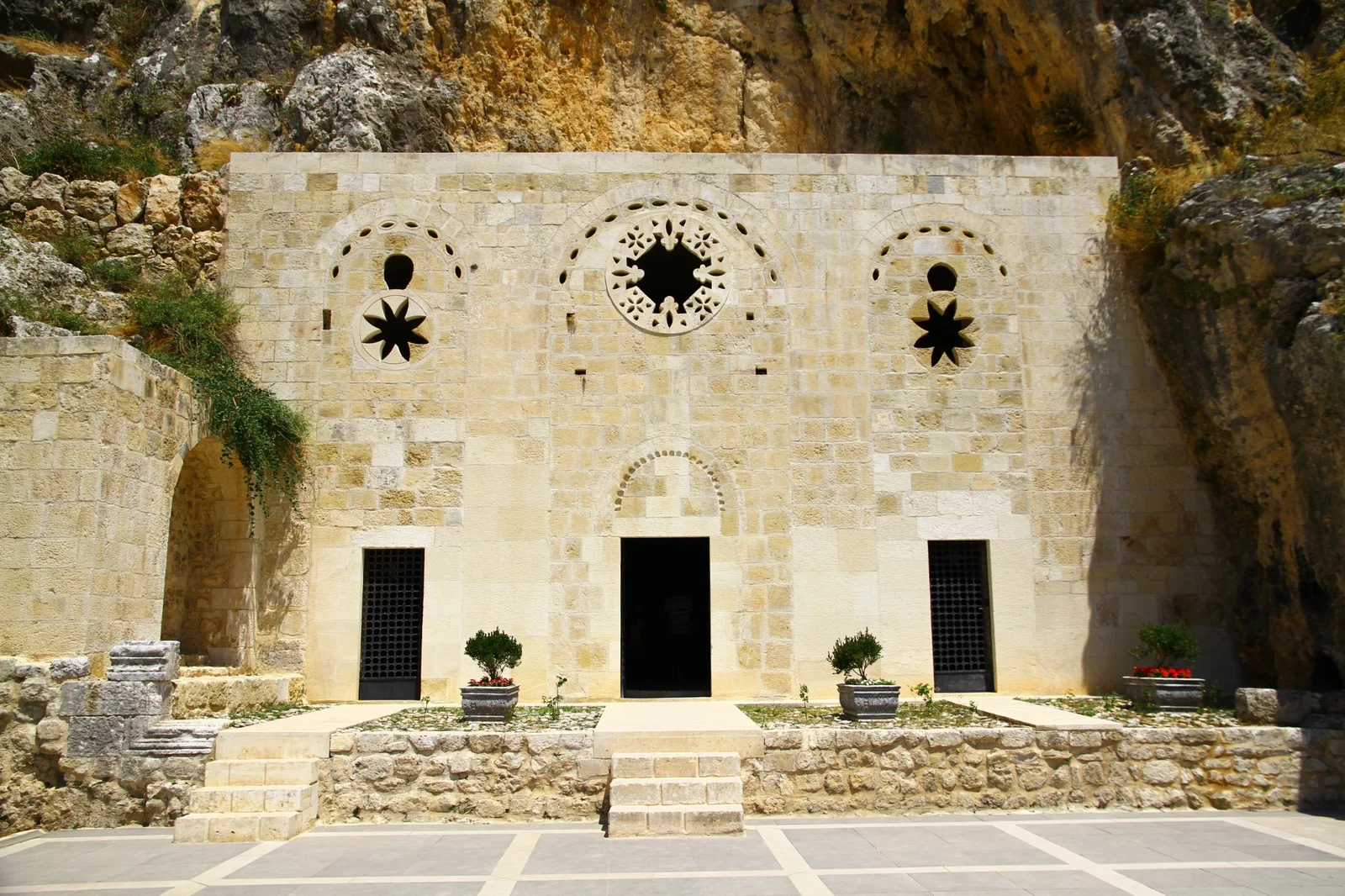
Antioch identified with AntakyaAntioch on the Orontes corresponds to Antakya in present-day Türkiye. Official cultural sources locate Saint Peter’s Cave Church at the foot of the Habib-i Neccar mountain area. This is not Pisidian Antioch near Yalvaç, another city appearing in Acts. Keeping the two Antiochs separate is essential for both reading and travel.
Connection to the event
Cave church preserves Christian memoryThe cave church is an important memorial of Antioch’s Christian heritage and is presented by Turkish cultural authorities as a religious monument. A connection with Peter or the earliest believers belongs to its received tradition. The existence of a later place of worship does not establish the first congregation’s meeting address.
What this does not establish
Avoid promotional claims that this is certainly the world’s first church or the exact room where Christianity received its name. Acts describes a citywide community and an extended period of teaching. Surviving religious fabric tells a history of remembrance that must be distinguished from the date of the biblical events.
Questions to explore
- Study the cave church’s setting through official heritage information before treating it as a portrait of a first-century meeting.
- On a regional map, place Antakya, Cyprus, Tarsus, and Jerusalem together; Barnabas’s movement makes Antioch part of a connected network rather than an isolated shrine.
Plan with the place in mind
- Check the museum authority’s latest access and restoration information before planning. Older photographs and opening listings are not enough for a city affected by major earthquake damage.
- Treat local residents and recovery work with care. Arrange any visit through current official guidance, and keep a remote study option if access is unavailable.
Opening hours and prices are not live. Before traveling, confirm access, services and local conditions with the site operator and relevant authorities.
No precise location
No exact event location is established; the named visitor site is a contextual or traditional landmark, not a verified event pin.
Take something with you
Choose one action that would make your community’s name credible to a stranger: patient teaching, practical relief, or welcome across a boundary. Let the action explain the label rather than expecting the label to do the work.
Continue in prayer · For ThisSources & further reading
Sources explain the passage, the tradition or the present site; they do not all support the same kind of claim.
- Acts 11:19–30 · full biblical text
- Türkiye Ministry of Culture and Tourism · Hatay
- Hatay Municipality · Saint Pierre Church
- Museum Directorate · Hatay
Guide prepared: November 12, 2026. AI-assisted synthesis; no independent academic review. Our editorial approach