Read the passage
Acts 13:4–12
Read the passage within its full chapter, not as an isolated line.
Read the chapter · World English BibleThe journey begins with a community sending Barnabas and Saul, not with an isolated religious adventurer. They sail to Cyprus, proclaim in the synagogues at Salamis, and cross the island with John assisting them. At Paphos the proconsul Sergius Paulus wants to hear the word, while Elymas attempts to divert him. Saul, now also identified as Paul, confronts the obstruction; the narrative describes temporary blindness and the official’s response to what he sees and hears. Notice that Acts explicitly pairs the governor’s astonishment with the teaching, not simply with a dramatic display. This is also where the narrative introduces the alternative name Paul; it does not say that his name changed on the Damascus road. Ask what distinguishes a sincere request to hear from someone else’s attempt to control access to the conversation. The conflict concerns particular participants and cannot be turned into a judgment against all people sharing Elymas’s Jewish identity.
What we know — and what remains open
Identification of the place
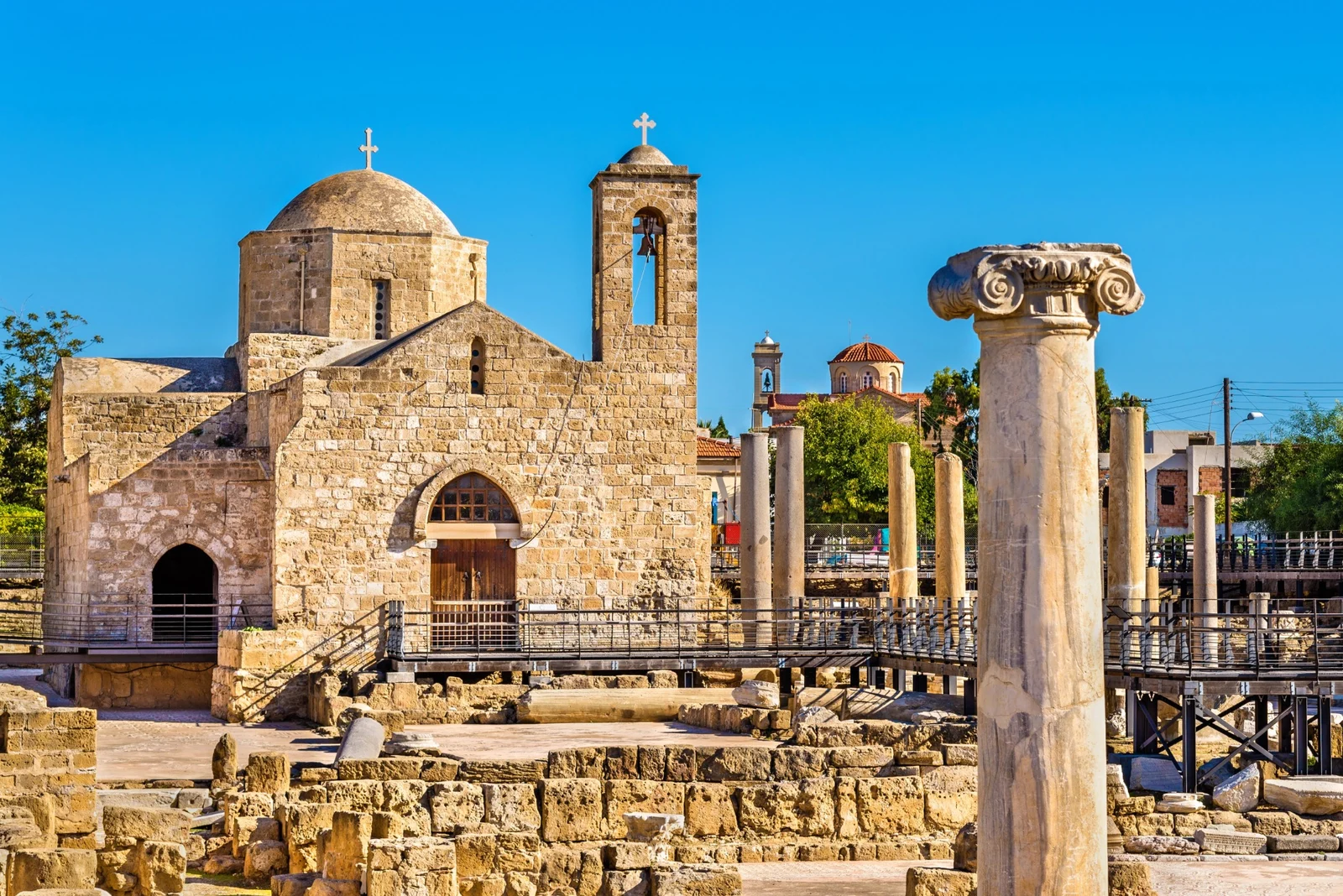
Paphos identified; audience location unknownPaphos is named in Acts. The official Cyprus tourism authority describes the Chrysopolitissa archaeological complex and Agia Kyriaki church in Kato Paphos, including the pillar associated with Paul. Its visible Christian remains belong to later centuries and illustrate the city’s subsequent religious history rather than the governor’s first-century audience.
Connection to the event
Pillar flogging is outside the Acts accountLocal tradition says Paul was tied to the pillar and flogged. The official tourism presentation identifies this as tradition. Acts 13 does not narrate that flogging, give a number of lashes, or identify this column. Keeping that distinction visible allows a visitor to appreciate the memorial without adding an episode to Scripture.
What this does not establish
A pillar’s survival cannot prove that Paul touched it, and the archaeological complex is not the demonstrated residence of Sergius Paulus. The blindness episode is not a general claim that disability reveals moral failure. Avoid using it to shame people who disagree or to imply that religious persuasion should imitate coercion.
Questions to explore
- Compare the pillar, the later basilica remains, and the standing church as different layers of Christian memory within one complex.
- Trace Salamis and Paphos on a map before reading: Acts describes an island journey, not simply a visit to the one photographed column.
Plan with the place in mind
- Confirm current church and archaeological-area access with the local operator. Worship and protected remains can require different visitor behavior and routes.
- Stay on authorized paths and do not touch or climb ruins for a photograph. Combine the reading with the surrounding city rather than promising a verified apostolic courtroom.
Opening hours and prices are not live. Before traveling, confirm access, services and local conditions with the site operator and relevant authorities.
No precise location
No exact event location is established; the named visitor site is a contextual or traditional landmark, not a verified event pin.
Take something with you
When sharing a meaningful tradition, practice saying clearly what the source reports and what later memory adds. Honesty does not weaken a good story; it helps another person know how to receive it responsibly.
Continue in prayer · For ThisSources & further reading
Sources explain the passage, the tradition or the present site; they do not all support the same kind of claim.
- Acts 13:4–12 · full biblical text
- Visit Cyprus · Chrysopolitissa and Saint Paul’s Pillar
- Pafos regional tourism · Saint Paul’s Pillar
Guide prepared: November 12, 2026. AI-assisted synthesis; no independent academic review. Our editorial approach