Read the passage
Genesis 11:1–9
Read the passage within its full chapter, not as an isolated line.
Read the chapter · World English BibleThe builders share speech, settle on a plain, and organize a construction project. Their stated ambitions include making a name and avoiding dispersal. The narrator then portrays God coming down to examine the supposedly heaven-reaching work. The irony invites attention to the difference between human self-importance and actual scale. The outcome is scattered people and disrupted communication. Read the passage beside the following call of Abram, where blessing is directed toward the families of the earth. The point is not that brickmaking, urban life, or learning another language is sinful. The more searching question is what happens when belonging depends on everyone joining one project of collective self-glorification.
What we know — and what remains open
Identification of the place
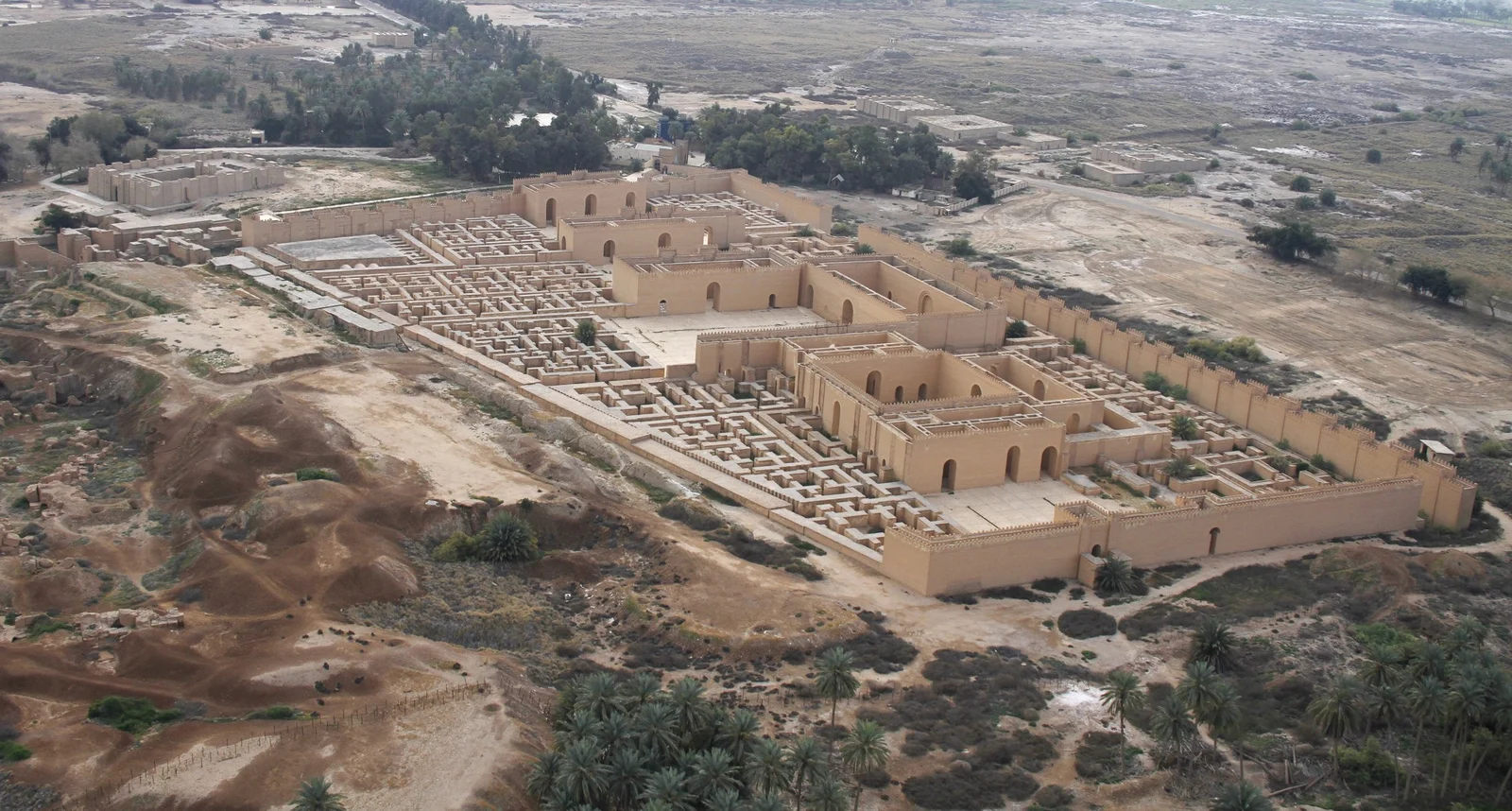
Ancient city identifiedBabylon is a documented archaeological city, protected as a UNESCO World Heritage property. The Etemenanki ziggurat belongs to its ancient monumental history and is frequently discussed as a contextual comparison for the biblical tower. This is a comparison between a known kind of building and a narrative, not an inscription identifying the tower of Genesis. The surviving site must also be distinguished from modern reconstructions.
Connection to the event
Tower association interpretiveArtists often depict Babel as a spiraling tower, although Genesis provides no such architectural description. Those images belong to the history of interpretation. A visitor who first sketches only what the passage actually says will notice how strongly later pictures have shaped expectations. Etemenanki provides a better historical question than an imagined photograph of the event: how did monumental religion and royal power organize a city?
What this does not establish
Neither the existence of a ziggurat nor the identification of Babylon demonstrates a single historical moment when every language began. Conversely, uncertainty about the tower does not erase the city’s archaeological value. Keep separate the evidence for urban remains, proposals about literary background, and theological interpretations of human ambition.
Questions to explore
- Use the site plan to distinguish the ziggurat area from palaces, processional spaces, and reconstructed features; a broad view helps prevent several monuments being collapsed into one imagined tower.
- Compare ancient construction materials and the organization of monumental space with the builders’ collective language in Genesis.
Plan with the place in mind
- Make Babylon an archaeological visit with a specialist local guide, not a stop advertised as proof that all languages originated here. Confirm current arrangements through the responsible site authority.
- Allow time for interpretation before photographing ruins. Ask which features are excavated, reconstructed, or inferred, and request the guide’s source when a biblical identification is presented as certain.
Opening hours and prices are not live. Before traveling, confirm access, services and local conditions with the site operator and relevant authorities.
No precise location
No event pin: Babylon is the archaeological context; a precise tower in the Genesis narrative is not established here.
Take something with you
Where does your community make room for difference? Try listening to someone whose background or language is not your own before proposing a common goal. Unity becomes more generous when it is not confused with uniformity.
Continue in prayer · For ThisSources & further reading
Sources explain the passage, the tradition or the present site; they do not all support the same kind of claim.
Guide prepared: November 12, 2026. AI-assisted synthesis; no independent academic review. Our editorial approach