Read the passage
Matthew 3:13–17
Read the passage within its full chapter, not as an isolated line.
Read the chapter · World English BibleBehold, a voice out of the heavens said, “This is my beloved Son, with whom I am well pleased.”
Jesus comes from Galilee to John at the Jordan. The scene belongs to the beginning of his public ministry, with the Spirit and the heavenly voice central to the narrative. John 1:28 separately names Bethany beyond the Jordan as a place of John’s activity. Neither passage provides a modern visitor entrance or GPS point.
John’s call to repentance comes before the baptism of Jesus and challenges reliance on inherited status. He asks for a changed life, not merely a religious appearance. When Jesus arrives, John initially objects; Matthew preserves this conversation rather than presenting the ceremony as routine. The voice and the descent of the Spirit identify Jesus before the public ministry unfolds. The river therefore connects preparation with vocation. For a visitor, the most searching question is not whether touching this water reproduces the event, but how a remembered commitment becomes visible in conduct after returning home.
What we know — and what remains open
Identification of the place
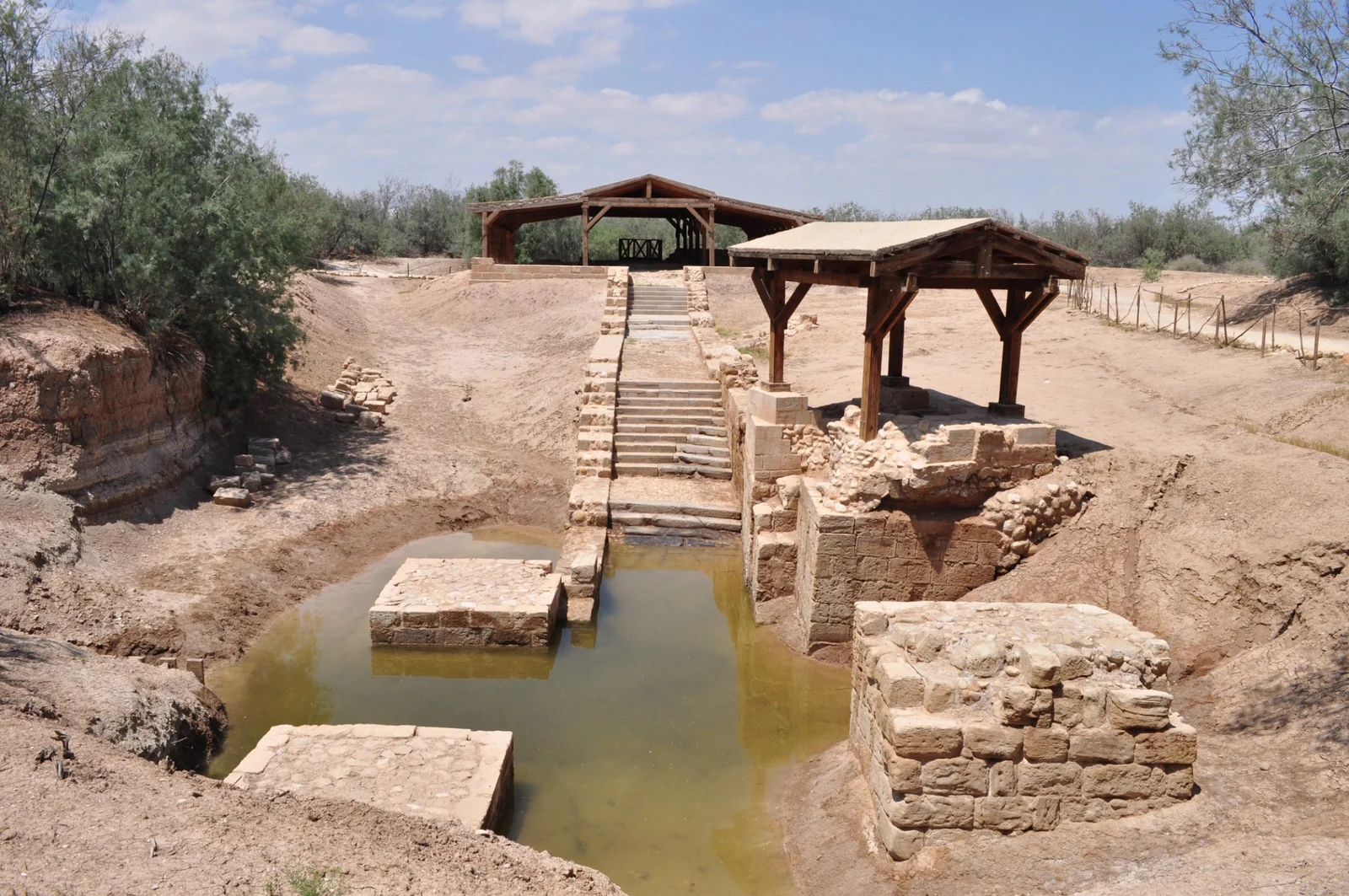
Archaeological pilgrimage siteUNESCO’s listed Al-Maghtas property is in Jordan, north of the Dead Sea. Its archaeological remains include churches and baptismal installations.
Connection to the event
Ancient baptism-site traditionChristian tradition associates the area with Jesus’ baptism. The excavated pilgrimage landscape supports the history of that association.
What this does not establish
Pilgrimage remains do not establish the precise point in the ancient river where the baptism happened. Yardenit near the Sea of Galilee is a different modern baptism destination and must not be substituted for this location.
What to notice when you visit
- Follow the authorized visitor route through the archaeological pilgrimage area.
- Visit the river viewpoint as directed by site staff; the opposite bank belongs to a different access system.
Plan with the place in mind
- Choose your bank before booking transport: Al-Maghtas is approached from Jordan, while Qasr al-Yahud is approached from the West Bank. There is no visitor footbridge between them.
- Check the official visitor page for entry, guide and shuttle arrangements. Arrange a baptism with the operator in advance rather than entering the water independently.
- Carry water and sun protection; ask the operator about the walking distance and suitable route for your mobility needs.
Opening hours and prices are not live. Before traveling, confirm access, services and local conditions with the site operator and relevant authorities.
Approximate visitor landmark; not a boundary or proof of the historical event. Open map
Take something with you
What commitment do you want to renew in ordinary life after this visit?
Continue in prayer · For ThisSources & further reading
Sources explain the passage, the tradition or the present site; they do not all support the same kind of claim.
- Matthew 3:13–17 · full biblical text
- UNESCO · Baptism Site “Bethany Beyond the Jordan”
- Baptism Site Commission · how to visit
- Israel Nature and Parks Authority · Qasr al-Yahud
Guide prepared: November 12, 2026. AI-assisted synthesis; no independent academic review. Our editorial approach