Read the passage
1 Samuel 24
Read the passage within its full chapter, not as an isolated line.
Read the chapter · World English BibleSaul resumes his pursuit with a large force after hearing that David is in the wilderness of En Gedi. Inside the cave, David’s companions interpret the moment as permission to kill. David instead cuts a corner of Saul’s garment, then feels troubled even by that gesture. He restrains his men and later speaks from a distance, using the piece of cloth as evidence that he could have killed Saul but did not. The conversation moves through accusation, appeal, recognition, and tears. Saul acknowledges David’s restraint and asks him not to destroy his descendants. Crucially, the chapter does not conclude with David moving back into Saul’s household. Saul returns home while David and his men go to their stronghold. Mercy and prudent distance coexist. This matters when the story is applied to conflict: refusing revenge does not require surrendering boundaries, denying danger, or trusting an apology before conduct changes. The narrative invites examination of how readily a group can call its preferred violent solution a divine opportunity.
What we know — and what remains open
Identification of the place
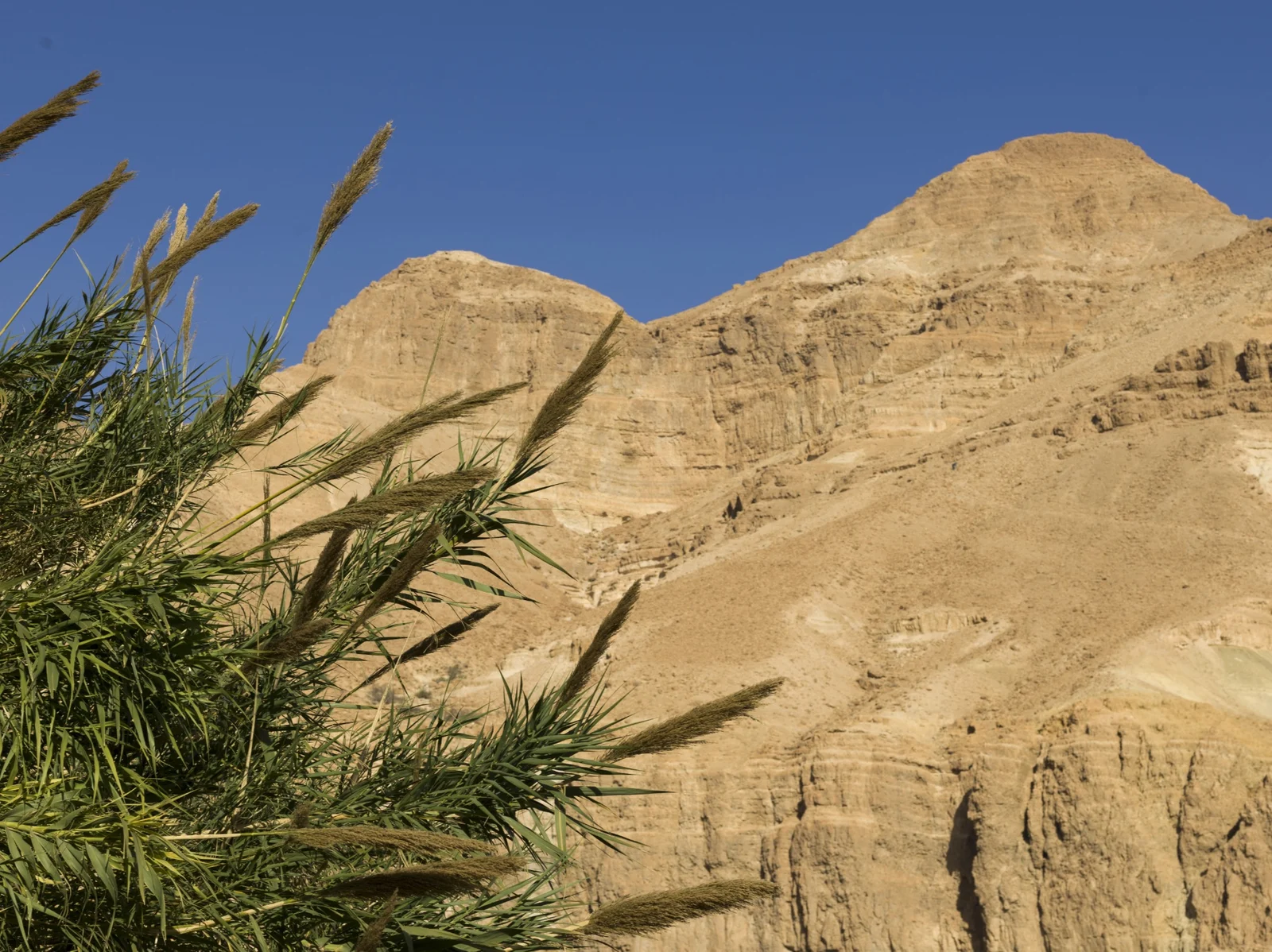
Biblical oasis; cave unknownEn Gedi is a recognizable oasis and biblical regional setting beside the Dead Sea. The nature reserve’s streams, cliffs, and shelters make the landscape intelligible. They do not identify the cave described in First Samuel, and a modern trail name is not archaeological proof.
Connection to the event
Interpretation and commemorationThe oasis has become a natural place to remember David’s wilderness years. Reading here can bring out the contrast between shelter and exposure. Keep that act of remembrance distinct from a claim that any accessible cave was the scene of Saul’s encounter.
What this does not establish
The landscape cannot establish the dialogue, the garment, or the exact route of pursuit. This is also not a rule that victims must privately confront an aggressor. David speaks with separation and support; readers should not erase those details when drawing ethical lessons.
Questions to explore
- Observe the contrast between the watered oasis and surrounding exposed slopes, using an open marked route.
- Compare the refuge imagery in the chapter with the actual visibility of cliffs and paths, without entering unmarked caves.
Plan with the place in mind
- Consult the Israel Nature and Parks Authority before departure: flood damage and weather can change which En Gedi routes are available.
- Choose your route by actual difficulty and mobility needs, not its biblical name. Carry water, respect closure barriers, and ask about accessible viewing options at the entrance.
Opening hours and prices are not live. Before traveling, confirm access, services and local conditions with the site operator and relevant authorities.
No precise location
The story names En Gedi; no specific cave is securely identified.
Take something with you
Think of a moment when you could embarrass someone who harmed you. What response would protect you while refusing needless retaliation? Identify one boundary and one action that keep both concerns visible.
Continue in prayer · For ThisSources & further reading
Sources explain the passage, the tradition or the present site; they do not all support the same kind of claim.
Guide prepared: November 12, 2026. AI-assisted synthesis; no independent academic review. Our editorial approach