Read the passage
1 Kings 18:16–46
Read the passage within its full chapter, not as an isolated line.
Read the chapter · World English BibleThe confrontation follows a devastating drought. Before the public contest, the chapter introduces Obadiah, who has protected prophets at considerable personal risk while serving within Ahab’s household. His presence complicates any claim that faithfulness is visible only in a single heroic figure. Elijah challenges the people’s divided allegiance, repairs an altar with twelve stones, and prays for recognition of God and the turning of hearts. Fire is the narrative’s decisive sign, but it is not the chapter’s only movement: there is also the return of rain after repeated looking toward the sea. The violent killing of Baal’s prophets must not be edited out of the story or turned into permission for modern religious violence. Read the episode as an ancient, difficult account of covenant conflict, rather than a model for humiliating or harming people of another faith. The central interpretive challenge is whether our attention goes to spectacle alone or also to the quieter courage represented by Obadiah, the repair of what is broken, and the patient expectation of rain.
What we know — and what remains open
Identification of the place
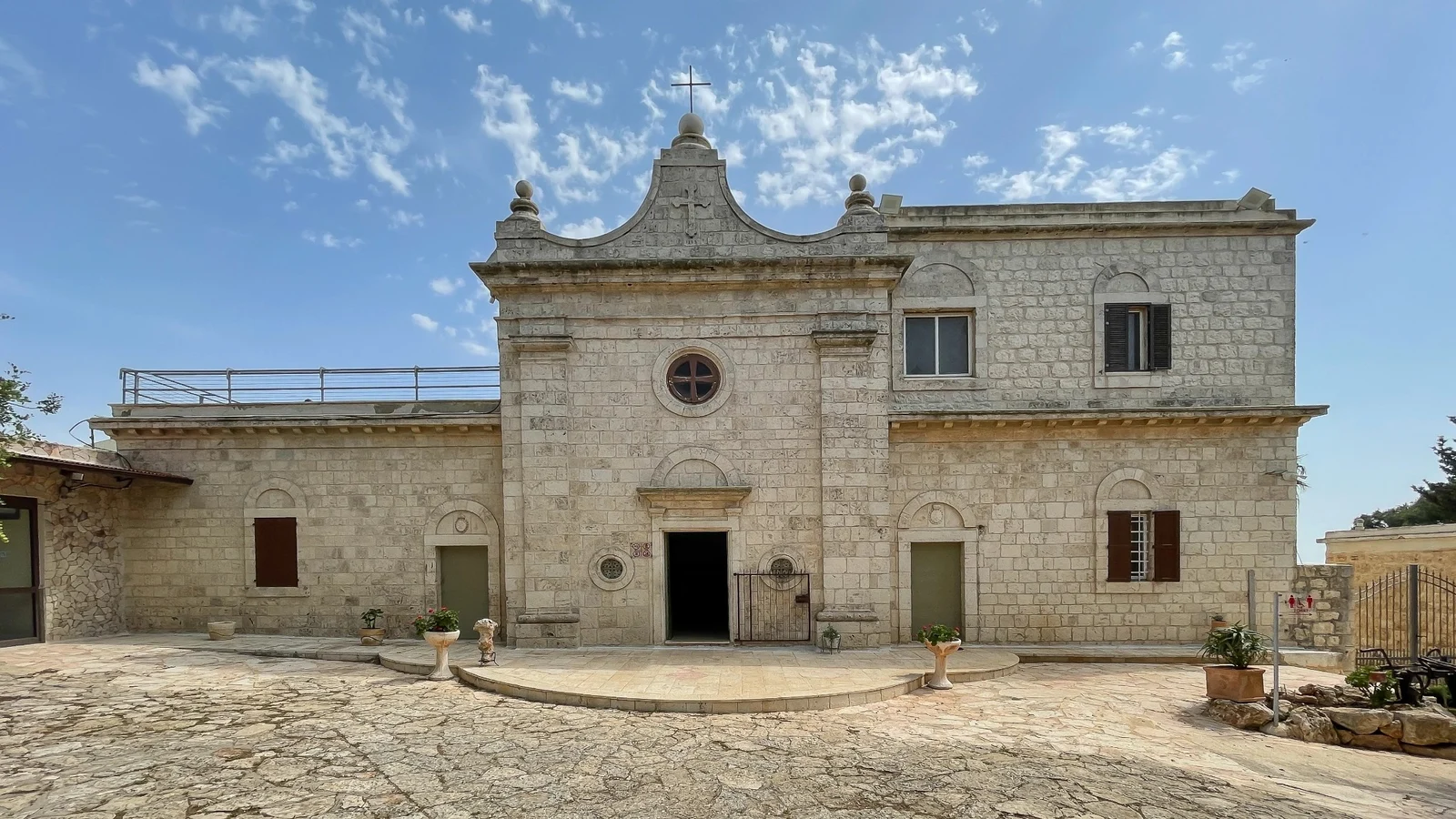
Carmel named; exact site traditionalMount Carmel is named in the biblical account. El-Muhraqa is a specific Carmelite commemorative site associated by tradition with the encounter. The Carmelites themselves describe the location through that traditional association; this does not establish the precise position of Elijah’s altar.
Connection to the event
Interpretation and commemorationElijah’s memory is important to Carmelite identity. A visit can explore how a religious community preserves a biblical story through a place of prayer. Do not confuse this inland commemoration with every other Carmelite sanctuary on the mountain, including Stella Maris near Haifa.
What this does not establish
Neither the monastery nor a devotional representation proves the fire or identifies a surviving biblical altar. The story is also not an explanation of every drought as punishment. Its theological interpretation of a particular conflict should not become a claim about present disasters or their victims.
Questions to explore
- Read the episode at the commemorative site, separating what the chapter says from details supplied by later art or storytelling.
- Consider the broader mountain landscape and the narrative contrast between a public confrontation and a small sign of approaching rain.
Plan with the place in mind
- Confirm the El-Muhraqa site’s current visitor arrangements through the Carmelite community or your local operator before traveling.
- Treat the property as a religious setting: arrange groups in advance, ask about mobility access, and keep commentary away from people praying.
Opening hours and prices are not live. Before traveling, confirm access, services and local conditions with the site operator and relevant authorities.
No precise location
El-Muhraqa is a traditional commemoration; the exact altar location is unverified.
Take something with you
Where do your stated commitments and your ordinary choices pull in opposite directions? Choose one quiet repair you can make today, without requiring an audience or a dramatic sign.
Continue in prayer · For ThisSources & further reading
Sources explain the passage, the tradition or the present site; they do not all support the same kind of claim.
Guide prepared: November 12, 2026. AI-assisted synthesis; no independent academic review. Our editorial approach