Read the passage
Mark 11:12–25
Read the passage within its full chapter, not as an isolated line.
Read the chapter · World English BibleLeaving Bethany, Jesus is hungry and approaches a leafy fig tree. Mark explicitly says it is not the season for figs, a detail that prevents an easy explanation based simply on a disappointing harvest. Jesus speaks against the tree. The narrative then moves into Jerusalem, where he disrupts trading in the Temple and teaches about a house of prayer and a den of robbers. Only afterward, on the following morning, do the disciples see the tree withered from its roots. This arrangement asks the reader to interpret the tree alongside the intervening Temple scene. It is not merely a travel diary with an unfortunate tree along the way. The closing teaching concerns faith, prayer, and forgiving others. Those final words should remain attached to the episode rather than being extracted as a formula for obtaining whatever one demands. What happens when a place or a life promises something through its appearance but does not fulfill its purpose? Mark’s literary structure raises that question. It does not authorize a blanket curse on Jewish people, nor a claim that one religious community is inherently barren while another is inherently fruitful.
What we know — and what remains open
Identification of the place
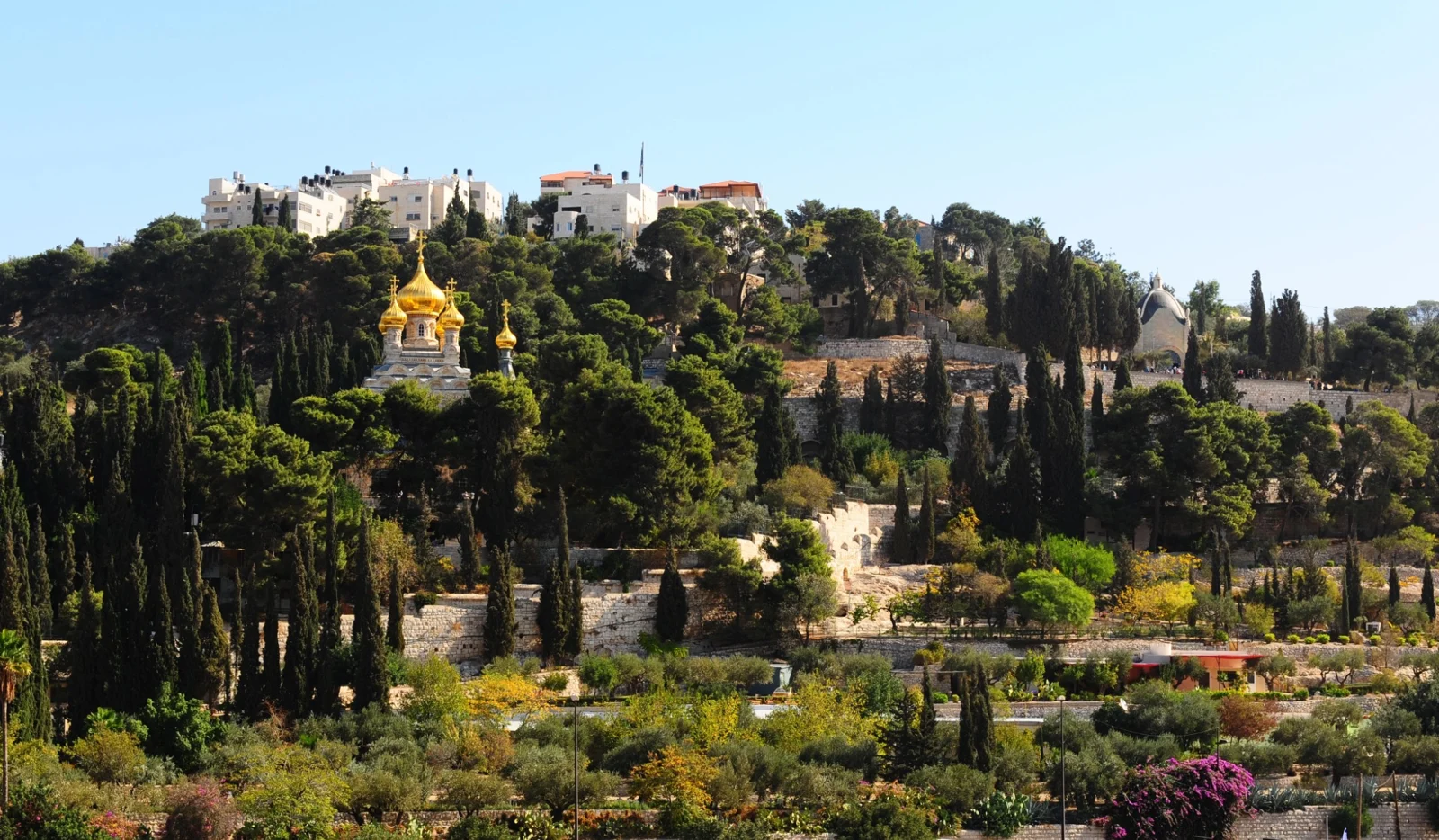
What can be locatedMark identifies the departure from Bethany and the movement into Jerusalem, but not the tree’s position. The route belongs to the Mount of Olives landscape. No present fig tree or roadside marker can be identified as the original tree described in the text.
Connection to the event
How the place is rememberedBethany’s sanctuary connects visitors with the wider Gospel memory of Jesus’ stays near Jerusalem. That connection supports reading the journey here. It does not preserve an exact footpath through every stage of Mark 11 or a botanical relic from the episode.
What this does not establish
The tree’s seasonal difficulty remains part of the text and should not be concealed by confident horticultural speculation. The Temple action is directed within a particular narrative conflict. It must not be converted into hostility toward contemporary Jewish worship or its worshippers.
Questions to explore
- Read the tree, Temple, and tree-again sequence without skipping the middle. Notice how Mark makes the reader wait for the second view of the tree.
- From an accessible Mount of Olives viewpoint, consider the relationship between the village side of the ridge and Jerusalem, without claiming that the view identifies an exact road.
Plan with the place in mind
- Plan Bethany and Jerusalem transport using current local guidance. Modern access barriers and road arrangements mean a simple biblical walking line may not be a practical route today.
- Do not pick fruit, enter gardens, or use a resident’s tree as a devotional prop. A symbolic reading gives no entitlement to someone else’s property.
- Allow time to read through verse 25. Ending at the curse or the withered roots omits the teaching on forgiveness that changes the tone of the whole stop.
Opening hours and prices are not live. Before traveling, confirm access, services and local conditions with the site operator and relevant authorities.
No precise location
Only the Bethany-to-Jerusalem movement is given. No tree or exact path is identified.
Take something with you
Choose one promise your daily habits appear to make: welcome, generosity, patience, or integrity. Identify a small action that would make it real today. Begin with your own conduct rather than evaluating someone else’s fruitfulness.
Continue in prayer · For ThisSources & further reading
Sources explain the passage, the tradition or the present site; they do not all support the same kind of claim.
- Mark 11:12–25 · full biblical text
- Bethany — Custody of the Holy Land
- Davidson Center — Friends of the Israel Antiquities Authority
Guide prepared: November 12, 2026. AI-assisted synthesis; no independent academic review. Our editorial approach