Read the passage
Luke 10:38–42
Read the passage within its full chapter, not as an isolated line.
Read the chapter · World English BibleMartha is the person who receives Jesus into her house. Her hospitality starts the encounter; it is not an embarrassment that the narrator asks us to despise. Mary sits at Jesus’ feet and listens, while Martha becomes distracted by much serving. Martha’s question asks Jesus both to notice her isolation in the work and to direct her sister to help. His reply names her anxiety and protects Mary’s choice to listen. Read this immediately after the Good Samaritan, where practical care is emphatically commended. Together the passages resist a simple opposition between active service and spiritual attention. Luke does not divide humanity into hardworking Marthas and superior Marys. Nor does the scene justify leaving domestic labor permanently to someone else. It asks what happens when welcome becomes so burdened by expectation that the guest can no longer be heard. A pause can restore the purpose of service rather than reject service itself. The text also allows Mary the position of a learner; her attention is not treated as something that must be surrendered automatically to household demands.
What we know — and what remains open
Identification of the place
What can be locatedBethany, now al-Azariya, is associated with Mary, Martha, and Lazarus in John and in the sanctuary tradition. Luke 10 says only a certain village. This page therefore distinguishes a plausible family connection from an explicit geographical statement in Luke.
Connection to the event
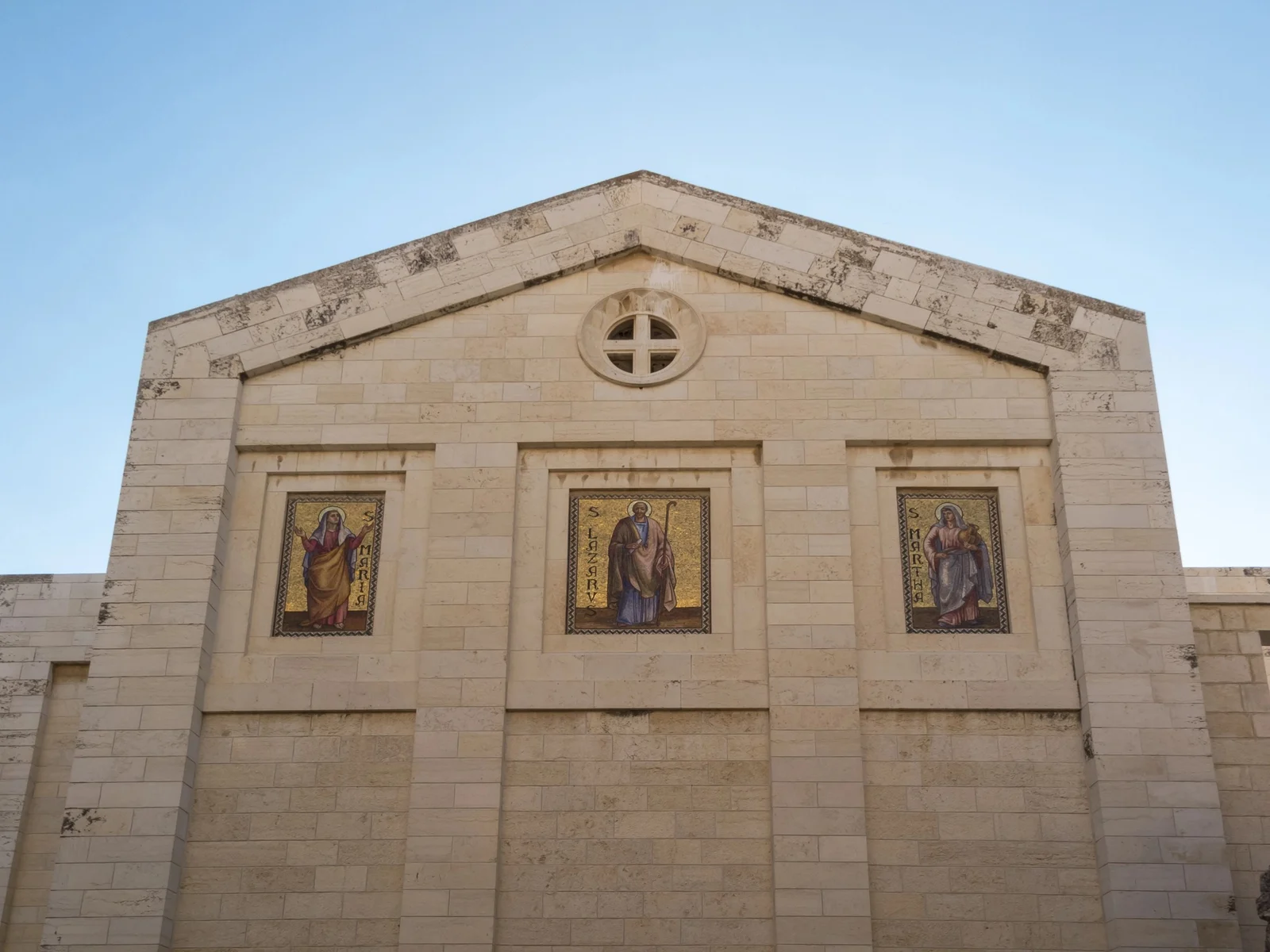
How the place is rememberedThe Bethany sanctuary commemorates the wider circle of stories about this household. Its buildings and remembered tomb belong to that continuing devotion. They should not be described as a recovered dining room containing the very places where the sisters sat or served.
What this does not establish
We do not know what meal was being prepared, how many guests were present, or the house’s plan. Avoid filling those gaps with confident decorative detail. The passage does not make exhaustion holy or require a caregiver to manage every responsibility alone.
Questions to explore
- At the sanctuary, distinguish artistic depictions of the family from evidence about their house. The images are interpretations that can prompt questions rather than answer archaeological ones.
- Read the Samaritan story and this household scene together. Ask how attentive listening might change the way practical help is offered.
Plan with the place in mind
- Plan transport to al-Azariya using current local advice. Modern roads and access arrangements mean the biblical journey over the Mount of Olives cannot simply be copied from an old map.
- Confirm sanctuary and tomb arrangements separately when relevant. The family’s associated sites need not share the same entrance, operator, or visiting conditions.
- Make the visit manageable for the person organizing the group. Distribute navigation, tickets, water, and meeting-point responsibilities rather than assigning all invisible work to one companion.
Opening hours and prices are not live. Before traveling, confirm access, services and local conditions with the site operator and relevant authorities.
No precise location
Bethany is a family tradition connected through other Gospel passages; Luke does not identify this house or village.
Take something with you
Set aside ten uninterrupted minutes to listen to someone without preparing your answer. If another person is carrying the practical work, first offer to share it so your pause does not become their extra burden.
Continue in prayer · For ThisSources & further reading
Sources explain the passage, the tradition or the present site; they do not all support the same kind of claim.
Guide prepared: November 12, 2026. AI-assisted synthesis; no independent academic review. Our editorial approach