Read the passage
Joshua 6:1–27
Read the passage within its full chapter, not as an isolated line.
Read the chapter · World English BibleThe chapter begins with a closed city and instructions for repeated processions involving the ark, priests, and trumpets. Silence and waiting are as important to its structure as the final shout. After the collapse comes destruction, while Rahab and her household are spared in fulfillment of an earlier commitment. Do not remove either element: the passage is not simply a motivational lesson about defeating personal obstacles, and its mercy does not erase its killing. A group may need to name the moral discomfort before exploring theological readings. The account belongs to an ancient conquest narrative; it is not a mandate for violence against contemporary inhabitants of any place.
What we know — and what remains open
Identification of the place
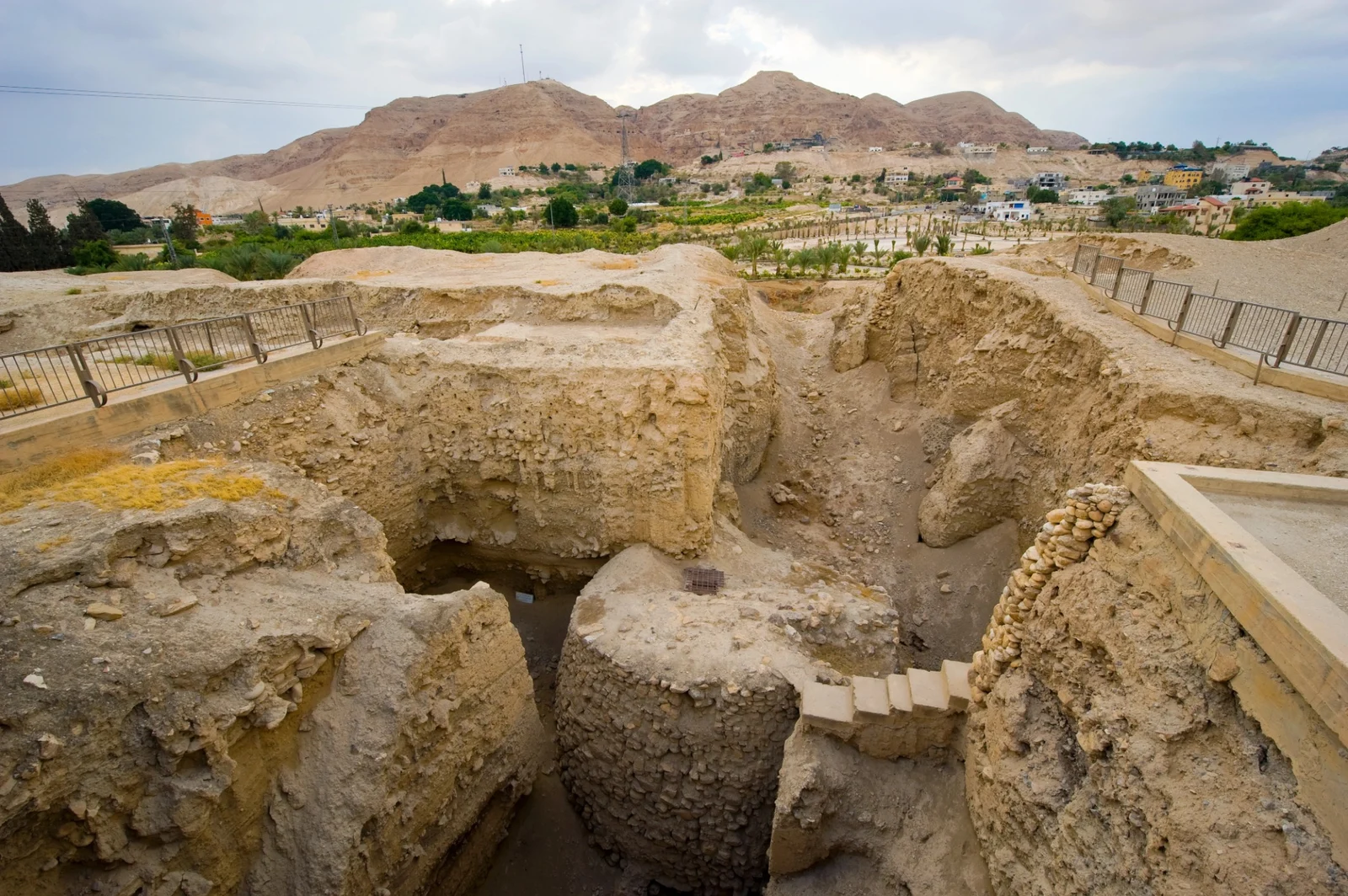
Ancient city identified; battle disputedUNESCO recognizes Tell es-Sultan as ancient Jericho and highlights its very early settlement history. Its famous Neolithic tower and wall belong to a period many millennia before the usual historical discussions of Joshua. The mound also contains later occupation phases. A correct identification of the site therefore cannot substitute for identifying and dating the particular layer relevant to a specific claim.
Connection to the event
Conquest association requires chronologyPilgrims have long connected Jericho with the fall of the walls, and a visit can make the city’s setting and importance easier to understand. The most useful guide does not point at the most impressive masonry and simply announce Joshua’s wall. Instead, the guide explains which remains are visible, how their dates are inferred, and where the biblical association enters the discussion.
What this does not establish
The dating and interpretation of destruction episodes at Jericho have generated disagreement. This page does not settle that debate or claim that UNESCO recognition proves Joshua’s battle. A destruction layer can establish damage at a particular period; assigning a named commander, cause, or supernatural mechanism requires additional arguments. Avoid certainty based on photographs alone.
What to notice when you visit
- Begin with the site’s chronology before looking for a connection to Joshua. Place the Neolithic tower and later settlement phases on separate parts of the timeline.
- Consider the spring-fed settlement setting and the relationship between mound and modern city. The archaeological tell is only one chapter in a much longer inhabited landscape.
Plan with the place in mind
- Confirm current entry arrangements for Tell es-Sultan with a local operator or responsible authority and ask how much of the interpretation can be reached by visitors with limited mobility.
- Use designated viewing areas and avoid walking on exposed remains. Read the chapter in a shaded, agreed stopping place rather than trying to recreate a procession around archaeological structures.
Opening hours and prices are not live. Before traveling, confirm access, services and local conditions with the site operator and relevant authorities.
The marker identifies Tell es-Sultan’s heritage site, not a proven location of a particular wall-collapse event. Open map
Take something with you
What changes when Rahab’s household is remembered alongside the victorious procession? Let the question interrupt any easy division between people who matter and people who are merely scenery in someone else’s triumph.
Continue in prayer · For ThisSources & further reading
Sources explain the passage, the tradition or the present site; they do not all support the same kind of claim.
Guide prepared: November 12, 2026. AI-assisted synthesis; no independent academic review. Our editorial approach