Read the passage
Revelation 1:9–20
Read the passage within its full chapter, not as an isolated line.
Read the chapter · World English BibleJohn introduces himself as a companion in suffering, kingdom and endurance rather than an observer standing outside the communities' difficulties. He describes being on Patmos because of God's word and the testimony of Jesus. The vision directs him to write to named assemblies in Asia. Its imagery is intense: lampstands, stars, a powerful voice and a figure whose appearance overwhelms him. The instruction not to fear comes within that encounter, and the passage itself explains the lampstands as the churches. This is already interpretation within the text, a reason to resist treating every image as a literal object waiting to be found in the cave. The distinctive question is how an experience of isolation becomes a message of responsibility toward others. Patmos is not merely a private retreat in the narrative; it is the starting point of communication with communities facing particular pressures. Read onward into the letters rather than stopping with the dramatic vision.
What we know — and what remains open
Identification of the place
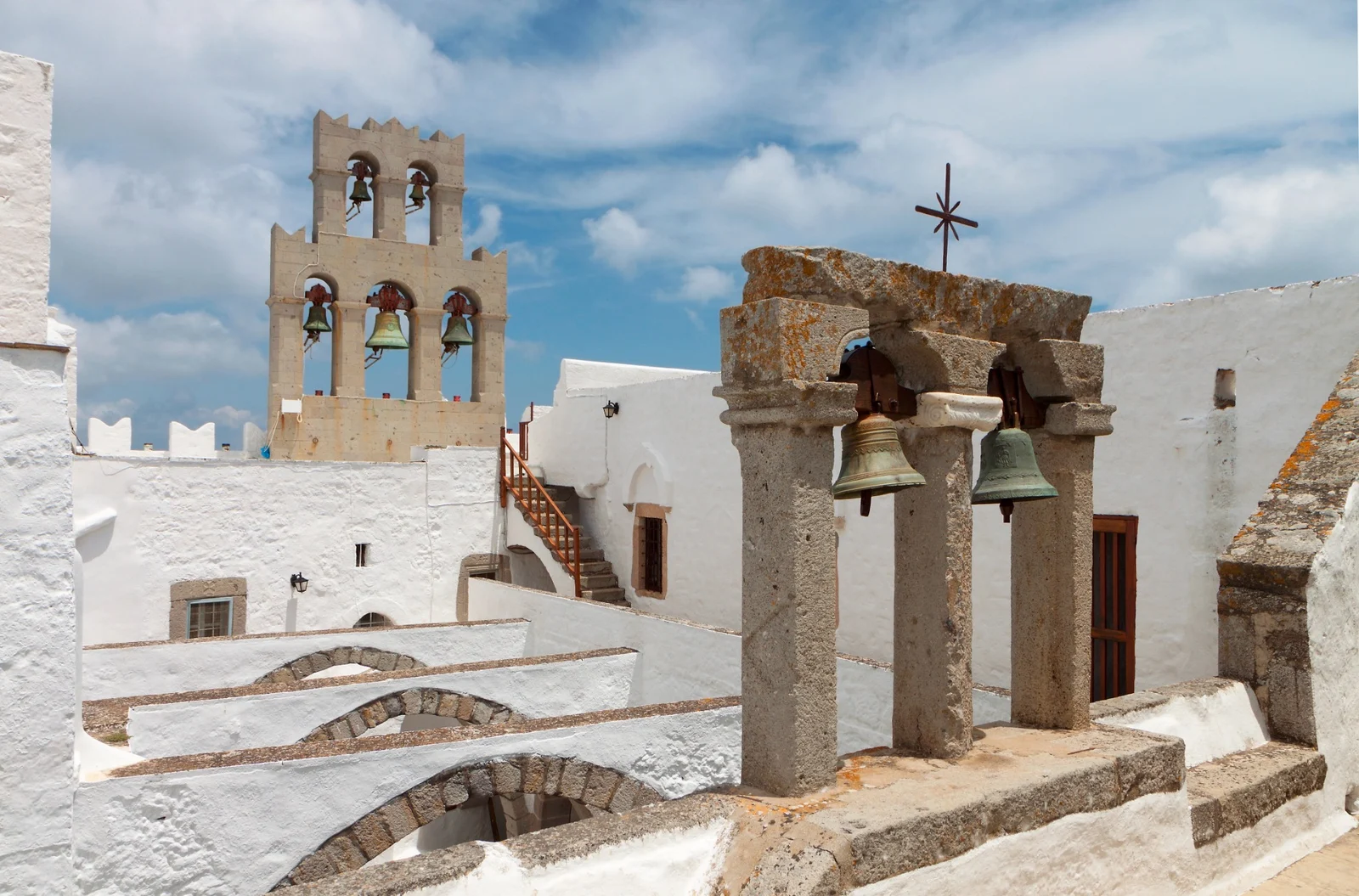
Island explicitly named in RevelationUNESCO recognizes Chora, the Monastery of Saint John the Theologian and the Cave of the Apocalypse as a connected heritage landscape. The monastery and settlement demonstrate a long, continuing religious history. Their documented medieval and later architecture should not be confused with surviving buildings from John's time on the island.
Connection to the event
Cave identification is traditionalThe cave is venerated as the place where the Revelation was received. Monastic worship and pilgrimage have sustained that identification. Christian tradition also relates John of Patmos to the apostle John; the book's self-identification as John does not by itself resolve every historical question about authorship.
What this does not establish
An identifiable island and a revered cave do not provide archaeological verification of a vision. Nor does visiting Patmos settle the dating and authorship debates around the book. The passage should not be turned into a method for predicting contemporary disasters or assigning hidden meanings to every feature of the rock.
Questions to explore
- Experience the cave as a living place of prayer, then read the passage's own explanation of the lampstands before imagining a literal reconstruction.
- Continue to Chora and the monastery to see how a brief biblical reference has shaped centuries of settlement, worship and artistic memory.
Plan with the place in mind
- Plan transport between the port, cave and Chora separately; an island arrival does not put every heritage site within an easy level walk.
- Confirm current worship and visiting arrangements with the custodians, and ask about steps and confined spaces if accessibility is important.
- Allow margin around ferry travel and avoid a schedule that forces hurried prayer or unsafe rushing; island journeys depend on transport conditions.
Opening hours and prices are not live. Before traveling, confirm access, services and local conditions with the site operator and relevant authorities.
No precise location
Patmos is named by the text. The cave is a traditional sanctuary, not a coordinate that independently verifies the vision.
Take something with you
If you feel cut off from others, identify one person or community you can encourage with a thoughtful message. Connection need not wait until every limitation has disappeared.
Continue in prayer · For ThisSources & further reading
Sources explain the passage, the tradition or the present site; they do not all support the same kind of claim.
Guide prepared: November 12, 2026. AI-assisted synthesis; no independent academic review. Our editorial approach