Read the passage
Acts 19:23–41
Read the passage within its full chapter, not as an isolated line.
Read the chapter · World English BibleDemetrius gathers craftsmen whose business is connected with Artemis. His appeal combines concern for their livelihood with the honor of the goddess and the city's reputation. The resulting uproar draws in people who do not all understand why they have assembled. Paul's companions are taken into the theater, while friends and local officials urge Paul not to enter. That restraint is a significant part of the story: courage does not always mean walking into a volatile crowd. A city official eventually appeals to recognized procedures and warns of the consequences of disorder. The narrative lets us notice how economic interest can borrow sacred language, and how public emotion can outgrow its original cause. It also shows that people outside the Christian group may act to prevent harm. The question for a visitor is not simply who won, but how a community distinguishes conviction, financial anxiety and civic responsibility when all three have become entangled.
What we know — and what remains open
Identification of the place
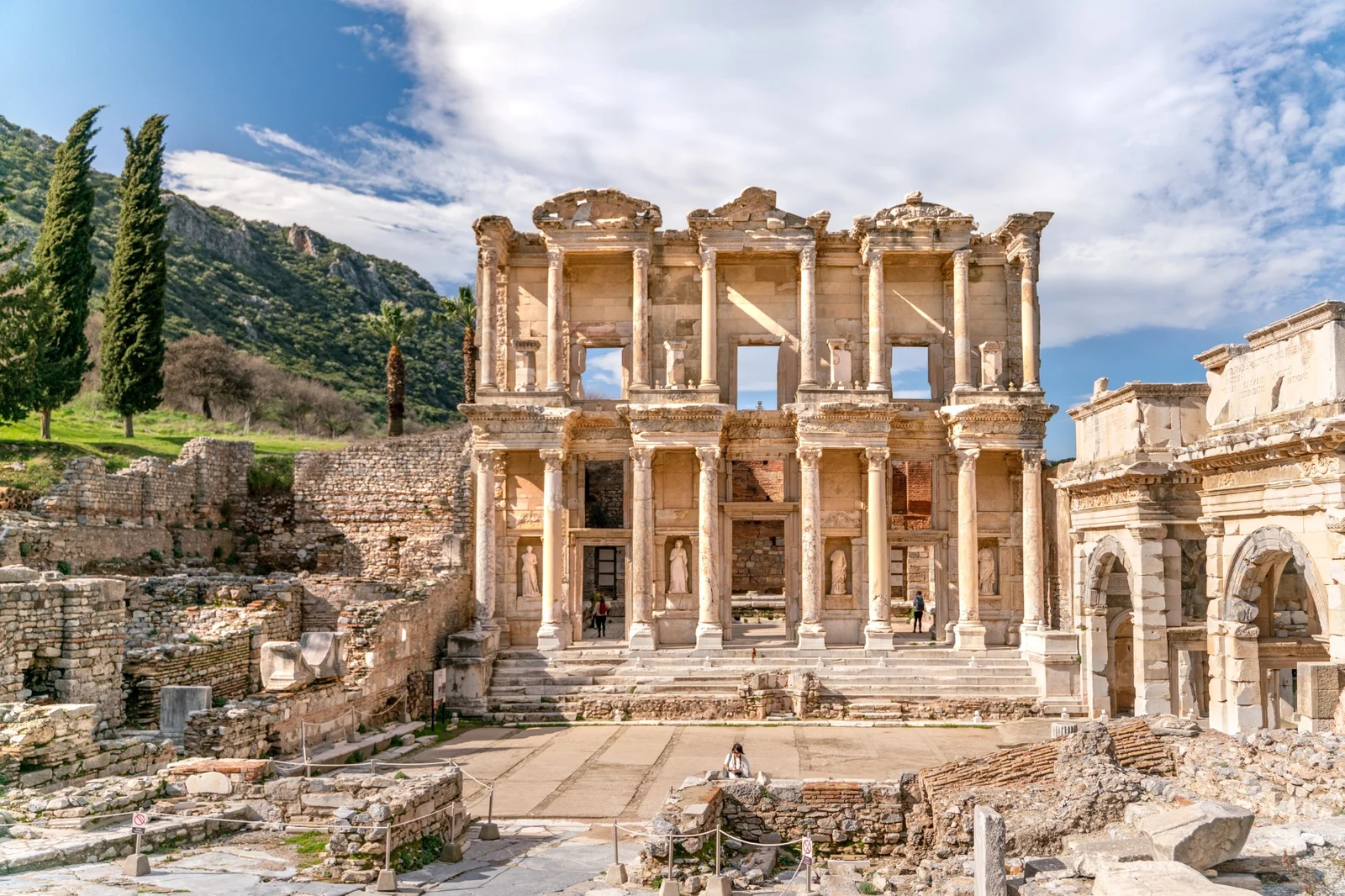
Ancient city and theater identifiedUNESCO identifies Ephesus as a major ancient settlement shaped by changing harbor locations and successive periods of construction. Its surviving theater belongs to that documented city. Much of what visitors see across Ephesus reflects different dates and renovations; a walk should not make every famous monument contemporary with Paul's visit.
Connection to the event
Text names the city theaterThe theater is traditionally connected with the gathering named in Acts because the text explicitly places the crowd in the Ephesian theater. Christian itineraries return to it as a setting for reading. That connection is more direct than a later chapel attribution, but cannot recover the location of individual speakers or spectators.
What this does not establish
The archaeological theater does not confirm the exact words of the crowd or prove a miracle. Do not present a seating estimate as the number who attended this episode. The story's criticism of disorder should not become contempt for the religious heritage or contemporary inhabitants of the region.
Questions to explore
- Study the theater's relationship to the surrounding city and routes of movement; a public gathering needs streets and institutions as well as seats.
- Compare the theater with other monuments using their dates on site labels, resisting the temptation to turn the whole city into one biblical snapshot.
Plan with the place in mind
- Confirm the current visitor route and theater restrictions with the official site operator; restoration may limit which areas can be approached.
- Plan transport around the actual site entrances near Selçuk rather than assuming every route returns to the same gate.
- Bring sun protection and allow a quiet reading stop away from congested steps; never test the theater's acoustics by interrupting other groups.
Opening hours and prices are not live. Before traveling, confirm access, services and local conditions with the site operator and relevant authorities.
No precise location
The theater is the visitor context; no exact position for the biblical crowd or speakers is claimed.
Take something with you
When an argument becomes heated, ask which concerns are about belief, which about status and which about livelihood. Naming them honestly may open a path that louder slogans cannot.
Continue in prayer · For ThisSources & further reading
Sources explain the passage, the tradition or the present site; they do not all support the same kind of claim.
Guide prepared: November 12, 2026. AI-assisted synthesis; no independent academic review. Our editorial approach