Read the passage
Acts 20:17–38
Read the passage within its full chapter, not as an isolated line.
Read the chapter · World English BibleThe travel narrative explains that Paul passes Ephesus because he is trying to reach Jerusalem without a long delay. Calling its elders to Miletus creates a deliberate pause. His speech looks backward to service and forward to uncertainty, including the prospect of imprisonment. He urges the leaders to watch over themselves as well as the community, warns about destructive teaching and refuses to make possession of money the measure of ministry. The remembered labor of his hands gives substance to the final emphasis on helping the weak. Prayer, embraces and tears follow; the companions accompany him toward the ship. Read the address as a transfer of responsibility, not a technique for making a departing leader indispensable. Its distinctive question is whether care has prepared other people to act wisely when the familiar guide is absent. The grief is real, but the narrative does not make separation evidence that trust or friendship has failed.
What we know — and what remains open
Identification of the place
Ancient harbor city identifiedThe Miletus excavation project documents the ancient city and its harbor-related monuments, including the Harbor Gate by the Lion Harbor. The museum authority provides the modern visitor setting around Balat. These remains establish a substantial maritime city and its changing urban history; they do not isolate the gathering described in Acts.
Connection to the event
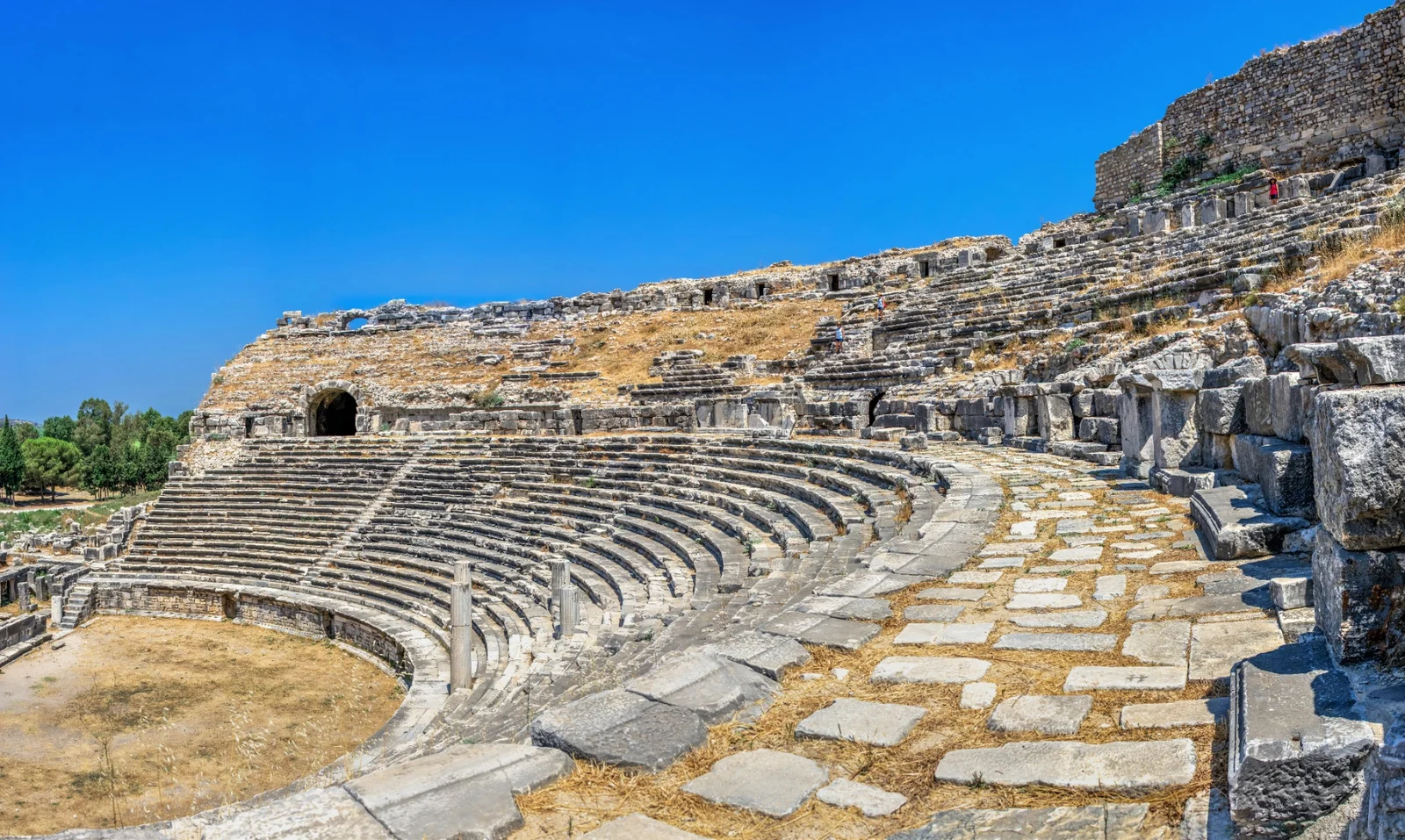
Farewell venue not identifiedPauline journeys often use the impressive theater as a gathering or reading point. That is a practical modern choice, not a venue named in the biblical account. A quiet place overlooking the archaeological landscape can serve the same purpose without claiming that Paul's farewell occurred on those seats.
What this does not establish
Miletus is the city named in the passage, while the exact meeting place and route to the ship are unknown. Do not confuse the elders' home city, Ephesus, with the farewell city. A map linking the two helps more than a confident but unsupported plaque beside a ruin.
Questions to explore
- Read the farewell with a plan of the ancient harbor landscape, remembering that the companions finish by accompanying a departing traveler.
- Compare the theater, harbor-related remains and museum interpretation as different parts of a city, not interchangeable biblical locations.
Plan with the place in mind
- Confirm the archaeological site and museum arrangements separately, and use Balat or the official Miletus visitor information when planning road transport.
- Ask which paths are currently suitable after wet weather; open landscapes and excavated areas can involve mud, uneven ground or restricted sections.
- If pairing Miletus with Ephesus, allow time for the distance between them rather than presenting the farewell as a short walk outside Ephesus.
Opening hours and prices are not live. Before traveling, confirm access, services and local conditions with the site operator and relevant authorities.
No precise location
The city is known, but the farewell's gathering place is not. No theater or room is pinned as certain.
Take something with you
Write down one responsibility you should share rather than retain. What information, confidence or practical support would help someone else carry it well after you step back?
Continue in prayer · For ThisSources & further reading
Sources explain the passage, the tradition or the present site; they do not all support the same kind of claim.
Guide prepared: November 12, 2026. AI-assisted synthesis; no independent academic review. Our editorial approach