Read the passage
Exodus 3:1–12
Read the passage within its full chapter, not as an isolated line.
Read the chapter · World English BibleRead the movement of Exodus 3 carefully: seeing, turning, hearing his name, removing sandals, listening to the account of oppression, and being sent. Moses does not merely discover a sacred object to admire. God’s speech emphasizes seeing affliction and hearing cries, and the call sends Moses back toward a confrontation he does not feel capable of undertaking. His question about his own adequacy receives an answer centered on divine presence. The passage therefore joins reverence to responsibility. It is not a technique for finding magical plants or a promise that every unusual experience is a divine instruction. The surrounding chapters also show hesitation and dialogue rather than effortless confidence.
What we know — and what remains open
Identification of the place
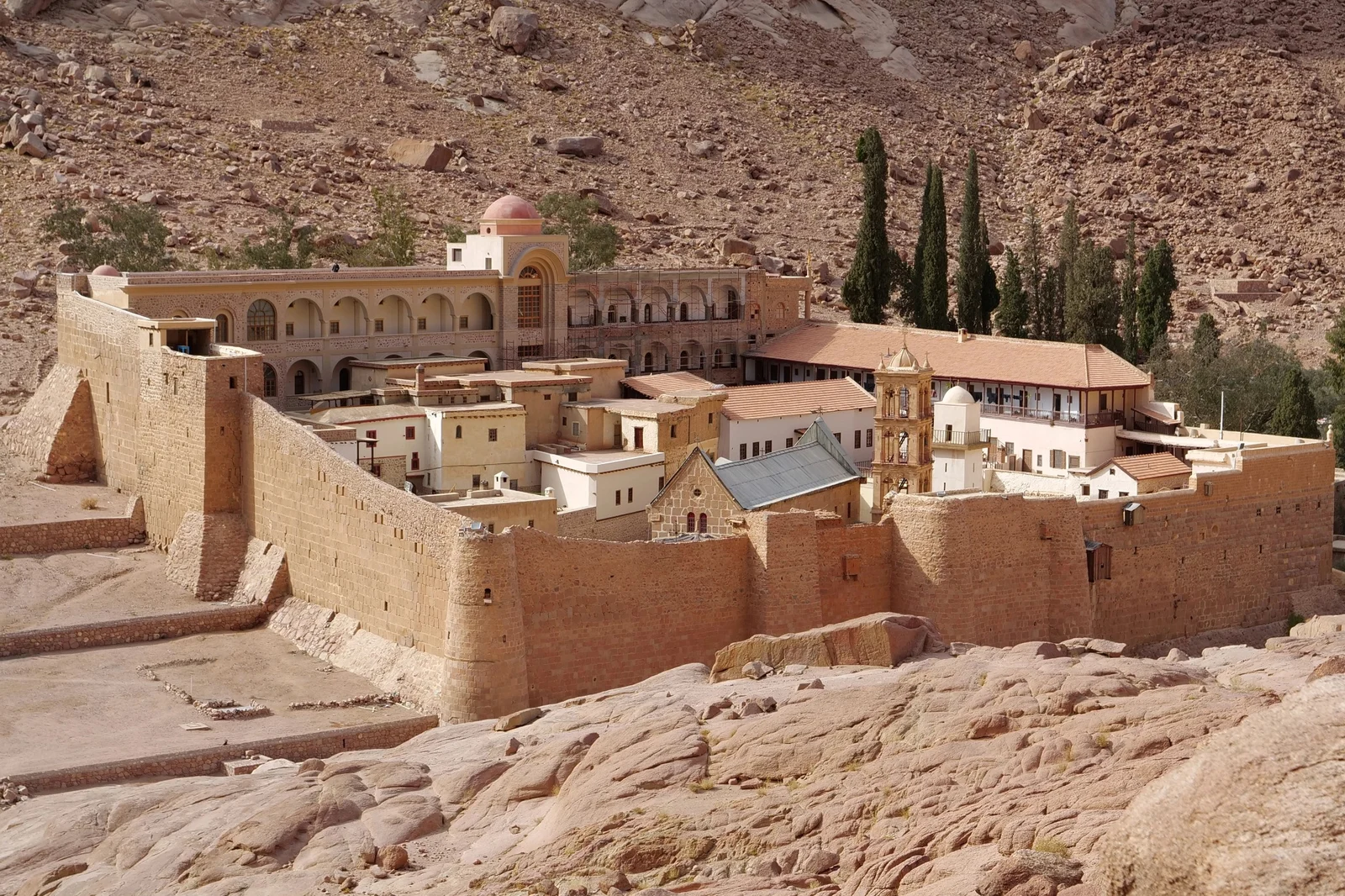
Later monastery identifiedUNESCO identifies the Saint Catherine area as a monastic cultural landscape in Sinai; the monastery was founded in the sixth century. This establishes a remarkable history of Christian presence, not a building contemporary with Moses. The biblical passage names Horeb but does not furnish a monastery address. The distinction between the scriptural setting and the later sanctuary should remain visible throughout the visit.
Connection to the event
Traditional bush commemorationThe bush tradition belongs within the monastery’s living devotional setting. A plant associated with sacred memory can matter deeply without being scientifically identified as the organism of Exodus. Ask how the community understands the commemoration, and resist the assumption that touching or taking a piece would bring the visitor closer to the original event. Respect for the tradition includes respect for the living place.
What this does not establish
Neither a preserved plant nor the age of a monastery proves the supernatural event described in the text. No claim is made here that the exact bush has been independently authenticated. Also avoid treating Moses’ call as an excuse to ignore ordinary safeguards when someone claims religious authority over another person’s decisions.
What to notice when you visit
- Approach the monastery as a community of worship and preservation. Let its own interpretation distinguish the bush commemoration from the later architecture around it.
- Read the speech about suffering alongside the visual image of fire. The people whose cries are heard are central to the scene even though they are not physically present at the bush.
Plan with the place in mind
- Confirm monastery visitor arrangements directly or through a qualified local operator before traveling into Sinai. Plan the monastery visit separately from any mountain ascent.
- Ask about the accessible route and clothing requirements for your group, allow worshippers space, and follow instructions concerning photography and plants. Never remove leaves or branches as souvenirs.
Opening hours and prices are not live. Before traveling, confirm access, services and local conditions with the site operator and relevant authorities.
Coordinate identifies the Saint Catherine heritage area, a later place of commemoration; it does not authenticate the original bush. Open map
Take something with you
Whose difficulty have you noticed without yet responding? Choose one proportionate act of attention today: listen without interrupting, ask what help is wanted, or connect someone with reliable practical support. Wonder can become care.
Continue in prayer · For ThisSources & further reading
Sources explain the passage, the tradition or the present site; they do not all support the same kind of claim.
Guide prepared: November 12, 2026. AI-assisted synthesis; no independent academic review. Our editorial approach