Read the passage
Exodus 19–20; focus 20:1–21
Read the passage within its full chapter, not as an isolated line.
Read the chapter · World English BibleExodus 19 gathers the people before the mountain and prepares them for an encounter marked by boundaries, sound, and awe. Chapter 20 opens by identifying God as the one who brought them out of bondage. The commands then address worship, speech, rest, family, life, fidelity, property, testimony, and desire. Notice the breadth of Sabbath rest: it extends beyond the household head to dependents, workers, foreigners, and animals. This makes the passage more than an exercise in private moral performance. A reader can ask what kind of shared life the freed people are learning to protect. The people’s fear at the end also belongs to the scene and should not be edited out of an uplifting quotation.
What we know — and what remains open
Identification of the place
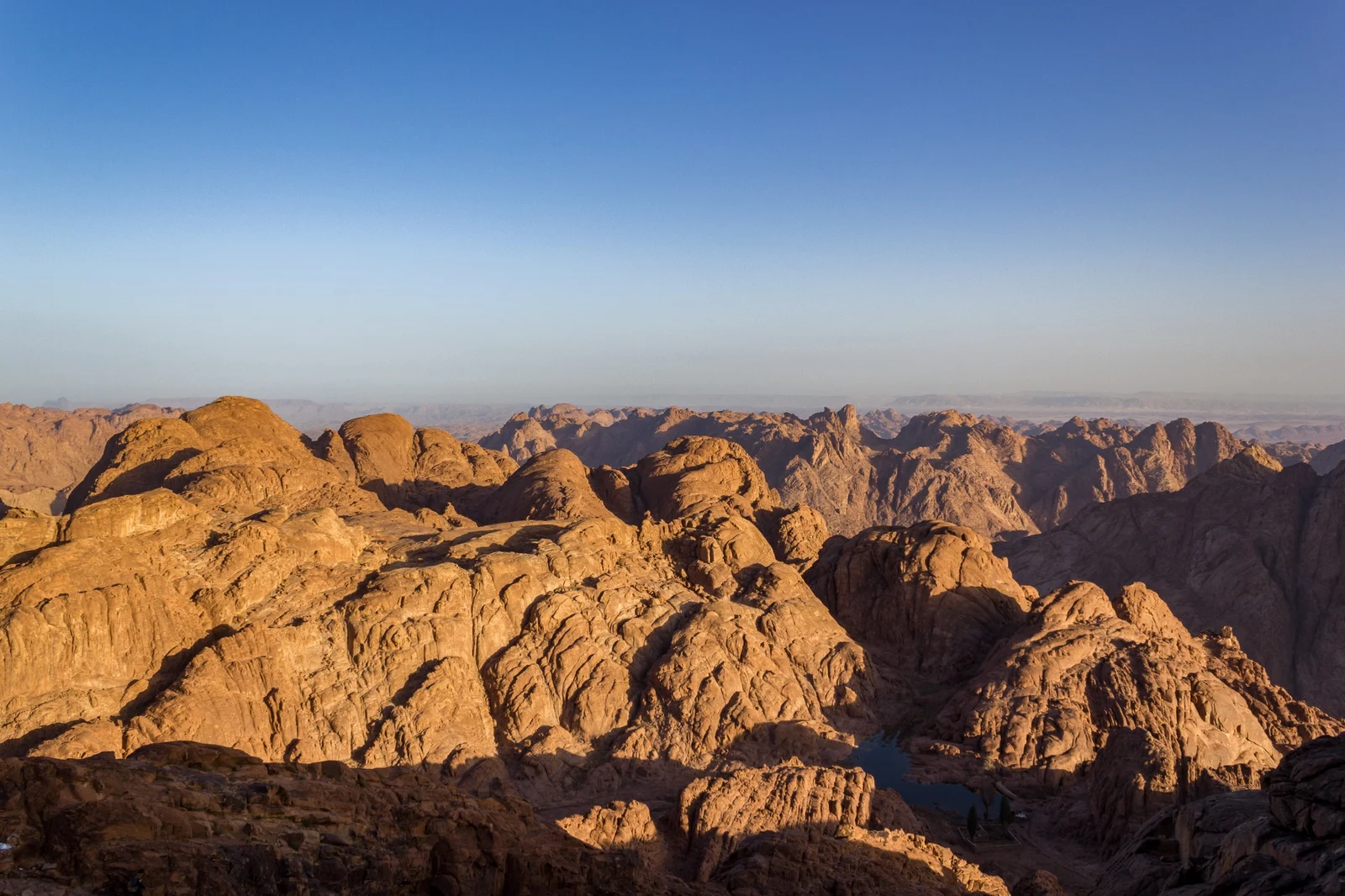
Mountain known; biblical equation traditionalThe UNESCO Saint Catherine property includes Jebel Musa within a landscape revered in several religious traditions. The mountain is geographically identifiable, whereas its equation with the Sinai of Exodus is traditional. A modern ascent reaches a real summit; it does not recover a dated event or a surviving pair of tablets. Keep these two statements together rather than allowing the drama of the climb to erase uncertainty.
Connection to the event
Living Sinai pilgrimage traditionPilgrims often connect the effort of ascent and the changing light with the biblical encounter. That can be a meaningful devotional practice, provided it is recognized as a present response rather than a reenactment of an authenticated route. Different traditions also arrange and number the commandments differently; a guide should not mistake one familiar numbering system for the only way the passage has been received.
What this does not establish
The exact biblical mountain is not established here by excavation. No sunrise, weather condition, or physical achievement confirms a person’s spiritual standing. People unable to climb are not excluded from the passage’s meaning. The commandments themselves concern daily relationships and practices that remain available far from a summit.
Questions to explore
- Read the opening statement of liberation before discussing any individual commandment. Then identify who receives protection or rest in the commands that follow.
- From a safe viewpoint, consider how a mountain separates and gathers a community in Exodus 19, without assigning modern paths to Moses.
Plan with the place in mind
- Arrange any ascent with a qualified local guide and ask about distance, elevation, footing, darkness, weather, and emergency arrangements before deciding whether it suits your group.
- Keep a non-climbing option in the itinerary. A reading at the monastery area or another agreed safe location can preserve the spiritual purpose without turning physical endurance into a test of faith.
Opening hours and prices are not live. Before traveling, confirm access, services and local conditions with the site operator and relevant authorities.
No precise location
No revelation-site pin is asserted. The page refers to the traditional Jebel Musa landscape, not an archaeologically authenticated spot where the law was given.
Take something with you
Who benefits from your rest, and who has to keep working so that you can stop? Choose one practical change that makes rest more equitable in your household or workplace. The command asks about a community, not only an individual schedule.
Continue in prayer · For ThisSources & further reading
Sources explain the passage, the tradition or the present site; they do not all support the same kind of claim.
- Exodus 19–20; focus 20:1–21 · full biblical text
- UNESCO · Saint Catherine Area and Mount Sinai tradition
Guide prepared: November 12, 2026. AI-assisted synthesis; no independent academic review. Our editorial approach