Read the passage
Exodus 14:1–31
Read the passage within its full chapter, not as an isolated line.
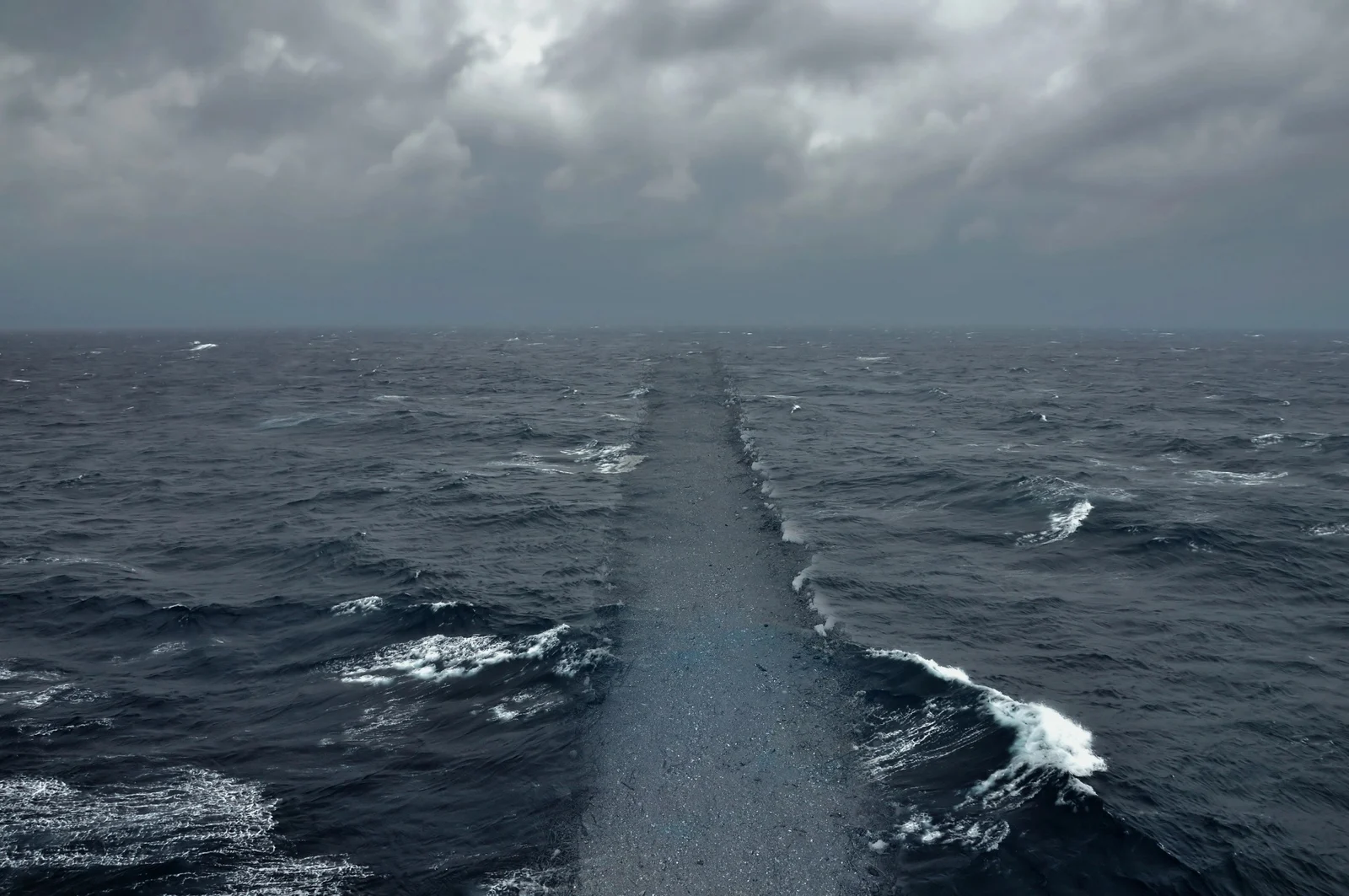
Read the chapter · World English BibleThe people are already outside Egypt’s immediate control when pursuit places them between danger and water. Their frightened complaint even makes slavery appear safer than the uncertain escape. The narrative describes an east wind through the night, a passage through the sea, and the pursuing army’s destruction. Read the song in chapter 15 afterward: celebration is the response to rescue, not evidence that the people felt brave throughout. The account presents liberation from oppressive power, yet it also includes death and must not be reduced to a cheerful image of a path opening on command. Modern readers facing difficulty are not promised that every obstacle will disappear in the same way.
What we know — and what remains open
Identification of the place
Crossing location unresolvedA research summary from the US National Center for Atmospheric Research discusses computer modeling of wind-driven water displacement in an ancient lagoon and river configuration. That work examines physical possibility under modeled conditions. It does not excavate Moses’ route, date the biblical crossing, or establish that the modeled event occurred. Scientific explanation of a possible mechanism and historical identification of a particular event are separate questions.
Connection to the event
Competing route traditionsPopular itineraries attach the crossing to different shores and gulfs, sometimes presenting one favored proposal as settled. The differences matter because they generate very different routes and pictures of the story. A named modern Red Sea destination is not automatically the biblical crossing. It is better to present the competing geographical questions than to hide them behind an exact-looking map marker.
What this does not establish
No verified chariot field, crossing corridor, or precise landing point is endorsed here. A striking underwater photograph needs archaeological context and independent analysis before it can support such claims. A fluid-dynamics model neither proves a miracle nor settles a theological argument against one; those conclusions exceed what the model tests.
Questions to explore
- Compare the geographical names in Exodus 14 with a map that marks uncertainty rather than forcing every name into a single modern route.
- Read the research summary’s assumptions before looking at an animation. Ask what was modeled, what was measured, and what remains a historical hypothesis.
Plan with the place in mind
- Choose any Egyptian coastal or museum visit for its actual documented heritage and practical suitability, not a promise of an authenticated crossing. Confirm arrangements with the responsible local operator.
- Do not book an unlicensed dive or remote expedition to search for purported chariot remains. This story can be studied fully through text, landscape interpretation, and carefully labeled maps.
Opening hours and prices are not live. Before traveling, confirm access, services and local conditions with the site operator and relevant authorities.
No precise location
No precise map marker is provided because the crossing location is disputed; a model or modern gulf name cannot supply the missing coordinate.
Take something with you
What familiar but harmful situation feels safer than an uncertain change? Consider one supported next step rather than a dramatic leap. Freedom may involve asking for help, planning carefully, and acknowledging fear instead of denying it.
Continue in prayer · For ThisSources & further reading
Sources explain the passage, the tradition or the present site; they do not all support the same kind of claim.
Guide prepared: November 12, 2026. AI-assisted synthesis; no independent academic review. Our editorial approach