Read the passage
2 Kings 5
Read the passage within its full chapter, not as an isolated line.
Read the chapter · World English BibleNaaman is introduced as an accomplished Aramean commander suffering from a skin condition. A young Israelite captive in his household points toward a prophet in Samaria. The journey first passes through royal channels, where a letter and expensive gifts produce alarm rather than healing. Elisha then sends instructions through a messenger, frustrating Naaman’s expectation of a personal ceremony. He compares the Jordan unfavorably with the rivers of Damascus and turns away angry. His servants persuade him to consider the simple instruction he would have accepted more readily had it been difficult. After the washing and restoration, Elisha refuses payment. The chapter ends with Gehazi secretly pursuing the gifts, exposing the temptation to turn someone else’s gratitude into personal profit. Do not reduce the episode to a technique involving seven immersions. Its narrative contrasts authority with teachability, impressive transactions with unpurchased grace, and the commander’s reputation with the wisdom of socially vulnerable people. Even the captive girl must not disappear behind the famous man whose story she helps change.
What we know — and what remains open
Identification of the place
River named; exact reach unknownThe biblical account names the Jordan but does not locate Naaman’s washing at a specific bank or crossing. Present-day baptism visitor sites provide managed encounters with the river; they do not establish the location of this earlier episode.
Connection to the event
Interpretation and commemorationBethany Beyond the Jordan, Al-Maghtas, preserves a distinct Christian baptismal tradition. It can serve as a river-context visit if its own identity is respected. Explain why you are there: to encounter the Jordan landscape, not to claim that Naaman stood at the baptism site.
What this does not establish
The ancient description of the skin condition should not be equated confidently with a modern clinical diagnosis. The story is not a promise that river water cures disease or an alternative to medical treatment. Archaeological evidence at a baptismal complex cannot verify Naaman’s healing.
Questions to explore
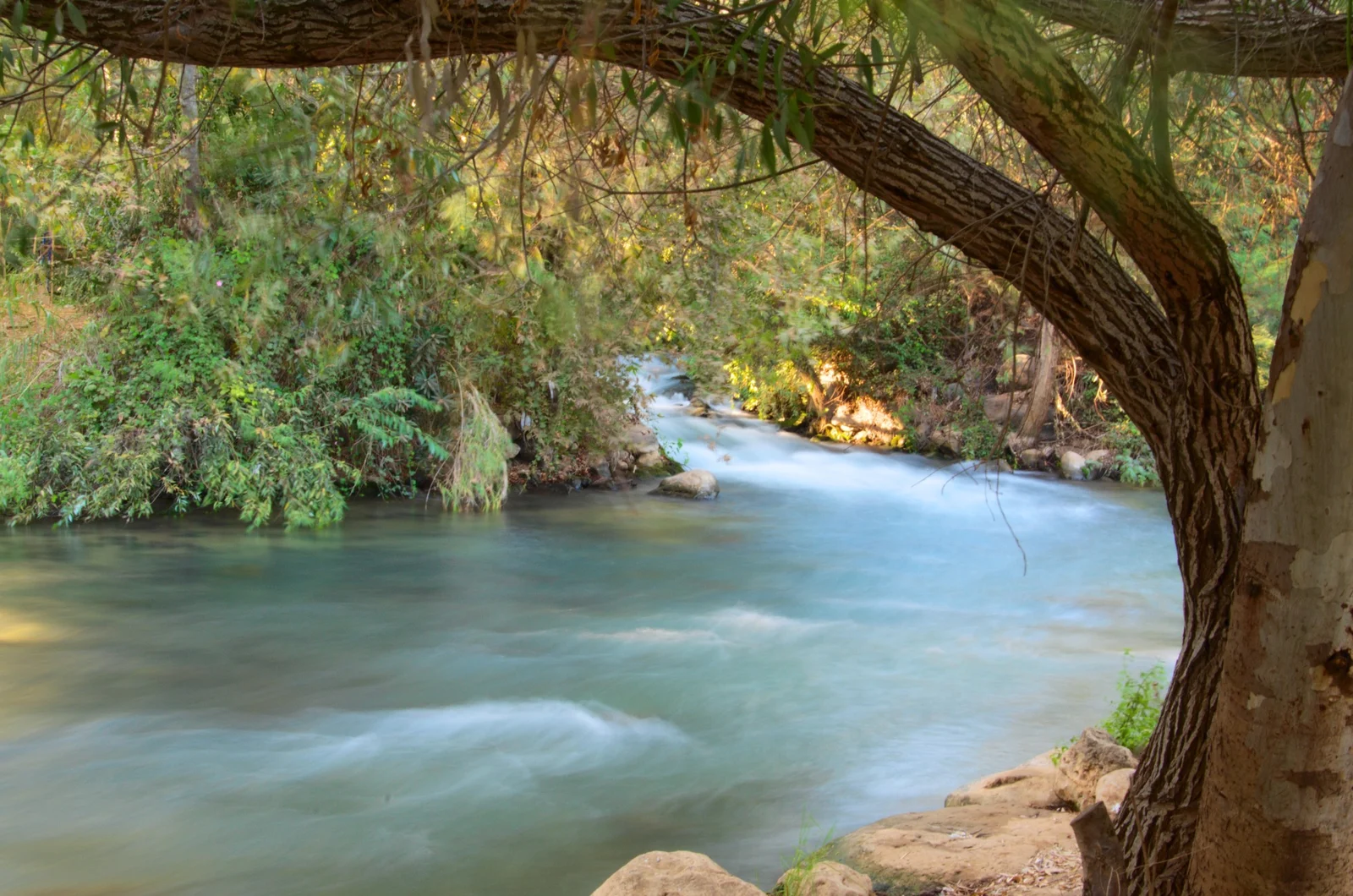
- Observe the river from the designated visitor area and consider why an ordinary-looking watercourse disappointed a powerful visitor.
- Keep the baptismal interpretation of Al-Maghtas separate from the reading of Second Kings; compare rather than merge the two stories.
Plan with the place in mind
- Choose the country and managed river site first; nearby places on opposite banks are not joined by a casual pedestrian crossing.
- Follow the operator’s instructions on entry, transport, and proximity to the water. Ask about accessible paths and do not enter the river outside explicitly permitted arrangements.
Opening hours and prices are not live. Before traveling, confirm access, services and local conditions with the site operator and relevant authorities.
No precise location
No exact Jordan River location for Naaman’s washing is known.
Take something with you
Whose useful advice have you dismissed because of their age, job, or status? Reconsider one recommendation on its merits before deciding whether to act.
Continue in prayer · For ThisSources & further reading
Sources explain the passage, the tradition or the present site; they do not all support the same kind of claim.
Guide prepared: November 12, 2026. AI-assisted synthesis; no independent academic review. Our editorial approach