Read the passage
Matthew 24–25
Read the passage within its full chapter, not as an isolated line.
Read the chapter · World English BibleThe discourse begins after Jesus leaves the Temple and predicts its destruction. On the Mount of Olives, the disciples privately ask when these things will happen and what signs will accompany them. Jesus first warns against deception. Wars and alarming reports are not presented as an invitation to produce a confident date. The chapter includes suffering, flight, endurance, and the coming of the Son of Man, followed by repeated calls to readiness. Chapter 25 continues with the waiting bridesmaids, entrusted resources, and the separation of sheep and goats. Read that continuation: watchfulness becomes more than staring at the sky or decoding headlines. It involves responsibility during delay and a searching encounter with hunger, thirst, estrangement, lack of clothing, sickness, and imprisonment. Christian traditions interpret the timing and relationships among these passages differently. This page does not settle those debates by attaching current events to a prophecy chart. A more grounded reading asks what faithful attention looks like when the future remains beyond the disciples’ control. The warning that the day and hour are unknown belongs within the discourse itself, not as a modern disclaimer added from outside.
What we know — and what remains open
Identification of the place
What can be locatedMatthew names the Mount of Olives, giving a meaningful landscape relation to Jerusalem and the Temple. He does not identify a cave or building. The Pater Noster site is a later place of teaching remembrance, not an archaeologically authenticated lecture position.
Connection to the event
How the place is rememberedThe Eleona and Pater Noster tradition associates the hillside with Jesus teaching his disciples, including prayer and teaching about the future. Its layered sanctuary history shows the development of Christian remembrance. That broader tradition should be distinguished from Matthew’s exact wording.
What this does not establish
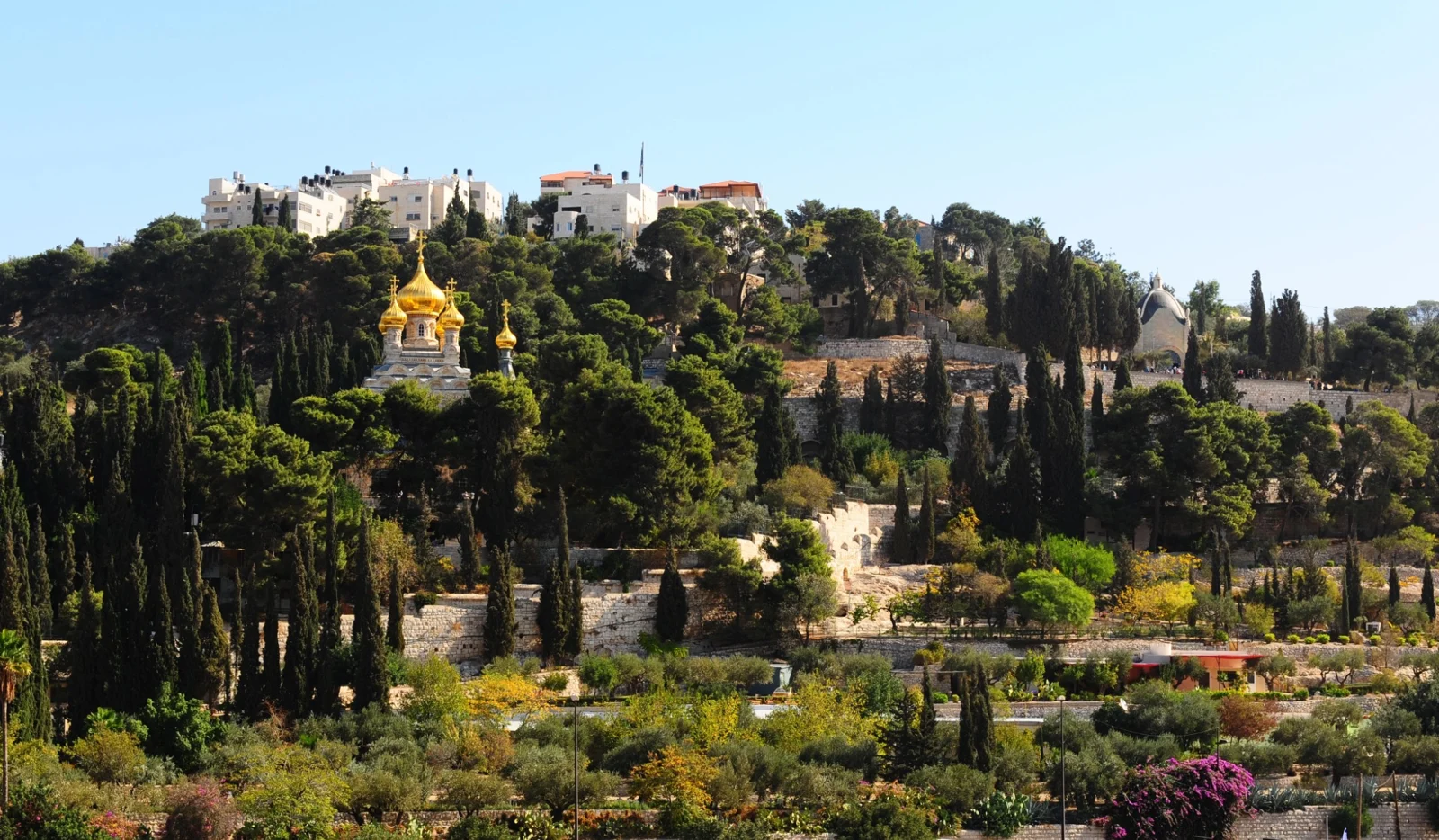
A viewpoint cannot verify a prediction or establish a modern end-times timetable. The destruction discussed here should not become a reason to celebrate violence against a contemporary community. Interpretive differences deserve explicit recognition rather than being hidden behind an impressive panoramic photograph.
Questions to explore
- Look across the valley toward the Temple landscape, then read the disciples’ opening question. The visible relationship explains why the setting matters without identifying an exact seat.
- If visiting Pater Noster, distinguish its prayer inscriptions and teaching memory from the particular discourse in Matthew. Related traditions need not be identical to be meaningful.
Plan with the place in mind
- Confirm Pater Noster visiting arrangements and the suitability of steps or enclosed spaces for your group. A hillside itinerary requires more planning than a flat map suggests.
- Read chapter 24 at one stop and chapter 25 at a quiet second stop if necessary. Do not omit the ethical conclusion simply because the opening view is more photogenic.
- Keep away from busy road edges when taking panoramic photographs. Use designated viewpoints and leave room for residents, worshippers, and other groups to pass.
Opening hours and prices are not live. Before traveling, confirm access, services and local conditions with the site operator and relevant authorities.
No precise location
The mountain is named; the exact teaching position is not. Pater Noster is a commemorative association.
Take something with you
Choose one form of need named in Matthew 25 and one responsible local way to respond. Spend ten minutes finding a concrete action rather than another prediction about the future.
Continue in prayer · For ThisSources & further reading
Sources explain the passage, the tradition or the present site; they do not all support the same kind of claim.
- Matthew 24–25 · full biblical text
- Jerusalem: la grotte du Pater Noster — Opus Dei
- Matthew 25 — World English Bible
Guide prepared: November 12, 2026. AI-assisted synthesis; no independent academic review. Our editorial approach