Read the passage
Acts 23:23–26:32
Read the passage within its full chapter, not as an isolated line.
Read the chapter · World English BibleA threatened attack in Jerusalem leads to Paul's transfer under guard to Caesarea. Before Felix, the accusation is framed as public disorder and desecration; Paul answers by describing his worship and the absence of evidence for the alleged offense. The proceedings do not produce a quick resolution. Felix delays, and Acts attributes mixed political and financial motives to him. Festus later inherits the case, and Paul's appeal to Caesar moves it toward Rome. Agrippa and Bernice then hear Paul's account of his calling and resurrection hope. These are related but distinct hearings, not a single dramatic trial condensed into one conversation. Notice the imbalance: powerful people can postpone, while the detained person lives the consequences of waiting. The text also makes room for testimony within constrained circumstances. Its distinctive question is how to speak truthfully before authority without confusing the ability to tell one's story with control over the outcome.
What we know — and what remains open
Identification of the place
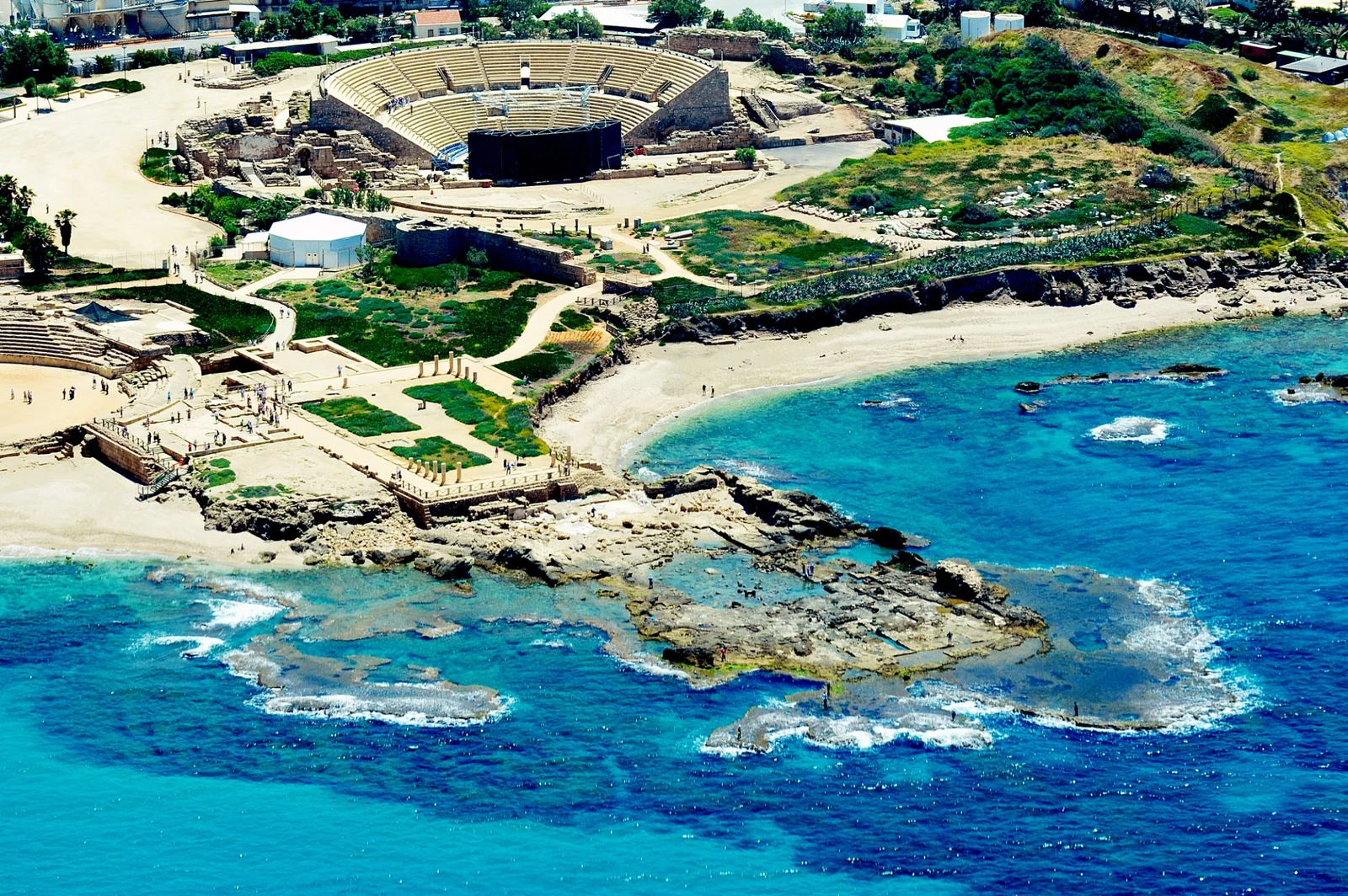
City and palace context identifiedThe Israel Nature and Parks Authority describes Caesarea's promontory palace and monumental coastal city. Cornell's archaeological work addresses the palace complex and its administrative interpretation. These sources support the regional and institutional setting of Acts. Proposed functions within a large complex remain more specific claims that need their own evidence.
Connection to the event
Exact hearing rooms require qualificationChristian itineraries remember Paul's imprisonment and hearings at Caesarea. The association rests on the explicit biblical city and praetorium reference, not only on later devotion. Nevertheless, a guide should distinguish reading near the palace from claiming that a visitor stands on the exact floor of every hearing.
What this does not establish
A palace identification does not establish every room's use during Paul's custody. The sequence spans several chapters and different officials; collapsing them obscures the prolonged detention. Archaeology can illuminate administration and architecture, but it cannot independently verify the private motives the narrator attributes to a governor.
Questions to explore
- Begin with the palace interpretation and a site plan, locating administrative space within a city that also included entertainment, trade and harbor activity.
- Read short sections from each hearing in sequence, noting what changes under Felix, Festus and Agrippa and what remains unresolved.
Plan with the place in mind
- Check the national park's current visitor route and weather conditions before arrival; exposed coastal remains can be uncomfortable in strong wind or heat.
- Ask the park which interpretation addresses the palace and Pauline custody, rather than relying on an unverified label from a private itinerary.
- Allow enough time for the palace context after the better-known theater and harbor; a rushed photo stop will miss the administrative story.
Opening hours and prices are not live. Before traveling, confirm access, services and local conditions with the site operator and relevant authorities.
No precise location
The palace complex provides context, but no individual room is marked as the certain venue of all the hearings.
Take something with you
Think of someone waiting for a decision that others control. What practical accompaniment could you offer without promising a quick outcome or telling them that delay measures their faith?
Continue in prayer · For ThisSources & further reading
Sources explain the passage, the tradition or the present site; they do not all support the same kind of claim.
- Acts 23:23–26:32 · full biblical text
- Israel Nature and Parks Authority · Caesarea
- Cornell Archaeology · Caesarea Maritima
Guide prepared: November 12, 2026. AI-assisted synthesis; no independent academic review. Our editorial approach