Read the passage
Acts 2:1–47
Read the passage within its full chapter, not as an isolated line.
Read the chapter · World English BibleBegin with the festival setting. Jewish pilgrims from many regions are in Jerusalem, and the crowd hears the disciples speaking in languages familiar from home. Some are amazed; others mock what they cannot explain. Peter responds with Scripture and testimony, interpreting the event through Joel and the story of Jesus. His address leads to repentance, baptism, and the formation of a community. Continue beyond the dramatic first verses to the chapter’s closing practices: teaching, fellowship, breaking bread, prayer, and attention to material need. These are not decorative afterthoughts. They describe what the public proclamation begins to produce. Ask who is able to understand a community’s message, and who is excluded by its language or habits. The multilingual scene should not be flattened into the idea that everyone becomes culturally identical. Nor should the shared life at the end become a promise that Christian communities will never have conflict, poverty, or organizational failures.
What we know — and what remains open
Identification of the place
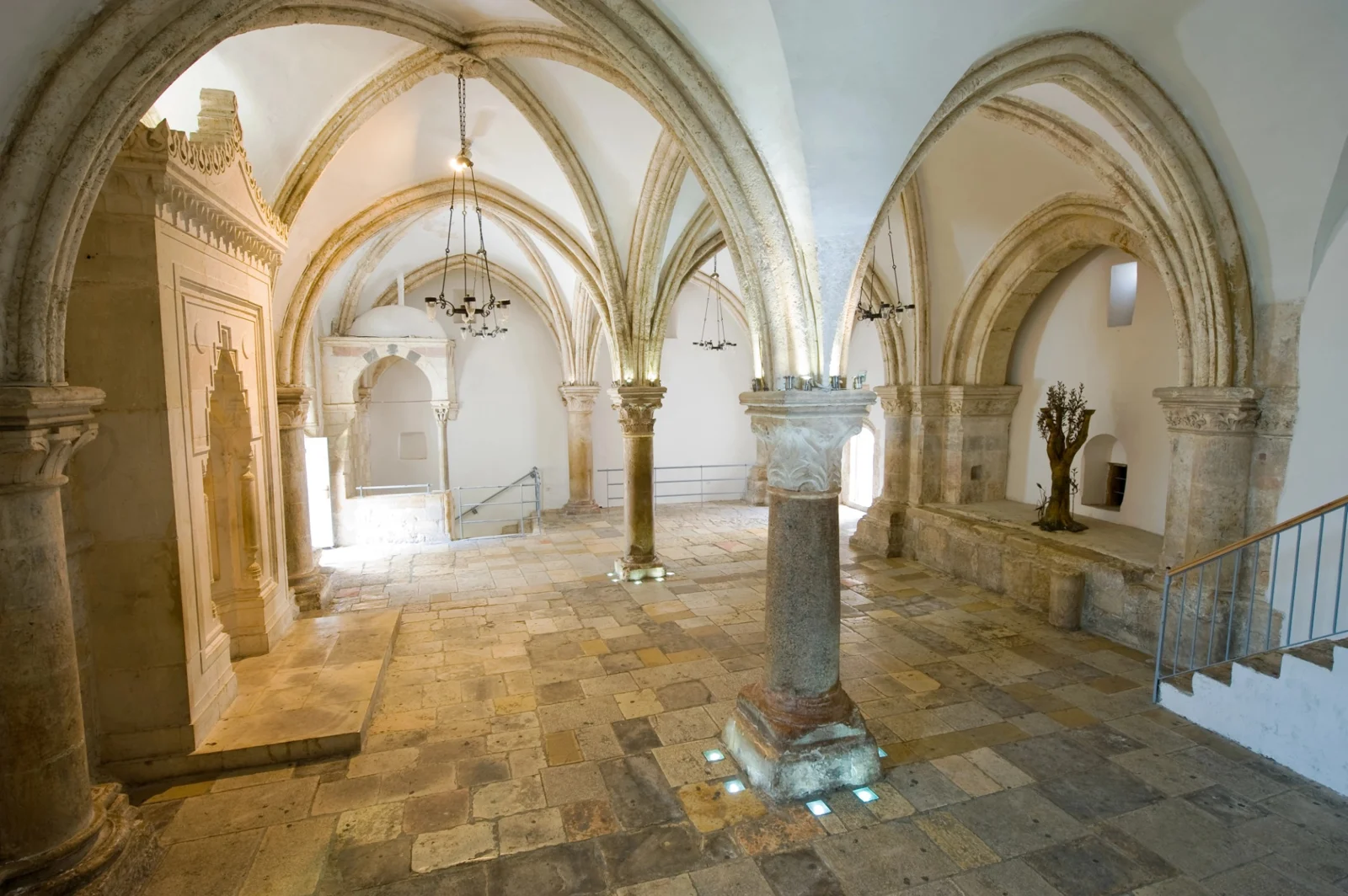
Jerusalem named; house unidentifiedActs names Jerusalem and describes a house, followed by a gathered crowd, but supplies no address for either. The Cenacle’s association depends on Christian tradition. The existing room preserves later construction phases; seeing its walls does not mean seeing the physical setting described in Acts 2.
Connection to the event
Pentecost commemoration at the CenacleChristians continue to mark Pentecost at the Cenacle, and the Custody documents services there. This living worship is meaningful evidence of remembrance. It is different from evidence identifying a first-century building. The Last Supper, resurrection appearances, and Pentecost are distinct narratives even when one sanctuary commemorates them together.
What this does not establish
No architectural feature proves the sound, languages, or descent of the Spirit described by Acts. Avoid calling Pentecost the replacement of Jewish identity or ignoring its Jewish festival setting. Interpretive differences about spiritual gifts also exist among Christians; the visit need not resolve them by overstating what the site can show.
Questions to explore
- Read the list of regions in Acts 2 and imagine the effort involved in hearing a familiar language far from home.
- Observe the shared room as a place used by visitors from different traditions; distinguish present-day international pilgrimage from the first-century crowd.
Plan with the place in mind
- Check access and any festival arrangements in advance, especially near Pentecost. A normal visit does not automatically include participation in a scheduled service.
- Choose a quiet place for a longer reading after leaving the room. Include the final community-life verses rather than stopping at the spectacular opening.
Opening hours and prices are not live. Before traveling, confirm access, services and local conditions with the site operator and relevant authorities.
No precise location
No exact event location is established; the named visitor site is a contextual or traditional landmark, not a verified event pin.
Take something with you
Make one piece of your community’s information easier to understand today: explain an unfamiliar term, provide a translation, or ask what a newcomer needs. Understanding is part of welcome, and welcome should eventually become practical care.
Continue in prayer · For ThisSources & further reading
Sources explain the passage, the tradition or the present site; they do not all support the same kind of claim.
- Acts 2:1–47 · full biblical text
- Custody · Pentecost at the Cenacle
- Custody · Saint Francis ad Coenaculum
Guide prepared: November 12, 2026. AI-assisted synthesis; no independent academic review. Our editorial approach