Read the passage
Matthew 26:69–75
Read the passage within its full chapter, not as an isolated line.
Read the chapter · World English BibleEarlier in the chapter Peter insists that he will not abandon Jesus, even if others do. After the arrest he follows at a distance and enters the high priest’s courtyard. A servant girl recognizes an association with Jesus; Peter denies it. Moving toward the gateway does not remove the pressure. Another identification and then comments about his speech lead to further denials, now intensified by oaths. The crowing of the cock brings memory, and Peter goes outside and weeps. Read the progression rather than reducing it to one isolated lie. Fear changes where he stands, what he says, and how emphatically he says it. Matthew does not supply an instant scene of repair here. That absence lets remorse have its weight. A useful comparison is the later lakeside conversation in John 21, while keeping the two Gospel narratives distinct. The question is how an identity built on being the dependable one responds when its own conduct has caused shame.
What we know — and what remains open
Identification of the place
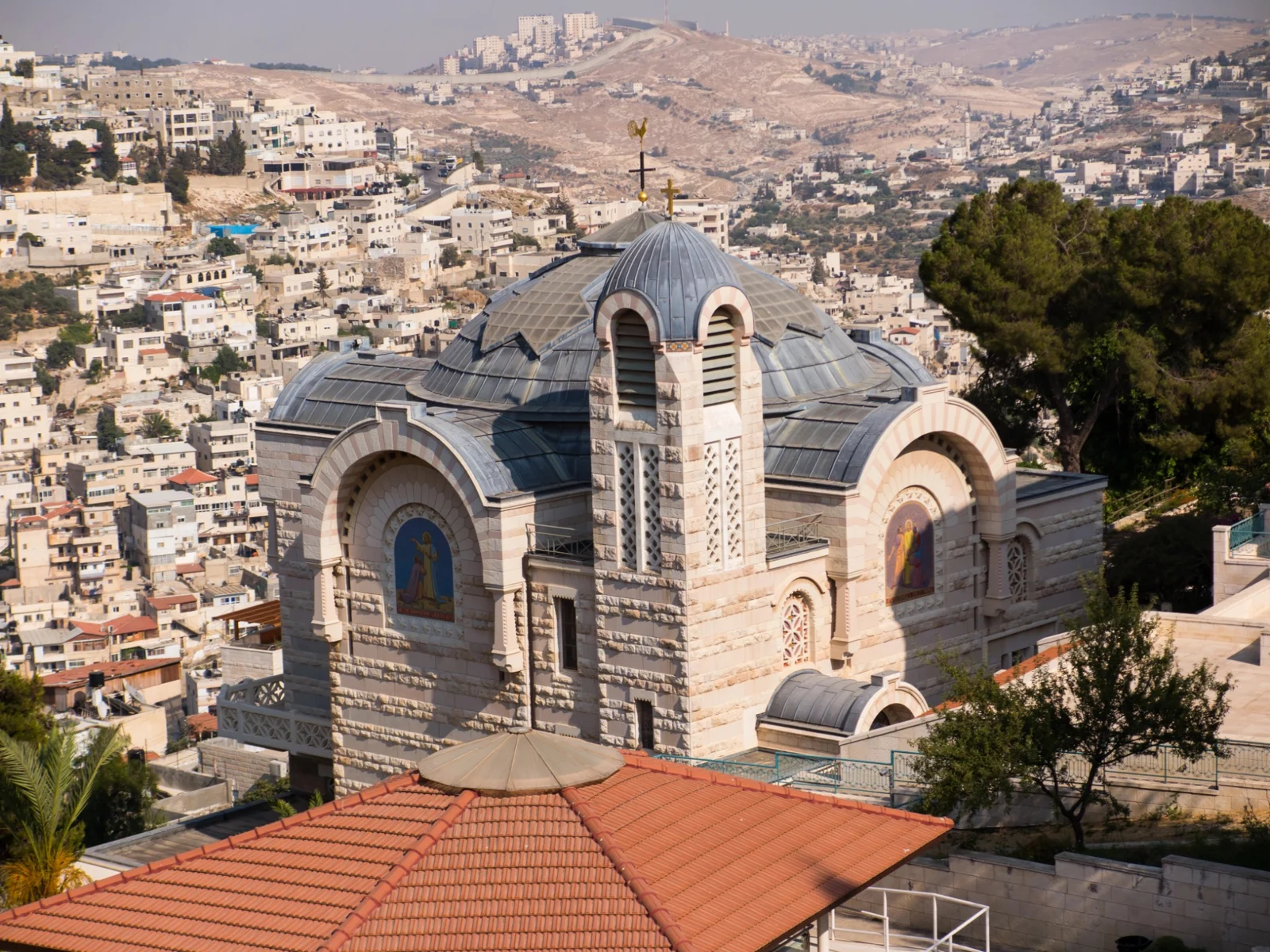
Existing sanctuary; residence debatedThe church stands on Jerusalem’s eastern Mount Zion slope. Its archaeological site contains older structures, installations, and a stepped street. The operator discusses the possible connection with the high priest’s residence, but the identification is debated and cannot be inferred simply from the presence of substantial remains.
Connection to the event
Denial and detention traditionsGallicantu’s name evokes the cock’s crow, and its art invites visitors to follow denial, suffering, and repentance. The underground spaces are also associated devotionally with Jesus’ detention. These associations should be introduced as traditions rather than as a documented prison record or a recovered eyewitness scene.
What this does not establish
Neither a pit nor ancient stairs can establish that Jesus was confined there or Peter stood on a particular paving stone. Do not use the story to shame people experiencing panic. Nor does Peter’s failure define every later action: remorse is part of a larger narrative of discipleship.
Questions to explore
- Follow the church’s images of Peter and compare their emotional sequence with Matthew’s short account.
- View the archaeological installations as evidence for the history of the property, asking which dates and functions are documented and which are proposed.
Plan with the place in mind
- Ask which levels and outdoor areas are available on your visit; the main church, lower spaces, and archaeological paths have different physical demands.
- The operator describes an inclined route for reduced mobility; confirm the exact spaces it reaches before assuming full access.
- Leave time at an outdoor viewpoint for reading and discussion rather than holding the group inside a confined lower chamber.
Opening hours and prices are not live. Before traveling, confirm access, services and local conditions with the site operator and relevant authorities.
No precise location
No independently verified coordinate for the biblical courtyard is supplied.
Take something with you
Is there a denial, excuse, or silence you need to acknowledge without adding another excuse? Write one honest sentence privately, then consider a safe and proportionate step toward repair.
Continue in prayer · For ThisSources & further reading
Sources explain the passage, the tradition or the present site; they do not all support the same kind of claim.
- Matthew 26:69–75 · full biblical text
- Saint Peter in Gallicantu · Archaeological site
- Saint Peter in Gallicantu · Prepare your visit
- World English Bible · Full chapter
Guide prepared: November 12, 2026. AI-assisted synthesis; no independent academic review. Our editorial approach