Read the passage
Matthew 26:47–56
Read the passage within its full chapter, not as an isolated line.
Read the chapter · World English BibleMatthew emphasizes that Judas is one of the Twelve. The rupture comes from inside the circle, not from an unknown stranger. An armed group accompanies him, and the identifying kiss is followed by seizure. One of those with Jesus draws a sword and injures the high priest’s servant. Matthew does not name that disciple or the servant here; importing names from another Gospel should be an explicit comparison rather than an unnoticed addition. Jesus rejects the sword and contrasts the arrest with his public teaching in the Temple. Finally, all the disciples leave and flee. The episode therefore refuses a simple division between a faithful inner group and hostile outsiders: the inner group betrays, strikes, and abandons. Its difficult question concerns what loyalty looks like when force appears to offer an immediate solution. Jesus’ refusal to escalate violence should not be turned into advice that a person experiencing abuse must remain in danger or avoid seeking protection.
What we know — and what remains open
Identification of the place
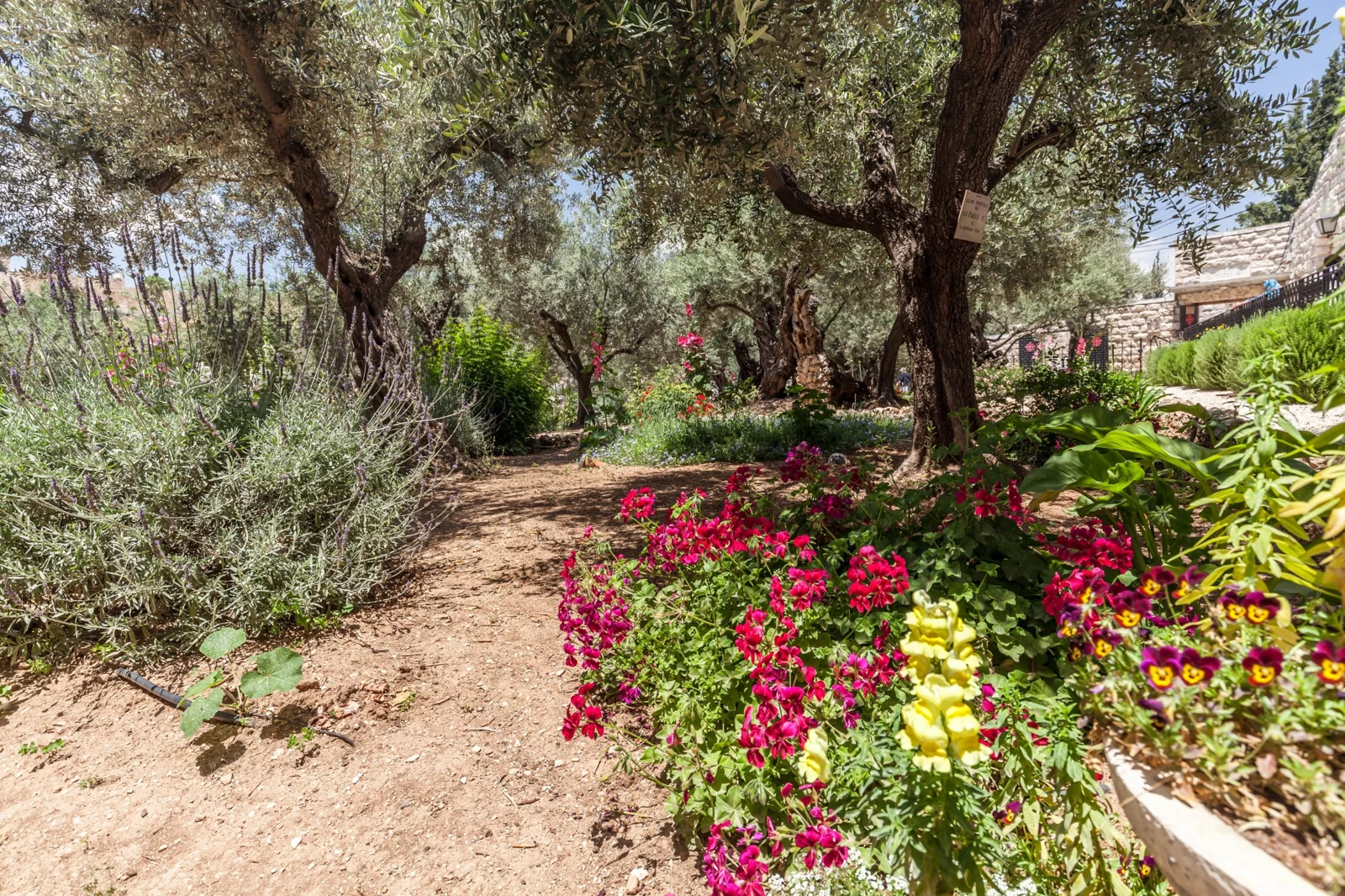
Traditional Gethsemane area identifiedMatthew’s preceding verses name Gethsemane. The traditional area lies at the foot of the Mount of Olives, where the basilica, olive garden, and nearby grotto preserve different aspects of Christian memory. The visitor landmark is identifiable; the precise arrest location within the area is not.
Connection to the event
Exact arrest point unverifiedThe Custody’s account describes a complex history of commemorating prayer and betrayal across the garden, grotto, and rock. This development is important: the present arrangement is a history of devotion, not a frozen plan handed down unchanged from the night of the arrest.
What this does not establish
An old olive tree cannot identify a witness to the event, and a devotional designation does not prove where Judas stood. Responsibility belongs to the named actors in the narrative, not collectively to Jewish people. Jesus and the disciples themselves belong to the Jewish world of the story.
What to notice when you visit
- Compare the garden’s quiet with the narrative’s rapid arrival of a crowd; the setting alone should not soften the seriousness of betrayal.
- If the grotto is included in your itinerary, distinguish its commemorative history from the basilica’s prayer focus.
Plan with the place in mind
- Check access to each sanctuary separately and allow time for road crossings between sites at the foot of the mount.
- A group reading should take place away from narrow entrances and ongoing services; agree on a quiet meeting point.
- Combine this passage with the preceding prayer and the following flight of the disciples, rather than ending the discussion at Judas’ kiss.
Opening hours and prices are not live. Before traveling, confirm access, services and local conditions with the site operator and relevant authorities.
The pin marks the Gethsemane basilica, not the exact arrest spot. Open map
Take something with you
Think of a conflict where your first impulse is to strike back with words. What would protect the vulnerable while refusing one unnecessary escalation? Restraint can be deliberate action rather than passive agreement.
Continue in prayer · For ThisSources & further reading
Sources explain the passage, the tradition or the present site; they do not all support the same kind of claim.
- Matthew 26:47–56 · full biblical text
- Custody of the Holy Land · Gethsemane sanctuary
- World English Bible · Full chapter
Guide prepared: November 12, 2026. AI-assisted synthesis; no independent academic review. Our editorial approach