Read the passage
Acts 10:9–48
Read the passage within its full chapter, not as an isolated line.
Read the chapter · World English BiblePeter goes to the rooftop to pray while food is being prepared. He sees a sheet-like object containing animals and hears a command that conflicts with his understanding of clean and unclean. The exchange happens three times, but Peter does not instantly understand it. The narrative explicitly leaves him pondering when messengers from Cornelius arrive. His next action is hospitality: he invites them to stay, then travels with them to Caesarea. There he explains the vision in terms of people, saying he should not call any person unclean. Read through the end of the chapter, because stopping at the animals misses the encounter that supplies the story’s direction. Ask whether you allow an unexpected person to change how you understand something you thought was settled. Christian traditions differ in how they relate this vision to dietary law; that discussion should not erase the chapter’s emphasis on welcoming Gentiles or caricature Jewish practice.
What we know — and what remains open
Identification of the place
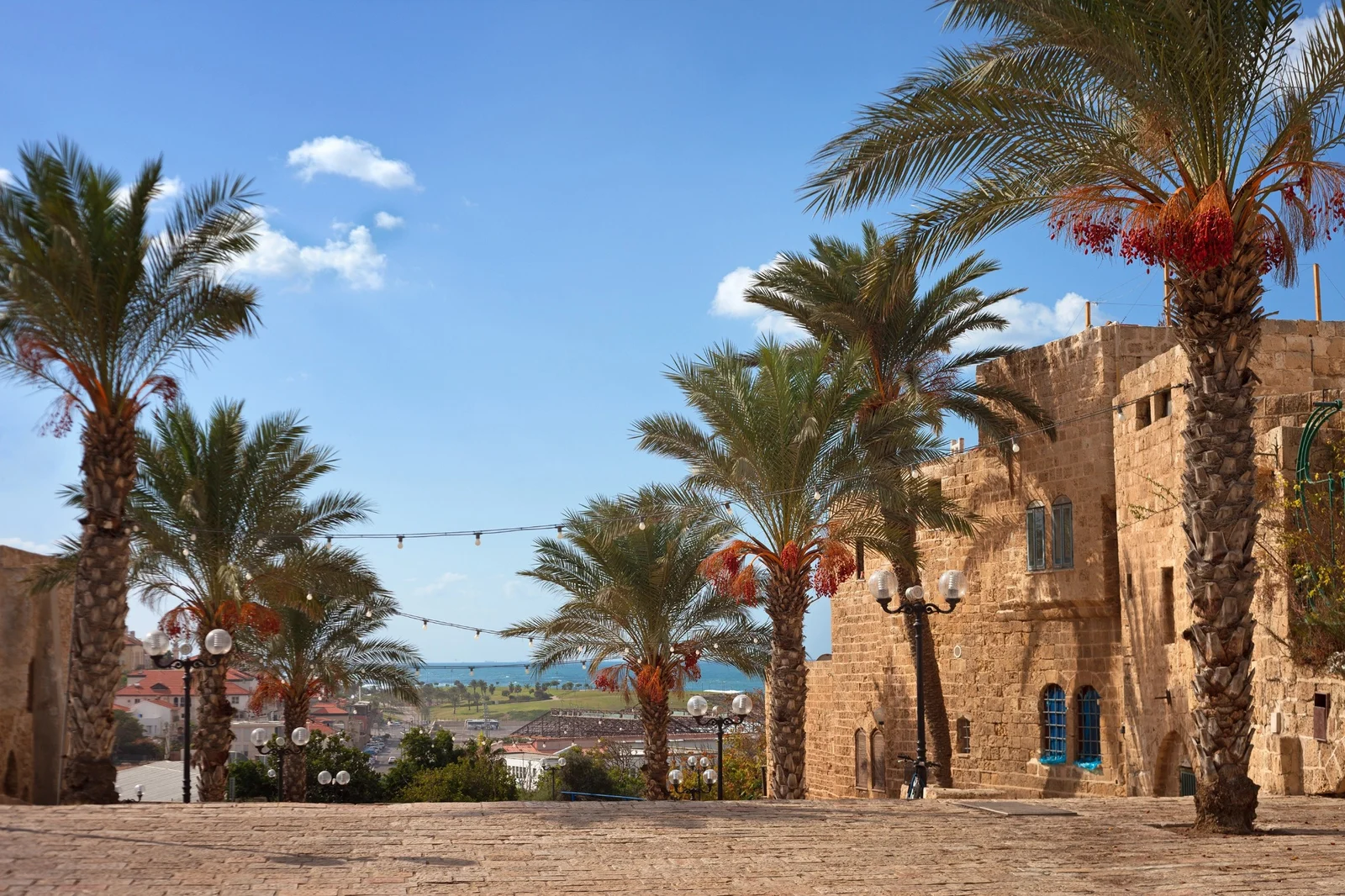
Joppa named; rooftop unidentifiedActs specifies a tanner named Simon whose house is by the sea in Joppa. The Custody’s Jaffa guide includes a traditional house of Simon within the city’s Christian geography. This supports the existence of the commemorative association, not a secure identification of a surviving first-century home or its roof.
Connection to the event
Traditional house of Simon the tannerThe nearby Saint Peter church also remembers the vision through its art and dedication. These different forms of remembrance let a visitor compare a supposed domestic address with a public sanctuary. Neither should be confused with Cornelius’s home, which belongs to the next stage in Caesarea.
What this does not establish
A traditional label does not establish a right to enter a residence or climb onto its roof. Nor can the vision be used as a general license to ignore another religion’s practices. Peter’s learning is told through his own Jewish identity and through a concrete encounter with a Gentile household.
Questions to explore
- Observe the relationship between the old town and the sea from public paths; the biblical detail by the sea matters more than an invented rooftop viewpoint.
- If visiting Saint Peter’s church, compare its depiction of the vision with the following verses about the arriving messengers and Peter’s decision to host them.
Plan with the place in mind
- Treat the traditional house as an exterior stop unless its occupants or custodian explicitly permit more. Keep entrances and residential lanes clear.
- Link Jaffa and Caesarea conceptually, but plan them as separate travel stops. Check transport and opening arrangements rather than implying the biblical journey is a short urban walk.
Opening hours and prices are not live. Before traveling, confirm access, services and local conditions with the site operator and relevant authorities.
No precise location
No exact event location is established; the named visitor site is a contextual or traditional landmark, not a verified event pin.
Take something with you
Identify one assumption you make about someone before hearing their story. Replace it today with a respectful question. Peter’s next step is not a final theory; it is opening the door and beginning a journey with other people.
Continue in prayer · For ThisSources & further reading
Sources explain the passage, the tradition or the present site; they do not all support the same kind of claim.
Guide prepared: November 12, 2026. AI-assisted synthesis; no independent academic review. Our editorial approach