Read the passage
Acts 7:54–60
Read the passage within its full chapter, not as an isolated line.
Read the chapter · World English BibleThe closing scene follows Stephen’s long speech, which retells Israel’s story and challenges the assumption that God can be confined to a particular building. His hearers react violently. Stephen describes a vision, is driven outside the city, and is killed by stoning. Saul appears as the person at whose feet the witnesses place their garments, connecting this death to the persecution and journeys narrated next. Stephen’s final prayers echo Jesus’ Passion through trust and a plea that the sin not be held against his attackers. Read into Acts 8 to see that the story’s consequences extend beyond one death: a grieving community is scattered. Ask how a place of remembrance can preserve a victim’s voice without teaching hatred toward the group from which the attackers came. The narrative arose within conflicts involving Jewish participants, including Stephen and the apostles. It cannot responsibly be used to attach inherited guilt to Jews.
What we know — and what remains open
Identification of the place
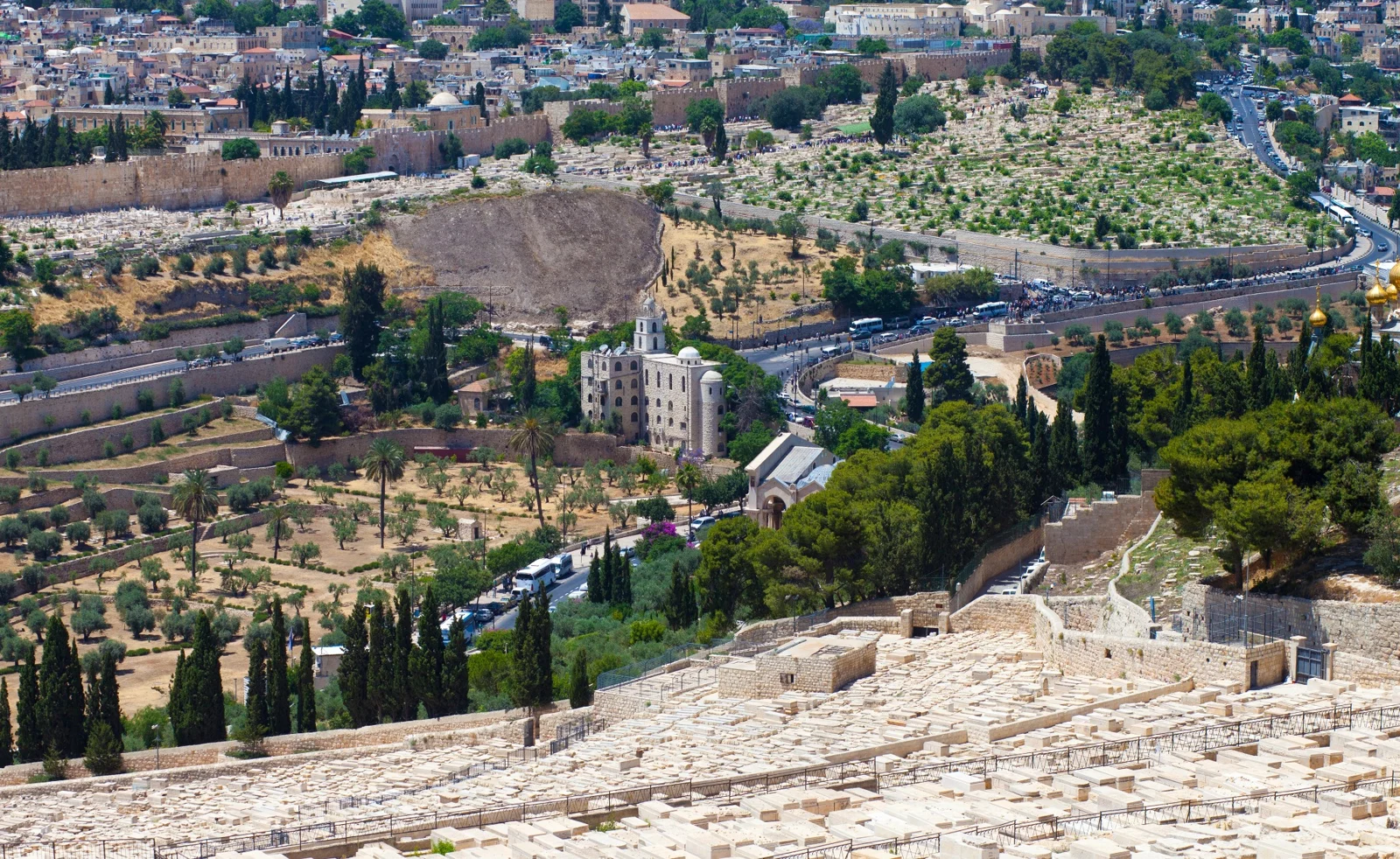
Outside Jerusalem; exact site unknownThe École Biblique’s Saint Stephen basilica stands north of the Old City and preserves a longstanding northern commemoration. A Greek Orthodox church beyond the eastern side of the Old City marks another tradition. Both are real religious sites; neither supplies an independently demonstrated coordinate for the stoning.
Connection to the event
Competing northern and eastern traditionsDominican and Franciscan institutional accounts document these different memories. The Franciscan description of the eastern pilgrimage connects its localization with medieval pilgrims. The existence of competing commemorations is valuable historical information, not a reason to quietly select whichever location fits a convenient walking route.
What this does not establish
Acts says outside the city but does not name today’s Lions’ Gate or Damascus Gate. The name Saint Stephen’s Gate cannot settle the question by itself. Remembering forgiveness does not require a victim to remain in danger, abandon legal protection, or pretend that violence was harmless.
Questions to explore
- Compare the two commemorations on a city plan and note their positions relative to the Old City rather than combining them into one supposed site.
- Where access is permitted, look for how a church’s dedication and liturgy preserve Stephen’s memory differently from archaeological evidence.
Plan with the place in mind
- Contact the relevant religious community before visiting; a scholarly institution and a pilgrimage church may have different access arrangements.
- If including both traditions, plan transport and walking separately. Do not promise an uninterrupted circuit around the walls without checking current local conditions.
Opening hours and prices are not live. Before traveling, confirm access, services and local conditions with the site operator and relevant authorities.
No precise location
No exact event location is established; the named visitor site is a contextual or traditional landmark, not a verified event pin.
Take something with you
What would it mean to remember a painful injustice truthfully without allowing it to become permission for another injustice? Write one sentence that names the harm, and another that protects the dignity of people who did not cause it.
Continue in prayer · For ThisSources & further reading
Sources explain the passage, the tradition or the present site; they do not all support the same kind of claim.
- Acts 7:54–60 · full biblical text
- École Biblique · Saint Stephen commemoration
- Custody · pilgrimage to Saint Stephen
Guide prepared: November 12, 2026. AI-assisted synthesis; no independent academic review. Our editorial approach