Read the passage
Acts 17:1–15
Read the passage within its full chapter, not as an isolated line.
Read the chapter · World English BibleIn Thessalonica, Paul reasons from Scripture over successive Sabbaths, explaining his understanding of the Messiah's suffering and resurrection. Some listeners join the movement. Opposition brings a crowd to Jason's house, where hospitality has exposed a local resident to risk. The accusation that the missionaries proclaim another king makes religious disagreement sound politically dangerous. The travelers leave at night for Berea. There, the narrative praises attentive examination of Scripture rather than uncritical enthusiasm. Opposition follows them, and supporters help Paul continue toward Athens while Silas and Timothy remain. Neither city is presented as a uniform population: people within each respond differently. The comparison must never become a verdict about the character of Jewish people or any modern city. The distinctive invitation is to combine openness with examination. A careful reader can ask what evidence supports a teaching, while also noticing the practical cost borne by the people who offer guests a home.
What we know — and what remains open
Identification of the place
Biblical cities identifiedThessaloniki's official tourism route and Central Macedonia's information about Veria locate the modern cities associated with the account. Their urban histories extend far beyond one visit. Veria's Jewish quarter and later synagogue belong to a continuing local history; their presence does not identify the first-century meeting described in Acts.
Connection to the event
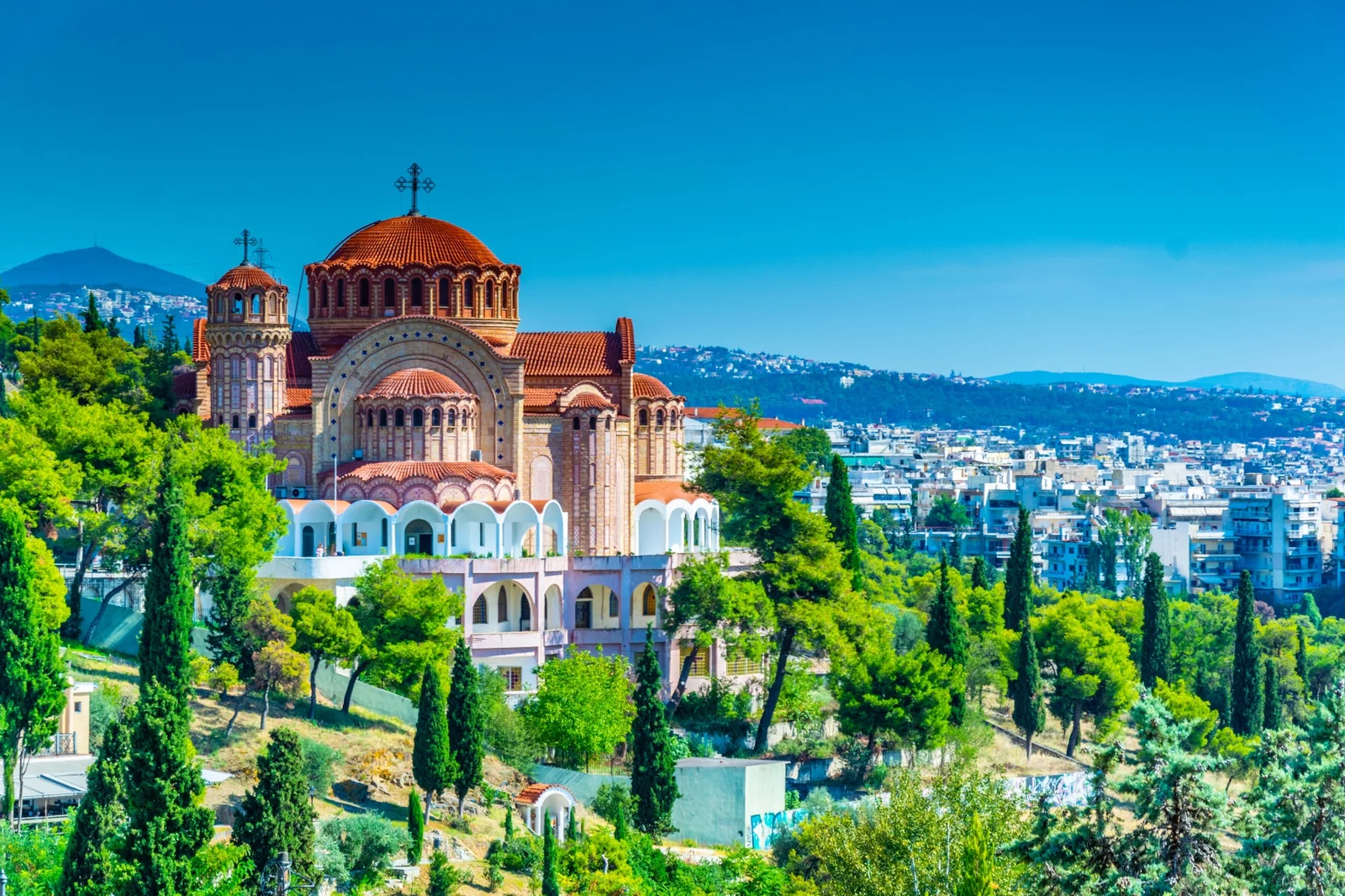
Preaching monuments commemorate later memoryThe Bema of Saint Paul in Veria commemorates his preaching. It is a place to encounter how later Christians remember the journey, not a preserved recording platform. Thessaloniki also maintains Pauline churches and routes; explain each monument's own history before attaching the narrative to its stones.
What this does not establish
A city's identification is stronger evidence than an exact preaching spot. We cannot reconstruct Jason's house from the text, or assume every surviving synagogue occupies Paul's meeting place. Reading differences in reception as ethnic stereotypes would contradict the variety of responses that the narrative itself records.
Questions to explore
- In Veria, compare the Pauline memorial with the Jewish quarter, giving each community's history its own respectful attention rather than using one as a backdrop.
- In Thessaloniki, follow the official Pauline route alongside the wider city, distinguishing commemorative churches from surviving Roman-era urban context.
Plan with the place in mind
- Treat this as a regional journey with transport between Thessaloniki and Veria, not a single walking tour; allow separate time in each city.
- Confirm entry arrangements for religious buildings with their custodians. A neighborhood visit does not guarantee that its synagogue or church is open to visitors.
- Read Acts 17 before looking at memorial labels, then ask your guide which claims arise from the text and which from local tradition.
Opening hours and prices are not live. Before traveling, confirm access, services and local conditions with the site operator and relevant authorities.
No precise location
This route connects two cities. No single point is claimed as the location of both preaching encounters.
Take something with you
Choose one claim you have accepted because it sounded reassuring. Examine its source patiently, without treating honest questioning as disloyalty or another person's uncertainty as weakness.
Continue in prayer · For ThisSources & further reading
Sources explain the passage, the tradition or the present site; they do not all support the same kind of claim.
- Acts 17:1–15 · full biblical text
- Thessaloniki Tourism · In the footsteps of Paul
- Central Macedonia · Veria
Guide prepared: November 12, 2026. AI-assisted synthesis; no independent academic review. Our editorial approach