Read the passage
Luke 1:39–56
Read the passage within its full chapter, not as an isolated line.
Read the chapter · World English BibleMary’s journey follows the announcement in Nazareth and the news of Elizabeth’s pregnancy. She enters the house and greets her relative; Elizabeth responds with joy and recognition. Mary’s answer is the Magnificat, a song that moves from personal gratitude to the reversal of social power: the proud are scattered, the lowly lifted, and the hungry filled. It also recalls mercy toward Israel and the promise to Abraham. This is more than a sentimental picture of mutual encouragement. Luke allows the women’s speech to announce what the wider narrative will explore about God’s attention to people overlooked by powerful institutions. Their encounter includes both intimate care and public significance. Mary remains about three months before returning home. The passage does not provide a travel diary or identify every task she performed there. Its distinctive question is whether gratitude remains private comfort or changes how a person sees hunger, status, and the obligations of hospitality.
What we know — and what remains open
Identification of the place
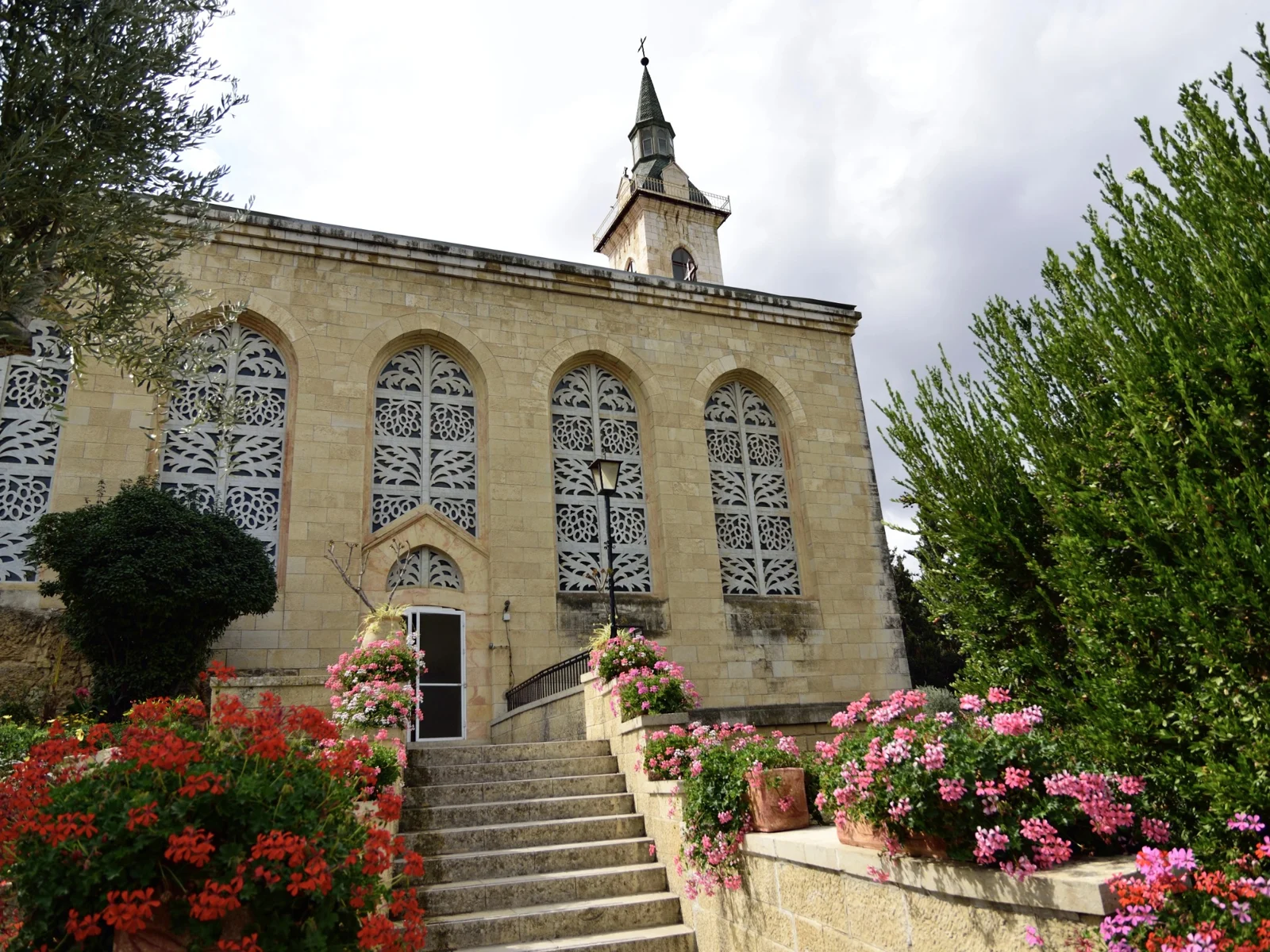
Sanctuary identified; village unnamed in LukeThe present sanctuary is identifiable on the hillside in Ein Karem. The Custody describes the village’s spring and the separate commemorations of the Visitation and John’s birth. These landmarks organize a visit through the village; Luke itself supplies only a broader regional setting.
Connection to the event
Traditional meeting placeChristian tradition associates this hillside with Elizabeth and Mary’s meeting. The development of distinct shrines makes visible how the village has held related memories together while giving each a place of prayer. The site’s devotional identity should not be confused with excavated proof of Elizabeth’s ownership.
What this does not establish
No surviving inscription establishes the household named in Luke, and the Gospel does not name Ein Karem. A spring or an old wall cannot fill that gap. Nor does the Magnificat authorize contempt for particular modern groups; it challenges pride and injustice while placing mercy at its centre.
Questions to explore
- Read the Magnificat at the sanctuary and notice the movement from Mary’s own experience to hungry people, rulers, and Israel’s remembered promises.
- Compare the hillside location with the village’s other shrine, keeping the meeting and the later birth as distinct moments.
Plan with the place in mind
- The hillside approach can be demanding. Ask about transport drop-off points and the practical route before bringing someone with limited mobility.
- Plan a village walk with time to rest rather than treating two churches and the spring as a single quick stop.
- Confirm current sanctuary access and worship arrangements. Keep conversations outside prayer spaces and respect the village’s residents.
Opening hours and prices are not live. Before traveling, confirm access, services and local conditions with the site operator and relevant authorities.
No precise location
Luke names the Judean hill country, not an exact household; no biblical house coordinate is asserted.
Take something with you
Who could use a visit that begins with listening rather than advice? After reading Mary’s song, consider whether your gratitude could also become one practical act for someone whose needs are easily overlooked.
Continue in prayer · For ThisSources & further reading
Sources explain the passage, the tradition or the present site; they do not all support the same kind of claim.
- Luke 1:39–56 · full biblical text
- Custody of the Holy Land · Visitation sanctuary
- World English Bible · Full chapter
Guide prepared: November 12, 2026. AI-assisted synthesis; no independent academic review. Our editorial approach