Read the passage
Luke 2:41–52
Read the passage within its full chapter, not as an isolated line.
Read the chapter · World English BibleAt twelve, Jesus travels to Jerusalem with his parents for Passover. After the festival they begin the return journey, supposing him to be among the travelling company. When they cannot find him among relatives and acquaintances, they return to Jerusalem. The search ends in the Temple, where Jesus is listening, asking questions, and answering among the teachers. Luke does not describe a child humiliating ignorant scholars; both listening and questions are explicit. Mary speaks honestly about the distress he has caused. Jesus’ answer points toward his Father, but the parents do not understand it immediately. The scene concludes with a return to Nazareth, obedience, Mary’s continued reflection, and growth in wisdom. That ending prevents a simplistic celebration of independence at any cost. The story holds vocation and family relationship in tension without resolving every feeling. Its question for visitors is whether they can allow understanding to develop over time instead of demanding that every important family conversation end in instant agreement.
What we know — and what remains open
Identification of the place
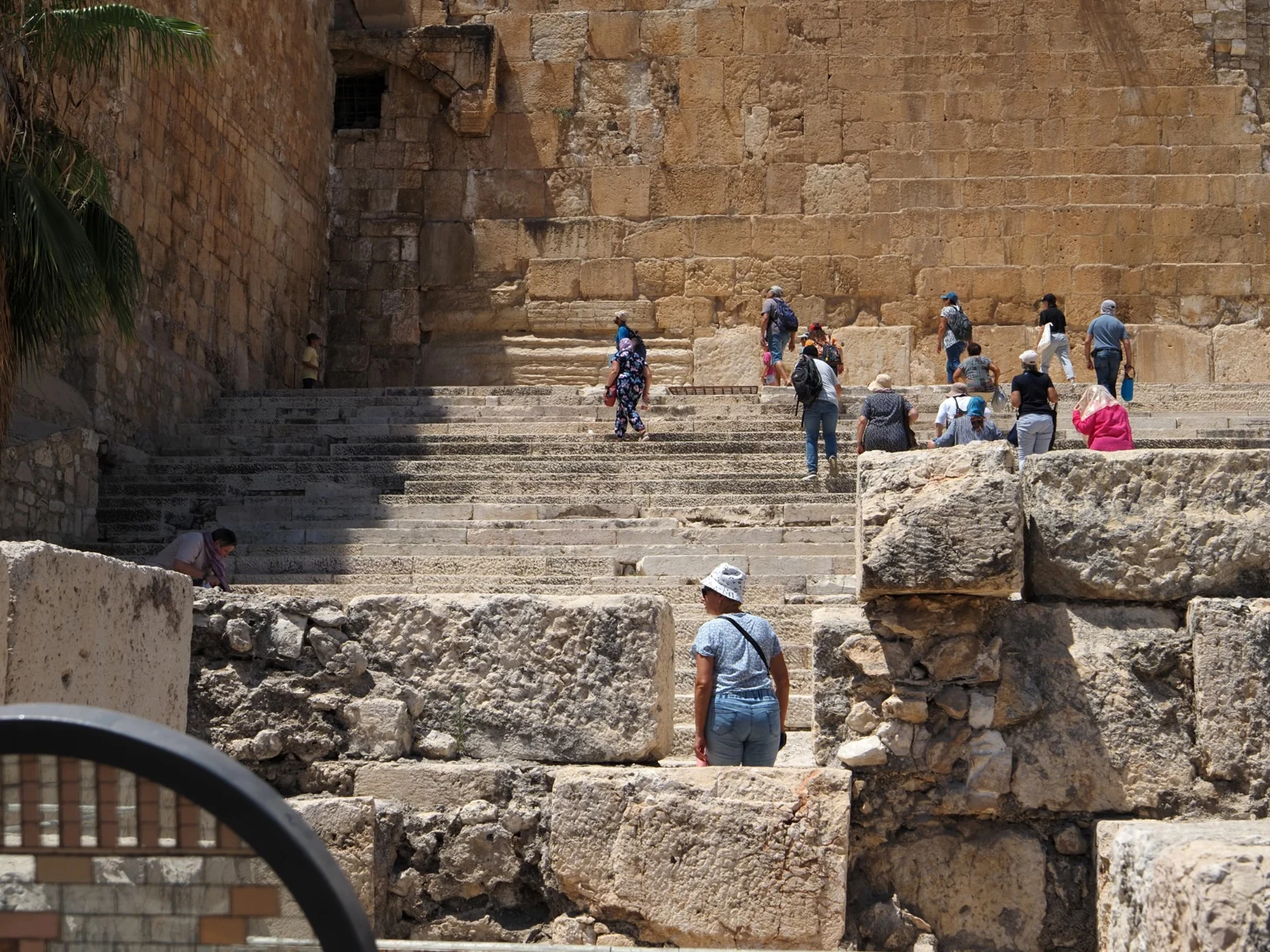
Temple setting identifiedThe ancient Temple’s general setting is known. The Davidson Centre and nearby archaeological approaches provide context for the scale and movement of Jerusalem pilgrimage. They do not preserve a classroom labelled as the place where the twelve-year-old Jesus sat, nor a recoverable route taken by his searching parents.
Connection to the event
Teaching location unspecifiedChristian art often depicts the boy at the centre of a circle of teachers. Such images interpret Luke’s scene and can be useful for comparing imagined arrangements, but they are not plans of an excavated room. A reading beside the southern approaches is contextual remembrance rather than a claim of exact location.
What this does not establish
Luke does not say that Jesus entered the Holy of Holies or disclose the teachers’ names. Do not add those details to make a tour more vivid. The passage also does not excuse unsafe separation from a group today or justify dismissing parents’ legitimate concern for a child’s safety.
Questions to explore
- Look at the scale of the Temple approaches and imagine the difference between a family’s expectations and the size of a festival gathering.
- Compare a reconstruction with surviving remains, then ask which elements help explain movement without identifying the teaching location.
Plan with the place in mind
- Confirm the archaeological visitor route and access needs with the operator; a visit there does not include automatic entry to the elevated religious compound.
- For families, agree on a meeting point and contact plan before entering busy areas. The reading can introduce that practical conversation without frightening children.
- End the discussion with verses 51–52, giving the return home and gradual growth the same attention as the surprising Temple scene.
Opening hours and prices are not live. Before traveling, confirm access, services and local conditions with the site operator and relevant authorities.
No precise location
No exact room or meeting point is identified in Luke; this is a contextual Temple-area visit.
Take something with you
In a difficult conversation with someone close, could you first ask a genuine question and listen to the whole answer? The text’s teachers and parents invite reflection on learning that does not begin with complete understanding.
Continue in prayer · For ThisSources & further reading
Sources explain the passage, the tradition or the present site; they do not all support the same kind of claim.
- Luke 2:41–52 · full biblical text
- Israel Antiquities Authority · Davidson Centre
- Davidson Centre operator · Temple reconstruction experience
- World English Bible · Full chapter
Guide prepared: November 12, 2026. AI-assisted synthesis; no independent academic review. Our editorial approach