Read the passage
2 Samuel 5:1–12
Read the passage within its full chapter, not as an isolated line.
Read the chapter · World English BibleChapter 5 begins at Hebron, where the tribes approach David and a covenant precedes his anointing as king. Only then does the account turn to Jerusalem, the Jebusites, and the stronghold called Zion. The defenders’ taunt about the blind and lame belongs to the difficult language of this confrontation; it should not be repeated as a judgment on the worth or belonging of disabled people. The text describes David establishing himself, building, receiving materials and craftsmen from Hiram, and recognizing that his kingdom has been raised for the sake of his people. That final purpose is a useful corrective to a tour concerned only with military brilliance or royal prestige. The account is brief enough to leave many historical questions open. Its reference to a watercourse does not supply a modern archaeological itinerary. Reading a compact narrative slowly helps prevent attractive reconstructions from becoming more certain than the evidence allows. Ask how the city’s vulnerable residents fit into a story normally told from the ruler’s viewpoint.
What we know — and what remains open
Identification of the place
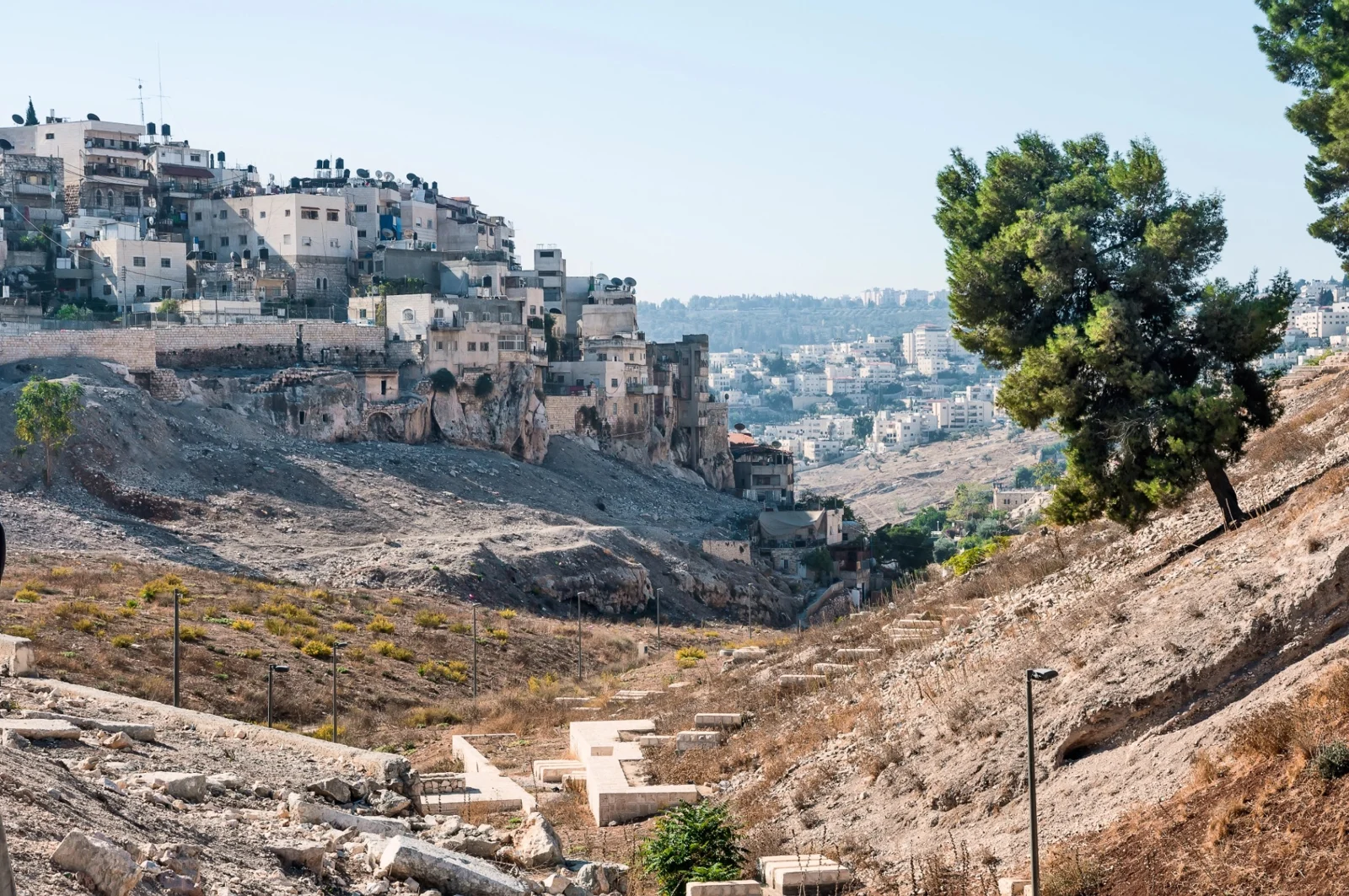
Ancient urban hill identifiedThe City of David archaeological park occupies the southeastern hill of ancient Jerusalem, outside the present Old City walls. Excavated structures and water systems illuminate long urban development. Their periods and proposed functions must be considered separately, rather than treating the entire park as a single Davidic building project.
Connection to the event
Interpretation and commemorationThe name links the hill with the biblical royal center. Some excavated structures have been proposed as royal buildings, but interpretation is debated. Ask guides to distinguish a structure’s physical remains, its dating, and the additional argument required to associate it with a named king.
What this does not establish
No visible route should be presented as the demonstrated path of David’s soldiers. In particular, Hezekiah’s Tunnel belongs to a different historical discussion and cannot simply be substituted for the watercourse in Second Samuel. Ancient associations also do not erase the living neighborhood around the excavation.
Questions to explore
- Start with a topographic overview: locate the hill, the water source, and the relationship to the later walled city.
- At major structures, compare labels describing secure observations with labels proposing royal identifications.
Plan with the place in mind
- Use the official park entrance information and choose a route before buying a ticket; underground, wet, and surface options are not interchangeable.
- Ask about stairs, narrow passages, and accessible alternatives. Keep entrances to homes and neighborhood streets clear, and photograph residents only with permission.
Opening hours and prices are not live. Before traveling, confirm access, services and local conditions with the site operator and relevant authorities.
No precise location
Visit the named archaeological park for regional context; the route of the biblical capture is not identified.
Take something with you
Read the phrase about the people’s sake alongside your own responsibilities. What decision would look different if the measure of leadership were the people it protects rather than the reputation it builds?
Continue in prayer · For ThisSources & further reading
Sources explain the passage, the tradition or the present site; they do not all support the same kind of claim.
- 2 Samuel 5:1–12 · full biblical text
- Israel Nature and Parks Authority · City of David National Park
- City of David · Official visitor information
Guide prepared: November 12, 2026. AI-assisted synthesis; no independent academic review. Our editorial approach