Read the passage
2 Kings 20; focus verse 20
Read the passage within its full chapter, not as an isolated line.
Read the chapter · World English BibleSecond Kings 20 is not primarily a construction manual. It recounts Hezekiah’s illness, prayer, recovery, and encounter with envoys from Babylon before closing with a notice about his achievements, including a pool and conduit that brought water into the city. The juxtaposition is worth retaining. A king can undertake useful public works and still make choices that the narrative criticizes. Isaiah challenges the display of royal treasures to the visitors and speaks of a future loss. Reading only the waterworks verse can turn a morally complex portrait into an uncomplicated celebration of technical success. Conversely, walking the tunnel can restore the material world behind a compressed royal summary: water must be collected, directed, maintained, and made available to people who cannot live on prestige. The useful interpretive question is what our own accounts of achievement leave out. Royal notices name rulers; physical infrastructure also depends on workers, planning, and the people whose daily survival it serves. Keep both the public benefit and the limits of royal judgment in view.
What we know — and what remains open
Identification of the place
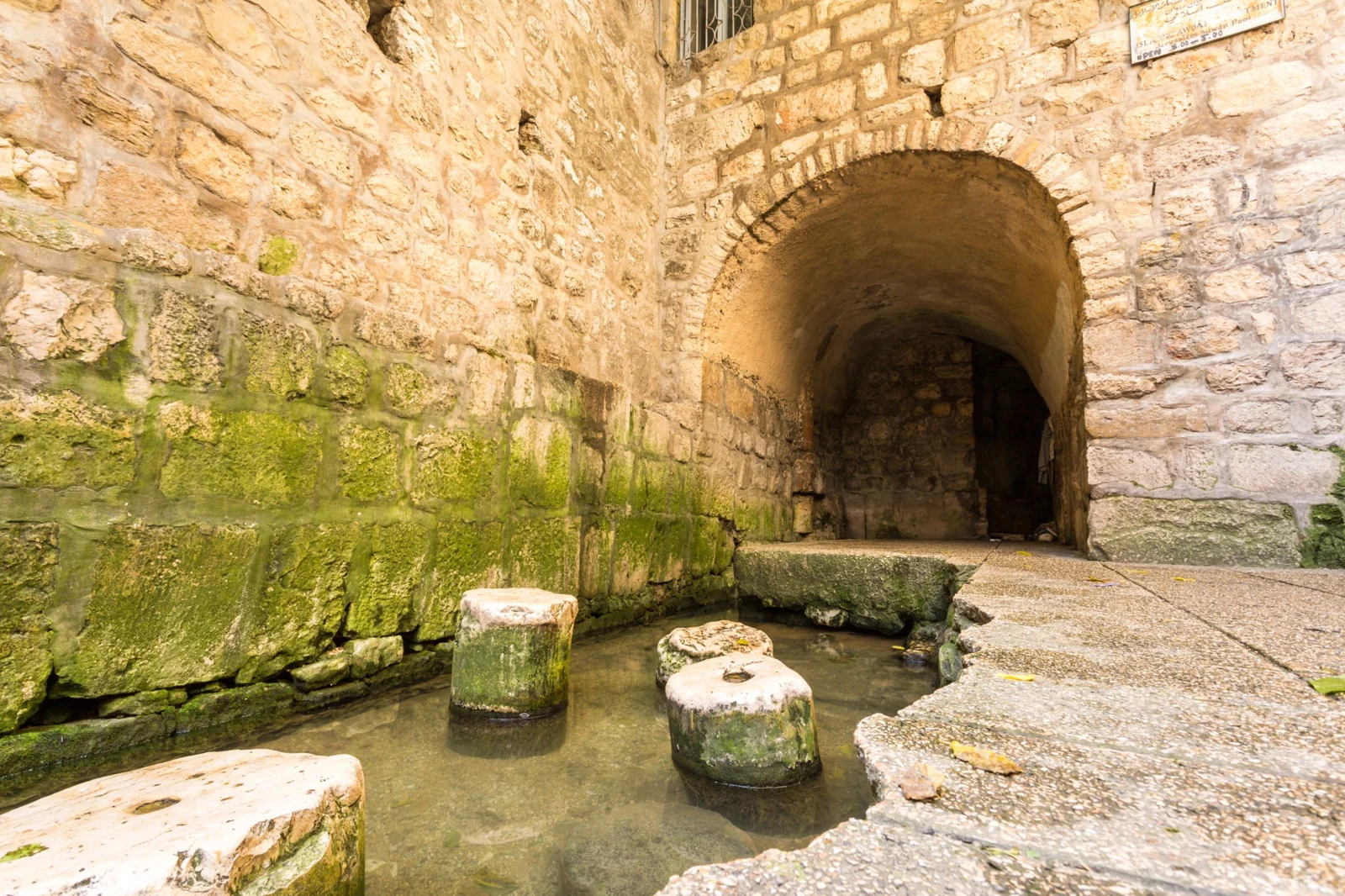
Surviving ancient water infrastructureThe City of David visitor complex includes the water tunnel commonly called Hezekiah’s Tunnel, connecting the Gihon water system toward Siloam. The parks authority explicitly connects this feature with the biblical tradition of Hezekiah’s waterworks. The structure is tangible; every detail of its historical interpretation is not equally certain.
Connection to the event
Interpretation and commemorationThe tunnel’s royal name connects an engineering monument with the biblical king. A visitor should ask which claims derive from the physical water system and which from reading Kings alongside other evidence. A named route is a starting point for inquiry, not a complete historical argument.
What this does not establish
Second Kings 20:20 does not describe every bend, measurement, or construction technique visible today. The tunnel must not be used as the established route of David’s earlier capture of Jerusalem. Nor does its survival prove every episode associated with Hezekiah elsewhere in Scripture.
Questions to explore
- Compare the surface topography with the underground route before entering; water geography can explain a city differently from walls and palaces.
- Where interpretation is available, look for the distinction between the water source, conduit, and receiving pool rather than treating them as one object.
Plan with the place in mind
- Confirm the current wet-route arrangements with the official operator. Ask about water depth, footwear, lighting, minimum participation requirements, and available alternatives before choosing it.
- This is a confined underground experience, not a standard paved museum corridor. People uncomfortable with darkness or narrow spaces should request a surface or dry-route option rather than feel pressured to enter.
Opening hours and prices are not live. Before traveling, confirm access, services and local conditions with the site operator and relevant authorities.
No precise location
Use the official park route for the tunnel entrance; no unsupported point is assigned to the ancient construction event.
Take something with you
Identify one unnoticed system that makes your day possible. Learn who maintains it, and consider one practical way to support that work rather than taking its reliability for granted.
Continue in prayer · For ThisSources & further reading
Sources explain the passage, the tradition or the present site; they do not all support the same kind of claim.
- 2 Kings 20; focus verse 20 · full biblical text
- Israel Nature and Parks Authority · City of David water system
- City of David · Route and visitor information
Guide prepared: November 12, 2026. AI-assisted synthesis; no independent academic review. Our editorial approach