Read the passage
Luke 23:6–12
Read the passage within its full chapter, not as an isolated line.
Read the chapter · World English BibleRead the episode between Pilate’s questioning and the renewed demand for execution. Learning that Jesus is Galilean gives Pilate a reason to refer him to the ruler of Galilee, who is also in Jerusalem. Herod hopes to see a sign. His lengthy questions receive no answer, while accusations continue around the prisoner. The scene ends with contempt, mockery, an impressive robe, and Jesus being returned to Pilate. Luke then notices a disturbing political result: two previously hostile rulers become friends. This is not a conversation between equal participants. One person can demand entertainment; the other is held in custody. Ask what happens when a religious question is really an attempt to control its subject. Jesus’ silence here should not become advice that every victim must remain silent or decline legal help. The wider chapter repeatedly raises the issue of innocence and responsibility.
What we know — and what remains open
Identification of the place
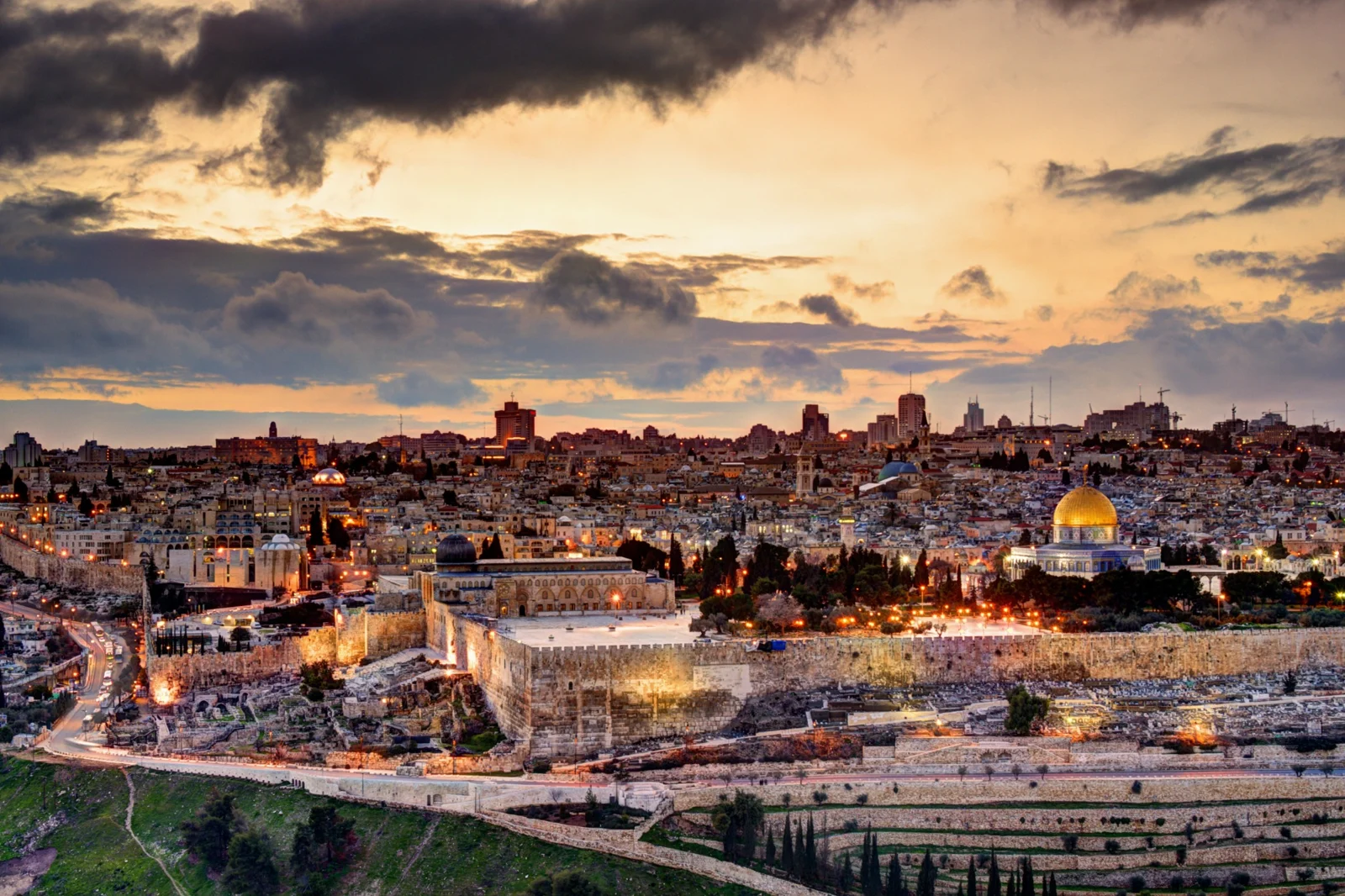
Jerusalem named; courtroom unlocatedThe proposed Hasmonean palace area belongs to reconstructions of Jerusalem’s elite residential landscape, not to an excavated room labelled with this event. The Tower of David museum offers a useful introduction to the city’s rulers and successive building phases. It is a contextual stop rather than the identified address of Antipas.
Connection to the event
Proposed palace settingPilgrimage often connects separate Passion scenes into a continuous walk. That devotional arrangement can help readers follow the narrative, but it should not erase differences between a named city, a proposed palace, and a later commemorative station. Herod Antipas must also be distinguished from Herod the Great.
What this does not establish
Architecture can illuminate the setting of government without proving the hearing’s location or every narrative detail. Do not identify the citadel, a modern courtyard, or any visible throne room as the place where this exchange occurred. The actions of particular rulers and accusers do not justify collective blame against a religious community.
Questions to explore
- Use the museum’s city-history displays to separate Hasmonean, Herodian, and later Jerusalem before imagining a route between palaces.
- Observe the citadel’s mixture of periods: a surviving wall can belong to a different century from the story you are reading.
Plan with the place in mind
- Begin with a Jerusalem overview rather than searching for an unverified courtroom. Confirm museum admission and current visitor arrangements with the operator.
- For a Passion walk, allow a separate reading stop for Luke’s Herod episode; the standard station sequence does not supply its missing address.
Opening hours and prices are not live. Before traveling, confirm access, services and local conditions with the site operator and relevant authorities.
No precise location
No exact event location is established; the named visitor site is a contextual or traditional landmark, not a verified event pin.
Take something with you
Consider a conversation in which you wanted proof mainly to preserve your own position. What would listening without controlling the outcome require? Choose one question you can ask another person with a genuine willingness to hear the answer.
Continue in prayer · For ThisSources & further reading
Sources explain the passage, the tradition or the present site; they do not all support the same kind of claim.
Guide prepared: November 12, 2026. AI-assisted synthesis; no independent academic review. Our editorial approach