Read the passage
John 8:1–11
Read the passage within its full chapter, not as an isolated line.
Read the chapter · World English BibleJesus is teaching in the Temple when the accusers bring the woman into the gathering. John describes their purpose as testing him so that they can accuse him. This framing matters: the woman is being treated as an instrument in a dispute, not simply as someone whose life is being considered with care. Jesus bends down and writes on the ground, but the account never tells us what he writes. Speculation about a list of names or sins should therefore remain speculation. His response redirects scrutiny toward the accusers, who depart one by one. The final conversation addresses the woman herself, combining the refusal to condemn with a call to leave sin behind. Mercy is not the erasure of moral responsibility; neither is responsibility a license for public humiliation. The linked WEB edition includes a note that textual critics have less confidence that John 7:53–8:11 belonged to the original text. Readers should know this while recognizing the passage’s long place in Christian reading and worship. A beautiful story does not need a fabricated manuscript certainty or a fabricated archaeological address.
What we know — and what remains open
Identification of the place
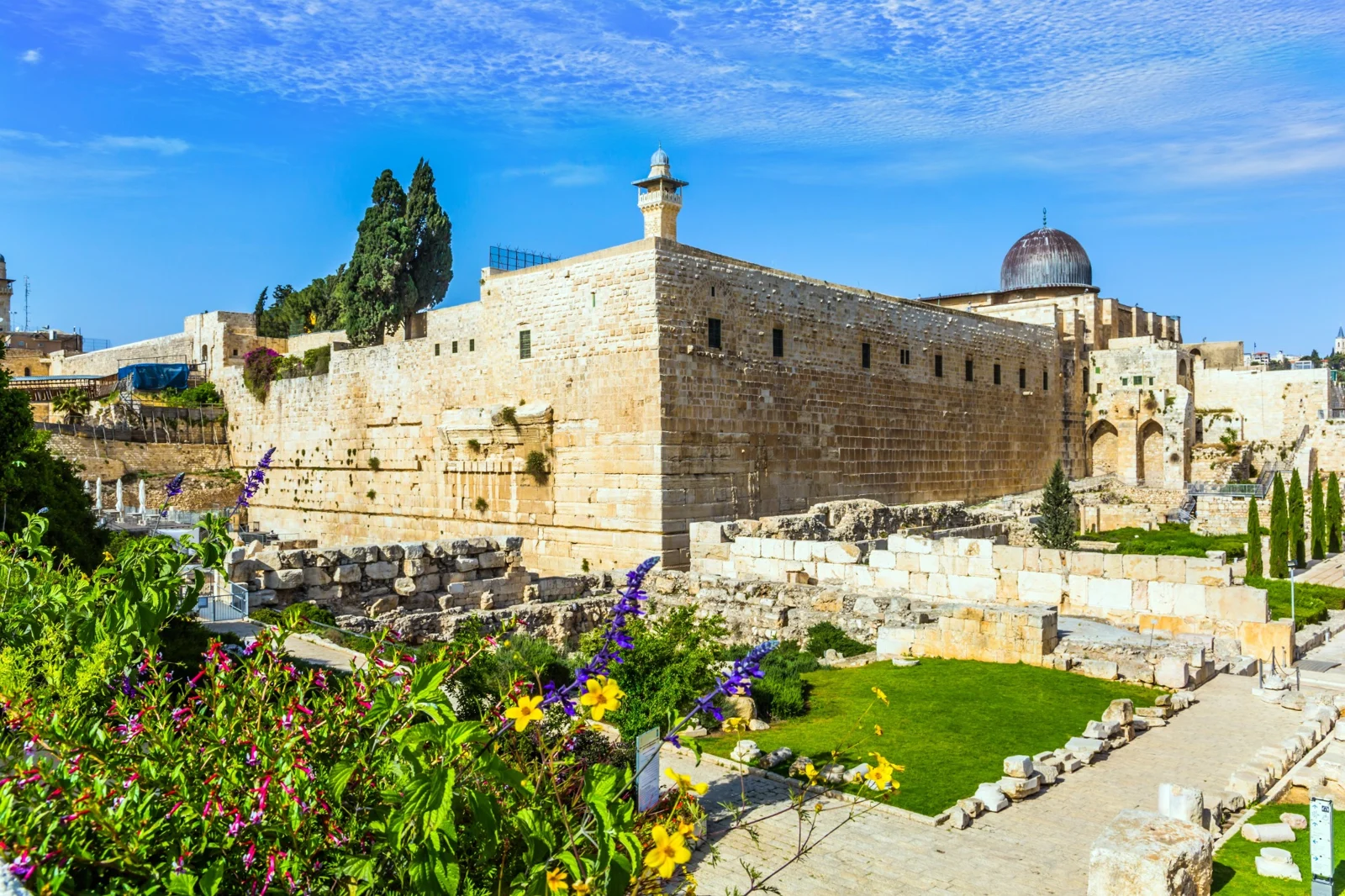
What can be locatedThe narrative supplies a Temple setting but no courtyard, doorway, or marked paving stone that can be matched to the scene. The Davidson archaeological area offers context for the approaches to the ancient complex, not the recovered ground on which Jesus wrote.
Connection to the event
How the place is rememberedChristian art and preaching have supplied many imagined visual details. These can help meditation when labeled as interpretation. The modern sacred compound has its own living religious significance and must not be treated as an empty stage for reenacting the accusation.
What this does not establish
No evidence identifies a particular woman or the content of the writing. Do not generalize the behavior of these accusers to Jewish people. Jesus, the scriptural debate, and the Temple all belong to a Jewish setting; collective blame would distort the passage.
Questions to explore
- Use an archaeological model or interpretation panel to distinguish the Temple complex from its surrounding approach areas. A nearby excavation is contextual evidence, not the location of every Temple story.
- Read the manuscript note with the passage. Acknowledging how a text was transmitted can be part of respectful study rather than an interruption of it.
Plan with the place in mind
- Arrange Davidson access with its operator and confirm which routes are currently open. It is separate from entry arrangements for the elevated sacred compound.
- Choose a permitted quiet place for group discussion. Follow the rules of the site you enter, including restrictions concerning religious activity, photography, and group conduct.
- Avoid staging the accusation with a volunteer cast as the woman. A reflective reading protects dignity better than turning a vulnerable person’s story into public entertainment.
Opening hours and prices are not live. Before traveling, confirm access, services and local conditions with the site operator and relevant authorities.
No precise location
The text names the Temple setting, not an identifiable court or pavement. No exact scene is pinned.
Take something with you
Before repeating a damaging story about someone, pause. Is the information necessary, accurate, and yours to share? Choose one action that preserves both accountability and the person’s dignity instead of feeding a public accusation.
Continue in prayer · For ThisSources & further reading
Sources explain the passage, the tradition or the present site; they do not all support the same kind of claim.
Guide prepared: November 12, 2026. AI-assisted synthesis; no independent academic review. Our editorial approach