Read the passage
John 18:28–19:16
Read the passage within its full chapter, not as an isolated line.
Read the chapter · World English BibleJohn structures the interrogation through movement between the governor’s interior space and the people outside. Questions about kingship and truth unfold alongside public negotiation, mockery, and political pressure. Pilate’s statements that he finds no basis for a charge do not remove his responsibility: he has Jesus flogged and ultimately hands him over for crucifixion. The narrative should therefore not be used to excuse Roman power by assigning collective guilt to Jewish people. References to particular authorities or groups must be read within a story whose central figures, including Jesus, are Jewish. The contrast between claimed authority and moral action is the passage’s searching theme. Pilate can ask an important philosophical question and still fail to act justly toward the person before him. Read across the chapter boundary so the discussion of kingship is not detached from the bodily violence that follows. A debated courtroom location does not make those ethical questions less immediate.
What we know — and what remains open
Identification of the place
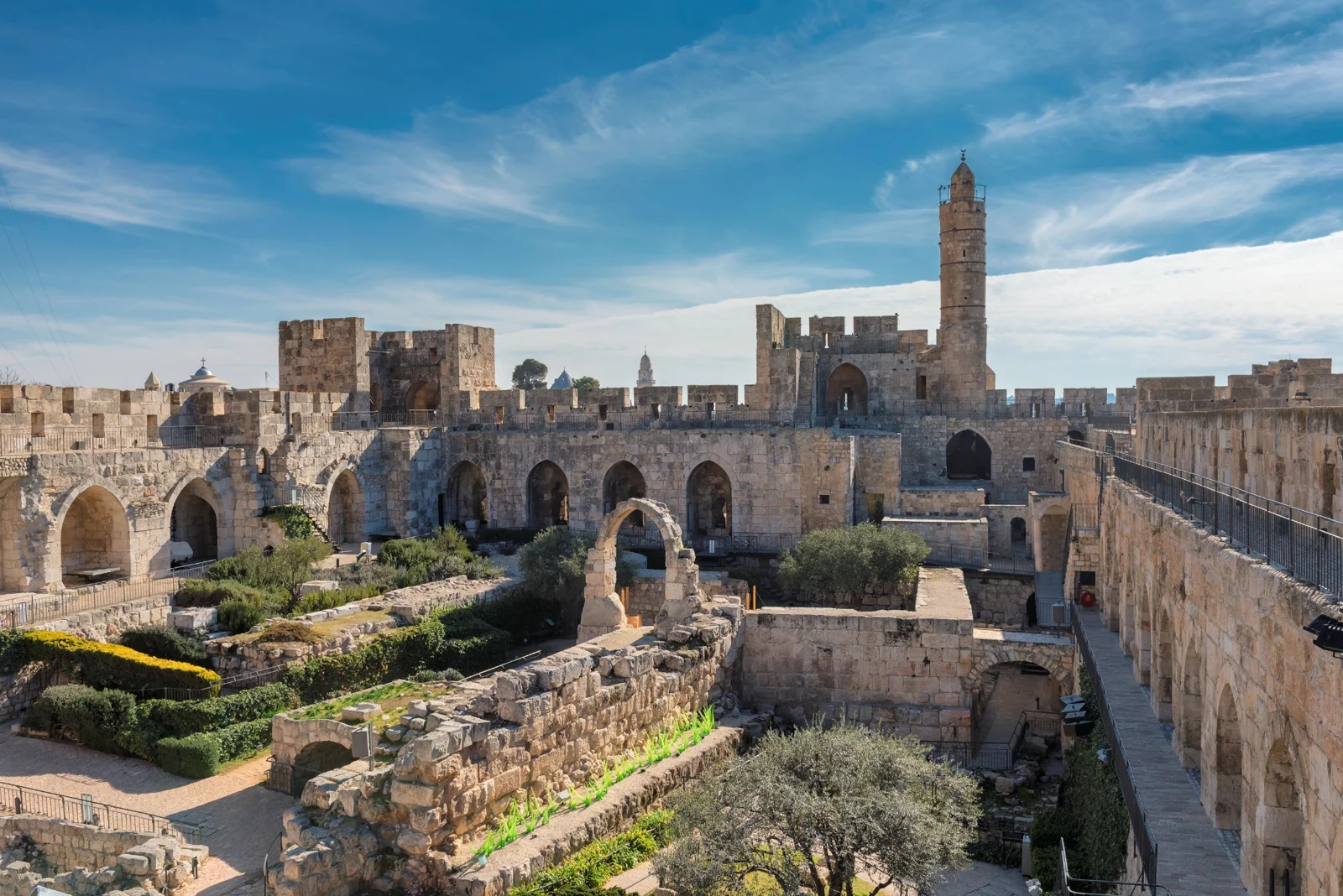
Praetorium location debatedThe Tower of David museum presents remains associated with Herod’s palace in the western city, including the Kishle area. The Terra Sancta Museum explains the eastern Praetorium tradition and its relationship with the remembered house of Herod. These sources allow visitors to distinguish physical remains from later devotional placement.
Connection to the event
Eastern route; western palace alternativeThe familiar eastern start of the Way of the Cross reflects an established pilgrimage tradition. A western palace setting is a serious historical alternative, not a new station that automatically replaces every devotional practice. A route can remain meaningful while its claim to reproduce ancient movements is qualified.
What this does not establish
Neither interpretation supplies a surviving labelled judgment seat that can be confidently assigned to this trial. Avoid presenting the Antonia identification as settled, or the western proposal as proof of the precise room. John’s name Gabbatha does not by itself resolve the modern archaeological debate.
Questions to explore
- At the citadel museum, ask which remains belong to the palace and which reflect later uses of the same property.
- At the eastern devotional beginning, compare the stations’ spiritual purpose with the historical claim about where the trial took place.
Plan with the place in mind
- Kishle or palace-area visits may have arrangements separate from general museum entry; verify the available guided route directly.
- Plan enough time to cross the Old City if comparing west and east; do not describe the two candidates as neighbouring rooms.
- Read John 18 and 19 together before choosing a route, then note explicitly where the evidence changes from text to excavation to tradition.
Opening hours and prices are not live. Before traveling, confirm access, services and local conditions with the site operator and relevant authorities.
No precise location
Competing locations are discussed; a single exact trial pin would imply false certainty.
Take something with you
Where are you tempted to say the right thing while leaving a harmful decision unchanged? Consider one responsibility that cannot be discharged simply by declaring that the outcome is someone else’s choice.
Continue in prayer · For ThisSources & further reading
Sources explain the passage, the tradition or the present site; they do not all support the same kind of claim.
- John 18:28–19:16 · full biblical text
- Tower of David · Herod’s palace
- Terra Sancta Museum · Praetorium and house of Herod
- World English Bible · John 19
- World English Bible · Full chapter
- World English Bible Classic · John 18 (alternate verified text)
Guide prepared: November 12, 2026. AI-assisted synthesis; no independent academic review. Our editorial approach