Read the passage
Psalm 23
Read the passage within its full chapter, not as an isolated line.
Read the chapter · World English BibleThe LORD is my shepherd; I shall lack nothing.
Read all six verses and notice that the imagery changes. The opening presents God as shepherd, associated with pasture, water, restoration, and right paths. In the dark valley, the speaker turns from talking about God to addressing God directly. Nearness matters within danger, rather than only after danger has disappeared. The latter part moves toward a host’s table, anointing, abundance, and dwelling. A reading limited to green grass misses both the shadowed passage and the surprising hospitality in the presence of enemies. The psalm does not promise a life without grief, conflict, illness, or uncertainty. Its confidence is relational: the speaker is accompanied and received. Nor does the text authorize blaming a frightened person for failing to feel peaceful enough. A landscape visit can slow the reading so that shifts of voice and image become audible. Ask which line you normally hurry past, and whether the poem’s movement gives that difficult line a place rather than demanding that you skip it.
What we know — and what remains open
Identification of the place
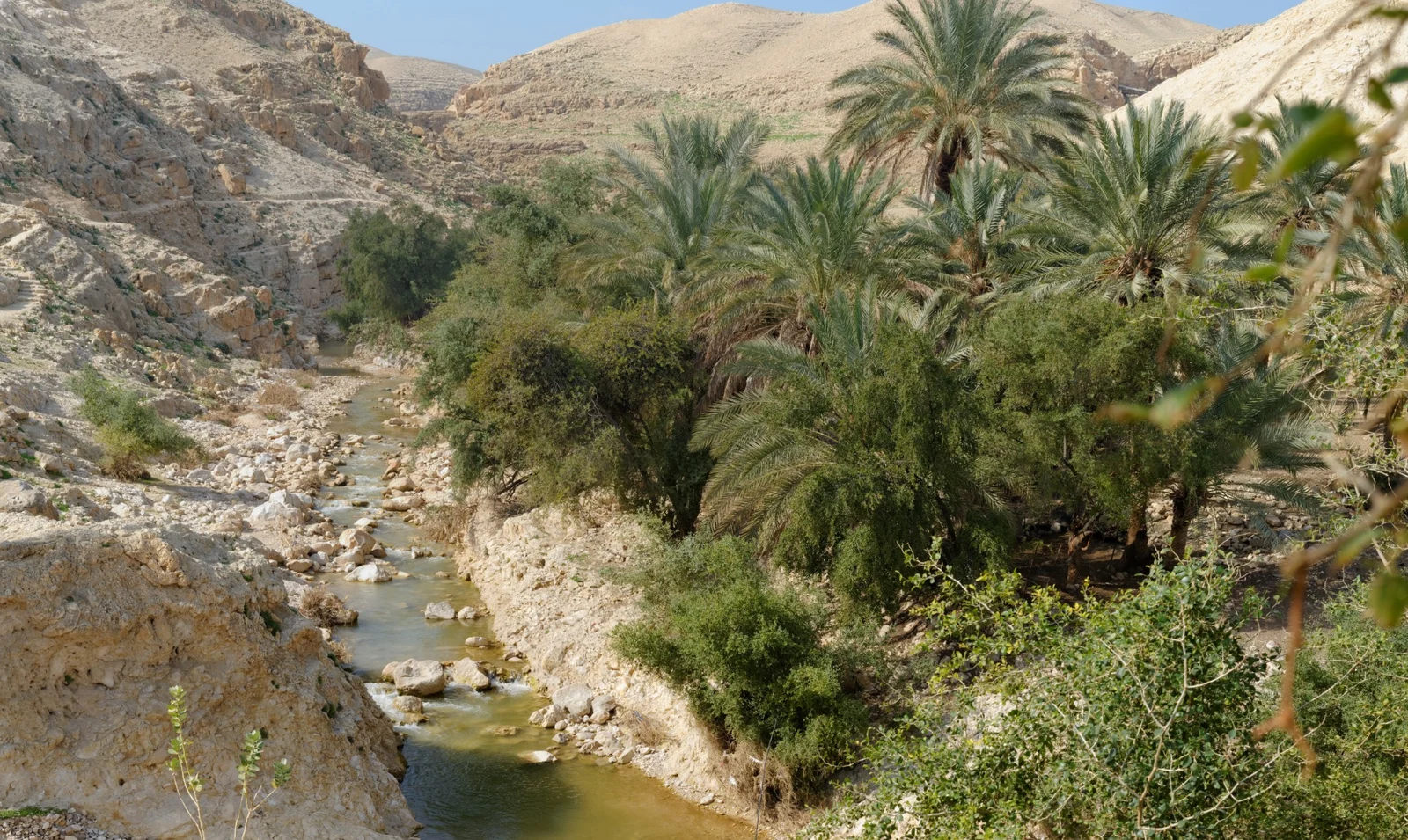
Poetic landscape; no exact locationPsalm 23 names no valley, village, or coordinate. Wadi Qelt is offered as one evocative comparison in the Judean wilderness, not “the valley of the shadow of death.” Its slopes and watercourse can illustrate vulnerability and guidance while leaving the poem geographically open.
Connection to the event
Interpretation and commemorationChristian wilderness monasteries, including Saint George’s in the Wadi Qelt landscape, represent later practices of prayer and retreat. They are part of the history of reading Scripture in a landscape. Their presence does not identify the location where this psalm originated.
What this does not establish
Seasonal greenery, a shepherd’s flock, or a dramatic photograph is not evidence of authorship or an exact biblical setting. A modern devotional nickname should be labeled as such. The UNESCO wilderness-monasteries document is a Tentative List submission, not a certification of this poetic association.
Questions to explore
- From a safe, permitted viewpoint, observe the contrast between exposed ground and places of shelter; let it prompt questions rather than a claim of exact identification.
- Read the psalm twice: first following the shepherd imagery, then listening for the shift to direct address and the host’s table.
Plan with the place in mind
- A quiet viewpoint is sufficient for this reading; the spiritual exercise does not require a strenuous canyon descent. Confirm current access locally before traveling.
- If choosing a hike, arrange a qualified guide, suitable water and footwear, and a weather check. Ask about accessible alternatives and keep any group reading away from narrow paths and monastery worship.
Opening hours and prices are not live. Before traveling, confirm access, services and local conditions with the site operator and relevant authorities.
No precise location
Thematic landscape only: Psalm 23 gives no identifiable geographic location.
Take something with you
Choose one image that speaks honestly to your present situation. Sit with it for a few minutes, then identify one concrete form of companionship you can receive or offer today.
Continue in prayer · For ThisSources & further reading
Sources explain the passage, the tradition or the present site; they do not all support the same kind of claim.
- Psalm 23 · full biblical text
- UNESCO · Jerusalem wilderness monasteries, Tentative List
- World English Bible · Psalm 23
Guide prepared: November 12, 2026. AI-assisted synthesis; no independent academic review. Our editorial approach